
Shifting Values in the Automotive Industry: What Really Matters Today?
In a rapidly evolving world, a critical question arises: What do we value in a car? And perhaps even more crucial: What have we stopped valuing? These are the pivotal inquiries currently permeating the automotive industry, an arena once primarily defined by performance metrics and engineering prowess. As we embark on a new era driven by innovation, the industry contemplates what truly defines modern vehicles.
Ford has stepped forward with answers that reflect these shifting paradigms.
“They do not define them.” This candid declaration from John Lawler, Vice President of Ford, encapsulates his perspective that the internal combustion engine no longer encapsulates the entirety of what a vehicle represents. His insights, reported by Automotive News, suggest a significant transition: “In the past, the engine defined a vehicle through aspects like horsepower, displacement, and torque. I believe a lot of that has faded away,” he stated, reinforcing a transformative viewpoint.
Indeed, Lawler posits that consumer interest in specific engine features is waning. “I don’t think consumers genuinely contemplate engine configurations like they did 30 years ago,” he emphasizes, signaling an industry-wide shift towards what consumers currently prioritize.
Let others handle it. Lawler discusses a strategy of increasing outsourcing within the industry. By delegating mechanical development to other companies, Ford aims to redirect resources toward facets of the vehicle that genuinely appeal to today’s consumers, particularly as they face a formidable competitor: China .
According to Lawler, “We must be competitive not only in development speed, software capabilities, and electrical architecture but also in global electrification capacity.” This statement resonates with the current climate where the Chinese automotive industry is redefining standards and expectations.
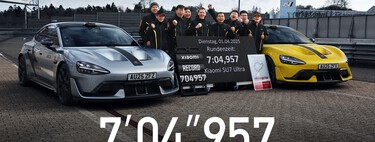
Reflecting on this competitive landscape, Ford CEO Jim Farley previously remarked that Chinese vehicles represent an “existential threat” to Western manufacturers. Such sentiment isn’t entirely new, but the surprise lay in Farley’s open acknowledgment of a particular vehicle—the Xiaomi SU7—which he touted as a “fantastic car.”
What do we value? The Xiaomi SU7 embodies not just a well-designed vehicle but also the ability to integrate seamlessly into an entire ecosystem—a critical consideration for modern consumers. Farley’s observation points to a larger trend where connections to our broader digital existence are increasingly prioritized, a factor that many Chinese cars are leveraging to capture market interest.
With Tesla setting a high bar based on this interconnected model, the insights shared in InsideEVs highlight how Chinese vehicles are evolving into interactive hubs on wheels, further attracting today’s tech-savvy consumers.
“For years, the West was the benchmark that Chinese brands aspired to.” This sentiment echoed during the Shanghai Auto Show, echoing a realization that the mirror reflecting Western expectations is now cracked, revealing new pathways of innovation and market dynamics.
Differentiating in a homogeneous market. Traditionally, automotive brands differentiated themselves through mechanical prowess—Japanese brands boasted reliability, American manufacturers were known for their powerhouse engines, while Europeans balanced both with practical designs for daily life. However, as emission regulations tighten, these distinctions are blurring.
Now, as the industry moves towards electrification and standardization, the competition lies predominantly in software capabilities. Finding what attracts consumers in this new landscape poses a significant challenge, with Chinese brands appearing to lead the way by effectively merging electrification, immersive experiences, and attractive pricing.
Ultimately, the automotive industry stands at a crossroads, one that necessitates a reassessment of what we truly value in our vehicles. As the marketplace becomes increasingly competitive and diverse, understanding consumer preferences will determine the leaders of tomorrow.
Photo Credit | Ford
In summary, the paradigm has shifted. The fans of traditional muscle cars may find solace in nostalgia, but the future lies in connectivity, functionality, and consumer engagement. As the industry moves forward, it must adapt to these new expectations to remain relevant in an evolving marketplace.