

In a scenario that could easily serve as the plot for an apocalyptic sci-fi film, we witness a missile of the future equipped with anti-ballistic, hypersonic, and exoatmospheric capabilities. This missile launches in pursuit of its target, aimed at intercepting a ballistic missile traveling at Mach 5 , which boasts technology that breaches the Kármán line at a staggering distance of 1,500 kilometers . Both sophisticated systems are situated in the exosphere, vying for supremacy, altering our understanding of modern warfare. But this scene is unfolding right now, transforming the traditional battlefield dynamics.
The Invisible Theater. The ongoing conflict between Israel and Iran signifies an unprecedented pivot in military history, marked by its profound political implications and radical methodologies. What began as an anticipated escalation, rooted in decades of latent tensions, has erupted into an unbounded confrontation devoid of physical borders, frontal battles, or direct military engagement—a “refined” version of the warfare witnessed in Ukraine.
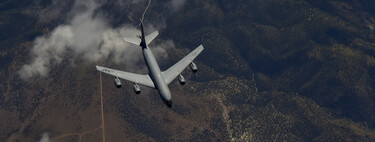
Separated by over 1,500 kilometers, with no shared borders and no direct involvement from neighboring countries, both states have managed to launch attacks across foreign territories. Israel unleashes its aerial might over Iran with a fleet of F-35 , F-15 , and F-16 fighter jets, refueled in midair and operating within foreign airspace with impunity. This level of operational freedom is only achievable because Iran, after years of sanctions, lacks any significant aerial capability to resist. Consequently, every moving object in Iranian skies is considered a potential enemy.
Aerial Warfare of Asymmetries. Historian and Columbia professor Adam Tooze remarked during the weekend that while Israel utilizes jets and guided bombs for precision strikes (including US-made anti-bunker bombs), Iran deploys a more economical, yet ambitious strategy: long-range ballistic missiles. This has created an asymmetrical warfare dynamic. Israel travels thousands of kilometers to drop bombs, while Iran launches missiles capable of traversing that same distance through the air.
As discussed previously, each of these projectiles can cost millions, yet collectively represent a fraction of the value of the Israeli aircraft. Remarkably, these missiles not only reach targets over 1,000 kilometers away but also breach the Kármán line , entering outer space and soaring to altitudes of up to 400 kilometers before descending toward their targets. These exoatmospheric trajectories are unprecedented in actual conflict, representing a direct evolution of the technological legacy of the V-2 rockets from Nazi Germany, which have since been recycled by Soviet and Iranian programs.
The “Star Shield.” Here we find an element that seems plucked straight from fantasy literature . The Israeli response to these cosmic attacks is equally futuristic. Through decades of collaboration with the United States, Israel has deployed the Arrow 3 system, an interceptor capable of neutralizing ballistic missiles in the emptiness of space .
Derived from Ronald Reagan’s SDI program , this system (developed by IAI, Boeing, Elta, and Elbit Systems) operates under the premise of “hitting a bullet with another bullet.” However, this capability comes at a significant cost , approximately $2 million per unit. These interceptors target Iranian missiles at their peak, often before they re-enter Israeli airspace. Notably, the first successful combat interception took place on November 9, 2023 , marking a historic moment as it was the first instance of a missile being destroyed in space during wartime.

Kármán Line
The Dome and Its Price Tag. As noted by Tooze, a striking anecdote reveals the significance of utilizing these *stellar* defenses. During the massive attack in April 2024, over 550 projectiles (including ballistic and cruise missiles) were launched towards Israel. The aerial defense system effectively prevented what could have been a catastrophic event. The tangible outcome from that night was that the population resumed normal activities.
However, the price of such protection is exorbitant: up to $285 million per night in defensive operations, according to the Washington Post . Furthermore, the production of intercepting missiles is limited. Israeli and American factories simply cannot produce enough Arrow 3 units to sustain that pace indefinitely. Thus, a major strategic question in the current conflict is who will exhaust their arsenal first: Iran with its missiles, or Israel with its interceptors.

Europe and Its Shadow. As the United States and its allies closely observe this version of “ Star Wars in reality,” Europe appears determined to act, even convincing Spain to participate.
Months ago, we discussed under the Sky Shield initiative led by Germany, which has ordered Arrow 3 systems worth billions of euros for the much-promoted rearmament desired by the United States. While the Israeli experience does not automatically transfer to continental U.S. territory defense against ICBMs, it does apply to Europe, which views this shield as a response to looming threats.
A New Warfare Paradigm. Underlying this is a notion that first emerged during the drone warfare following the Russian invasion of Ukraine, and has now intensified through the missile conflict between Israel and Iran: the onset of a new military era. Conventional wars that once measured front lines across vast land distances are becoming relics of the past.
Today, war transcends geographical concerns, as attack trajectories encompass continents and atmospheres. Battles unfold from the exosphere down to nuclear facilities excavated deep within mountains. What once appeared as science fiction—intercepting rockets in space, living beneath invisible defensive domes, or coordinating surgical bombings from 1,500 kilometers away—has become a routine part of the arsenal for the world’s most militarized states.
An Unprecedented Experiment. First, it was Ukraine. Now, the conflict between Israel and Iran has confirmed, in strategic terms, a radical rupture—not only due to its breadth or participants but also because of the types of technology employed, the environment in which it unfolds, and the fundamentally technical, automated, and remote nature of its operations.
This is no longer merely a regional confrontation; it marks the beginning of an orbital era of distance warfare, where supremacy is defined through satellite intelligence, space-based ballistic defense , and sustainable industrial capabilities. If one considers it, this conflict reveals a transformation that will redefine how future wars are planned, fought, and remembered.
Image credit: NASA, Universe
In Xataka | To ensure that 125 planes and 14 bombs reached Iran, the U.S. implemented one of the oldest tactics in warfare: deception.
In Xataka | Russia has highlighted a threat looming in the conflict between Iran and Israel: the potential for a nuclear disaster.