
The Luxury Yachts: A Symbol of Wealth and Environmental Concerns
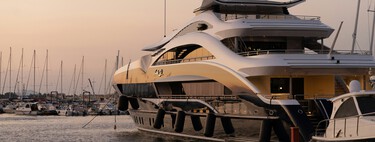
Superyachts have become the ultimate symbol of opulence and status for billionaires, flaunting their financial prowess through these floating mansions. It is unlikely that any of these affluent owners ponder whether the fine woods used for the floors of their colossal vessels are environmentally friendly.
However, one individual questioned this notion and made a curious choice in that regard. Steve Jobs, renowned for his meticulous attention to detail concerning design, opted to replace the banned teak wood from Myanmar with a much more sustainable option: poplar wood sourced from the forests of León, Spain.
Teak: The Traditional Wood for Luxury Yachts
For decades, teak has been the preferred choice for luxury yacht flooring. Its natural beauty and resistance to extreme marine conditions make it a highly valued material. However, the increasing demand for this wood has placed the forests of India, Laos, Myanmar , and Thailand at grave risk, leading to deforestation and environmental exploitation.
Due to the risks of deforestation and unsustainable exploitation, the trade of teak has been banned in many countries . International organizations such as the FAO have warned about its environmental impact and advocated for restrictions to protect these threatened ecosystems.
Despite these prohibitions, teak has continued to flood the luxury yacht market through illegal channels. A notable case involves the Dutch shipyard Oceanco , responsible for constructing the Koru for Jeff Bezos .
Oceanco was fined $150,000 for using teak wood from Myanmar, a country where deforestation is linked to conflicts and severe environmental issues.
This scandal gained further attention because the Koru is marketed as a symbol of innovation and sustainability , while in reality, it utilized practices that contradict those values. The use of illegally sourced teak on Bezos’s yacht has been criticized, especially given that the magnate has received awards for his supposed contributions to environmental preservation .
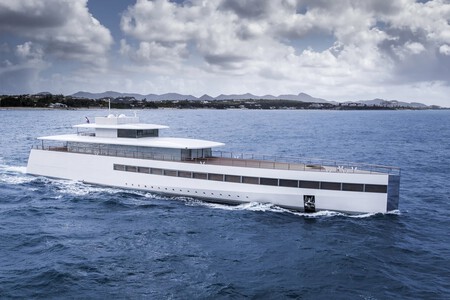
The Superyacht Venus, Designed by Philippe Starck and Steve Jobs
Steve Jobs’ Commitment to Sustainability with Poplar Wood
In contrast to this controversy, Steve Jobs made a markedly different decision for his yacht, Venus . Obsessed with perfection and sustainability , Jobs outright rejected teak from over 60 countries and chose poplar wood from León . This variant of aspen is celebrated for its quality and low environmental impact.
As revealed by the University of León in a specialized forum, both the deck and certain structural elements of Venus were crafted from this local wood, highlighting its versatile applications in luxury yacht construction.
León poplar is highly valued in luxury yacht building due to its strength and lightness , making it an ideal alternative to teak. This choice not only reflects Jobs’s commitment to excellence but also his concern for the planet.
The Apple founder never witnessed the completion of the yacht he designed alongside Philippe Starck , as he passed away in 2011. However, he supervised every detail of the project until his last breath, and the yacht was delivered in 2012.
According to Superyacht Fan , Venus is valued at $120 million . Its sleek silhouette stretches 78 meters in length, showcasing a futuristic aesthetic and cutting-edge technology . The bridge is equipped with seven 27-inch iMacs , and the interior spaces are surrounded by floor-to-ceiling glass, providing exceptional luminosity and openness.
Venus’s interior is understated yet elegant and features systems for lighting, climate control , and even entertainment that can be controlled by iPads , aligning with Apple’s philosophy of delivering intuitive and sophisticated user experiences. It accommodates 12 guests in six cabins and requires a crew of 22 people to operate.
In conclusion, the choices made by Steve Jobs in relation to his yacht highlight the dichotomy between luxury and environmental awareness. While the superyacht industry often plays a part in environmental degradation, Jobs’s commitment to sustainable materials invites thought on how luxury can intersect positively with environmental responsibility.