
Exploring the Fascinating World of Caffeine
Every day, the world consumes approximately 2.25 billion cups of coffee. This beverage is enjoyed not only for its health benefits but also for its unique flavor and, of course, its caffeine content. Caffeine is the most widely consumed psychoactive substance globally and is found in various products beyond coffee, such as tea, sodas, and energy drinks. However, it’s essential to understand that not all caffeinated beverages contain the same amount of caffeine.
Caffeine Content in Different Beverages
The amount of caffeine varies significantly depending on the beverage type, preparation method, and even the processing of the coffee beans. For instance, the espresso stands out as the drink with the highest caffeine concentration.
To illustrate this, a graphical representation provides crucial insights into caffeine levels for various beverages.
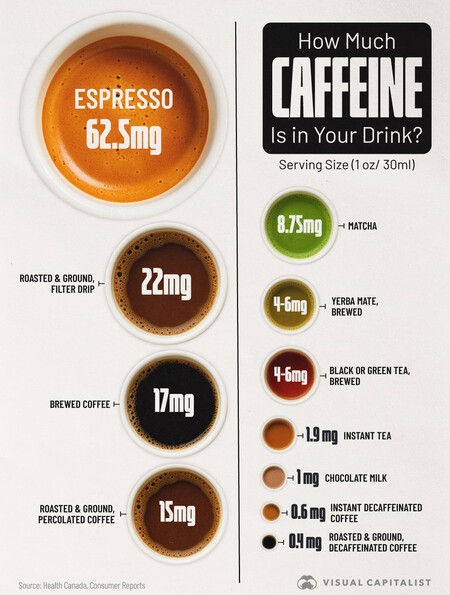
The Numbers Game
There are numerous methods for brewing coffee, including classic Italian espresso, filter coffee, percolation, infusion, and even innovative options like protein or mushroom infusions. The caffeine content in these beverages is influenced by various factors, such as coffee bean type, roasting process, and brewing technique.
Here’s a comprehensive table listing caffeine content across different drinks:
| Beverage | Caffeine per 30 ml |
|---|---|
| Espresso | 62.5 mg |
| Filter Coffee | 22 mg |
| Infused Coffee | 17 mg |
| Percolated Coffee | 15 mg |
| Matcha | 8.75 mg |
| Mate | 4-6 mg |
| Black or Green Tea | 4-6 mg |
| Instant Tea | 1.9 mg |
| Milk Chocolate | 1 mg |
| Decaffeinated Instant Coffee | 0.6 mg |
| Very Dark Roast Decaf | 0.4 mg |
As indicated by data from studies by Health Canada and Consumer Reports, espresso reigns supreme regarding caffeine concentration, boasting almost four times more caffeine than its nearest competitor: the coffee filter. When compared to black tea, espresso has twelve times as much caffeine. While other brewing methods yield similar caffeine levels, they still fall short compared to the popular matcha or other teas.
The Italian Tradition of Espresso
It’s no surprise that espresso has the highest caffeine concentration. This beverage emphasizes an intense and robust flavor, thanks to its brewing technique, which optimizes caffeine extraction. Historically, espresso was designed for quick consumption, enabling drinkers to enjoy it while continuing their day.
In Italy, espresso is often consumed without milk and can be likened to a quick caffeine shot—a brief pause and a surge of energy are all part of the experience. This traditional beverage serves a practical purpose, making it more than just a drink; it’s a lifestyle.
Understanding the Impact of Serving Size
While espresso may have the highest caffeine content per volume, it’s important to remember that serving size matters significantly. The 30 ml serving size of espresso is relatively small, which means that larger drinks can deliver more caffeine overall.
For example, a cold brew served in a large glass exceeding 300 ml can contain between 200-280 mg of caffeine due to prolonged brewing times. Filter coffee is typically served in larger volumes, providing between 95-150 mg per cup. Similarly, a French press can yield between 80-100 mg of caffeine.
Comparing Caffeine Per Liter
According to a study from Newcastle University, espresso is the queen of caffeine when measured by concentration. Still, when evaluating the total volume consumed, other coffee preparations can surpass espresso’s caffeine contribution. The following table demonstrates caffeine content per liter for various brewing methods:
| Beverage | Caffeine per Liter |
|---|---|
| Espresso | 4,200 mg |
| Cold Brew | 2,240 mg |
| Moka | 2,192 mg |
| French Press | 742 mg |
| Drip Coffee | 692 mg |
How Much Caffeine is Too Much?
Increasingly, studies suggest that caffeine is not as harmful as once believed. For adults, a single dose of 200 mg is deemed safe, with a maximum of 400 mg being generally acceptable. However, recommendations differ for pregnant or breastfeeding women, who should limit their intake.
Ultimately, the proper amount of caffeine can depend significantly on individual factors, such as metabolism, sleep patterns, and physical activity—making it an integral aspect of personal health management.
In summary, the nuances of caffeine consumption reveal a complex landscape where quality and quantity intersect. From the intensity of espresso to the milder flavors of infused teas, the versatility of caffeine continues to fascinate. Understanding these intricacies allows us to appreciate our favorite brews even more, creating opportunities for informed choices around this beloved beverage.