
3D Printing Revolutionizes Space Exploration
In a groundbreaking achievement, the European Space Agency (ESA) has successfully created a metal object in space using a 3D printer aboard the International Space Station (ISS). This feat is not merely a technical success; it signals a pivotal turn in space exploration, enhancing the potential for greater autonomy during future missions. This article delves into how this astounding accomplishment was made possible and its implications for the future of space travel.
A Historic Technological Milestone
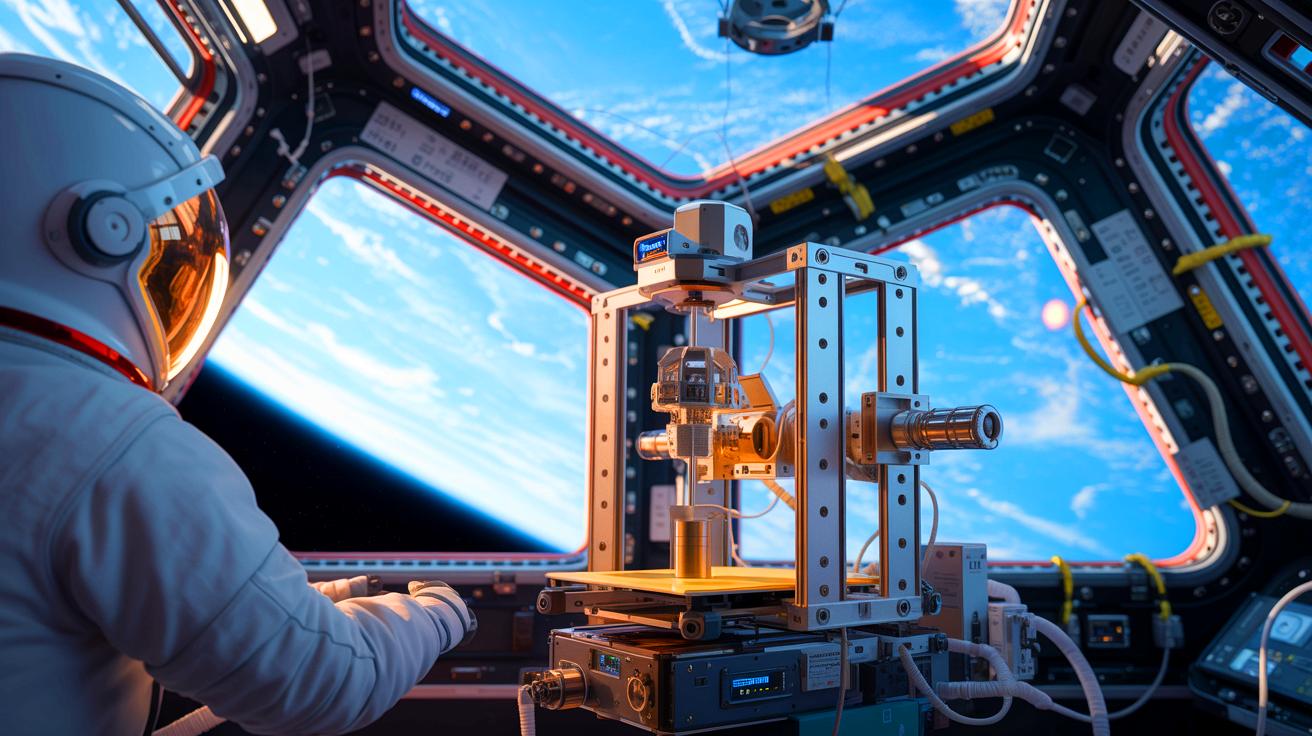
The metallic object was produced with a 3D printer designed by Airbus Defence and Space in collaboration with the ESA. This marks the first instance where an object has been created in microgravity , highlighting the advances in 3D printing technology in space. The printer, installed in the Columbus module of the ISS by astronaut Andreas Mogensen , has already created several items including an ‘S’-shaped component and two complete samples. These milestones contribute to the ongoing evolution of this technology, showcasing its untapped potential in the arena of space exploration.
Currently, ESA scientists are analyzing these samples to understand how microgravity affects the printing process. This analysis is crucial for developing future space missions, potentially enabling astronauts to fabricate essential parts and tools on demand, thereby reducing the reliance on supply missions from Earth.
Path to Space Mission Autonomy
The ability to print metal objects in orbit is just the beginning. This innovation is a significant step toward self-sufficiency in long-duration space missions. The capability to manufacture spare parts or tools directly in space could radically transform mission planning and execution. With decreased need for transporting vast inventories of spare parts, 3D printing could lighten payloads and reduce mission costs.
The ongoing analyses could lead to even more ambitious applications. Building structures directly in space may soon become achievable, opening new avenues for expanding human presence beyond our planet. This marks a crucial point in collaborative efforts between space agencies and industry stakeholders, underscoring the importance of technological innovation for future space exploration.
The Technology Behind Space 3D Printing
The process of metallic 3D printing in space employs techniques akin to those used on Earth but tailored to microgravity conditions. A laser melts metal powder layer by layer to construct the desired object. However, managing metal powder in the absence of gravity is challenging; special systems are required to contain and direct it effectively.
3D printers must be specifically designed to operate under these unique conditions, necessitating innovations in material science and engineering design. This technology allows for on-demand production of parts by sending designs from Earth. Consequently, it reduces the need for significant inventory of spare parts, optimizing the efficiency of space missions.
Future Implications for Space Exploration
The practice of 3D printing in space demonstrates unparalleled technological potential for transforming how we explore and utilize our universe. This advancement is a critical milestone, not only for space missions but also for international collaboration in space exploration. By enabling the autonomous manufacture of vital components in space, this technology has the potential to become an essential pillar of future missions, especially those aiming for distant destinations like Mars .
As scientists continue to evaluate the printed samples, one question looms large: How will these technological advancements shape the planning and execution of upcoming space missions? Will the coming decades usher in a genuine era of autonomous space exploration ?
This article leveraged insights from artificial intelligence to provide a comprehensive overview of current advancements. As we venture into an exciting phase of space exploration, the integration of innovative technologies like 3D printing could indeed redefine our capabilities and visions for the cosmos.