
The Impact of Karol Nawrocki’s Victory on Poland’s Political Landscape
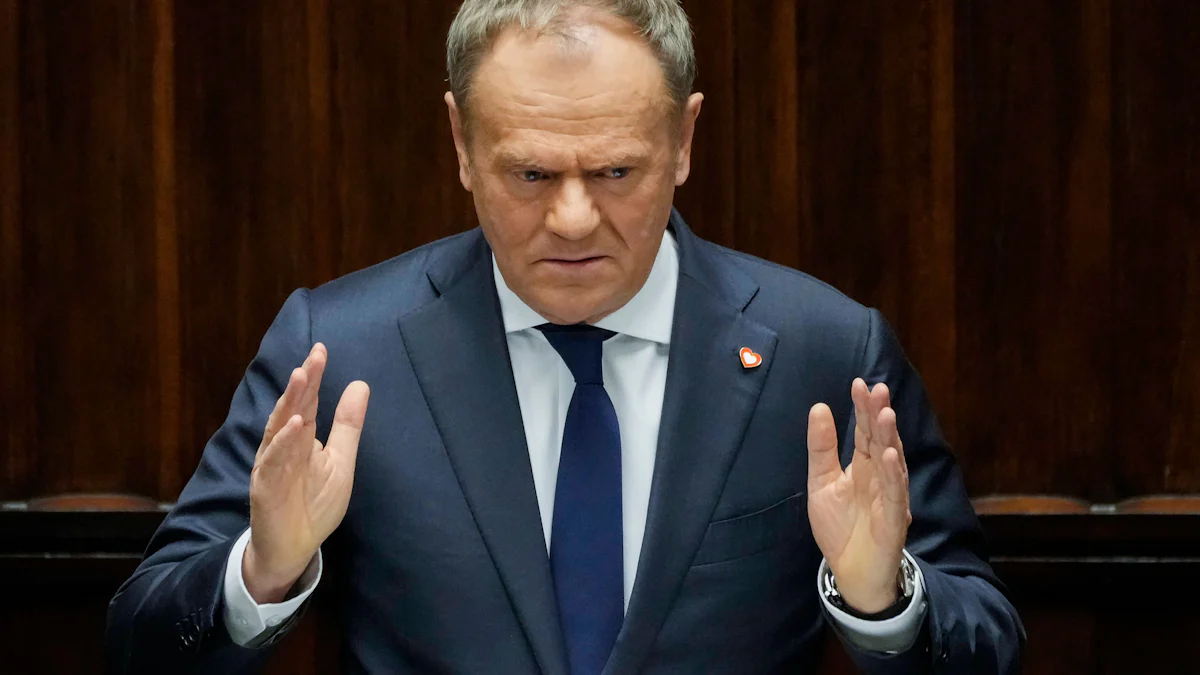
The recent victory of opposition presidential candidate Karol Nawrocki in Poland marks a pivotal moment in the nation’s political arena, significantly impacting the pro-European government led by Donald Tusk. In a recent address to Polish television, Tusk indicated that he would soon present a confidence vote in Parliament to navigate the turbulent waters ahead. With Nawrocki assuming the presidency, the Tusk administration faces pressure to unite and exhibit courage within their three-party coalition. This confidence vote is set to be an essential test of the government’s resolve in adapting to new political dynamics.
The Context of the Presidential Election
During Sunday’s runoff for the Polish presidency, Rafal Trzaskowski, supported by Tusk, narrowly lost to Nawrocki, who was backed by the right-wing Law and Justice Party (PiS). This outcome represents a significant defeat for Tusk and his coalition, prompting PiS leader Jaroslaw Kaczynski to declare the election results a “red card” for the Tusk government, urging it to step down. The loss not only weakens Tusk’s position but also ignites fresh debates regarding the administration’s future and its ability to implement its agenda effectively.
Tusk’s Coalition and Challenges Ahead
Since late 2023, Tusk has led a center-left alliance with three political parties at the helm of the Polish government. A primary objective for Tusk’s administration is to reverse the judicial reforms enacted by the PiS from 2015 to 2023, which severely compromised the rule of law. However, the current president, Andrzej Duda, who hails from the PiS, has been blocking pertinent legislative drafts aimed at restoring judicial integrity. Observers speculate that Nawrocki may adopt a similar or even more stringent stance against opposition efforts, raising concerns about potential fractures within the coalition and increased tensions.
Tusk, while addressing these pressures, acknowledged the importance of collaboration with the new president where feasible: “In accordance with the constitution and our conscience, we will cooperate with the new president wherever necessary and possible,” he said. However, he emphasized the government’s determination, stating, “Everyone will see that the government does not intend to take a single step back.”
The Role of the Polish Presidency
In Poland, the president wields more power than the federal president in Germany, playing a crucial role not only as a representative of the nation on the international stage but also in shaping foreign policy. The president holds the authority to appoint the prime minister and the cabinet, and in times of war, serves as the commander-in-chief of the Polish Armed Forces. Significantly, the president possesses a veto power that can complicate the government’s legislative efforts immensely.
For the Tusk administration, overturning any presidential veto requires a substantial legislative majority of 60% in Parliament—an achievement that currently lies beyond the coalition’s reach. This underscores the critical need for strategic maneuvering and potential negotiations with Nawrocki’s camp moving forward.
Implications for Polish Society
The political shift brought about by Nawrocki’s election is not only a matter of governance but also speaks volumes about the societal sentiments prevalent within Poland. Voter preferences have demonstrated a growing inclination toward more conservative policies, signaling a substantial ideological rift that Tusk’s coalition must navigate with dexterity. The previous administrations of the PiS have resonated with a significant portion of the population who are concerned about the liberal reforms and immigration policies championed by the Tusk government. Therefore, navigating these sensitive issues will require a delicate balance, reaffirming Tusk’s commitment to pro-European values while addressing local concerns.
Looking Ahead: The Road for Tusk and Nawrocki
Given the current political landscape, both Tusk’s coalition and Nawrocki’s administration must brace for a complex journey ahead. As the first confidence vote looms, all eyes will be on the parliament to see whether Tusk’s coalition can sustain itself amid the pressure from the newly elected president. The intricate interplay between governance, societal demands, and potential legislative impasses will define not just the immediate future of Polish politics but also shape its long-term trajectory.
In conclusion, the rise of Karol Nawrocki as Poland’s president introduces a new chapter filled with both challenges and opportunities. Tusk’s government must now strategically navigate these changes, ensuring it remains resilient against the opposition while staying true to its core principles of rule of law and democratic integrity. The evolving political dynamics will undoubtedly keep Poland under the watchful gaze of its citizens and international observers alike.