
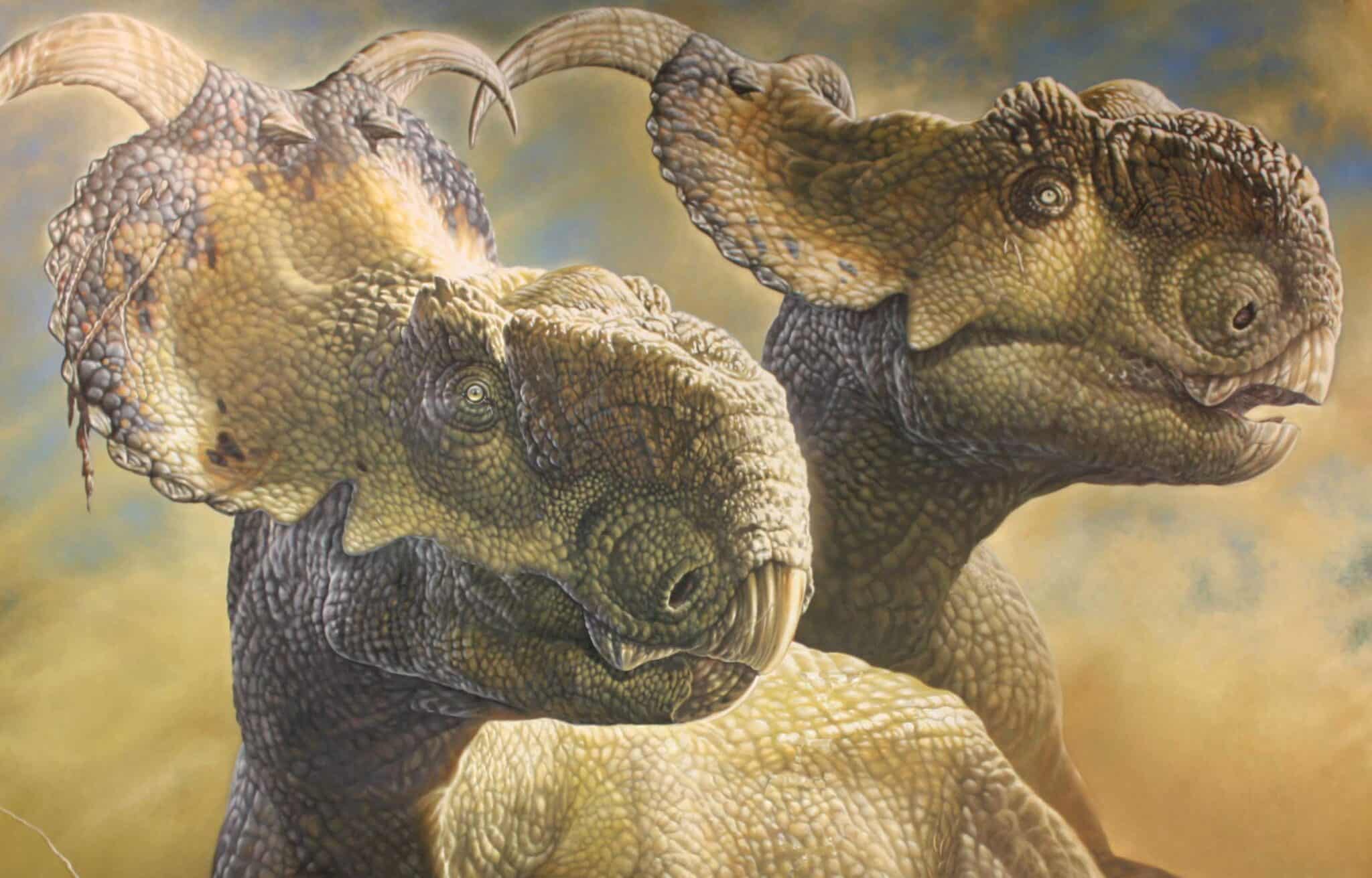

In the northwestern region of Alberta, Canada, a remarkable paleontological discovery continues to captivate scientists and dinosaur enthusiasts alike. On just a single kilometer of land, paleontologists are methodically extracting thousands of fossilized bones belonging to a single type of dinosaur: the Pachyrhinosaurus , a massive herbivore from the Ceratopsidae family, cousin to the famous Triceratops.
This site, nicknamed the “river of death,” is now considered one of the most densely packed fossil sites in the world. Indeed, over 8,000 bones have been unearthed so far, covering an area approximately the size of a football field. But beyond the impressive numbers, it’s the mystery behind this prehistoric disaster that fascinates researchers.
A Discovery Born from Luck
In 1974 , a Canadian high school teacher stumbled upon the first fossils at the Pipestone Creek site. Since then, excavation efforts have intensified. Today, the site attracts a team of scientists, students, and volunteers each summer, equipped with jackhammers and brushes to delicately uncover the remnants of a distant past. Nearby, a museum has even been constructed to house the findings and share this scientific adventure with the public.
A Whole Herd Decimated in an Instant
The fossils found all originate from the Pachyrhinosaurus , an imposing herbivorous dinosaur that roamed the earth approximately 72 million years ago . Equipped with a broad beak, a prominent nasal bump, and an ossified fringe at the back of its skull, this dinosaur differed from its relatives with a more massive than horned facial structure. It was not a predator; rather, it likely lived in migratory herds across the plains of present-day Alberta.
According to paleontologist Emily Bamforth, who leads part of the excavations, all these bones seem to belong to the same catastrophic event, a prehistoric tragedy that may have wiped out an entire herd in mere moments.
A Hypothesis: The Flash Flood
While the exact cause of this event remains unknown, researchers believe they have a lead. Geological clues, such as layers of spiral sediments typical of flowing waters, suggest that a sudden flood may have struck the herd. Perhaps a torrential storm in the nearby mountains triggered a rapid surge of water, sweeping away trees, rocks, and dinosaurs in its path.
“These animals were enormous, not very fast, and likely uncomfortable in the water,” explains Bamforth to the BBC. Trapped in the mud and unable to escape, they may have been submerged en masse, their bodies mingling with sediments to create this true “river of dead” fossilized.
A Goldmine for Paleontology
This unique site continues to provide researchers with a treasure trove of information regarding the lives of social dinosaurs. Studying individuals that perished together allows scientists to better understand group behaviors , migrations, and responses to natural disasters.
Each section of the site can contain hundreds of bones, some perfectly preserved. This allows for the reconstruction of complete skeletons, the study of pathologies , bone growth, and differences between juvenile and adult individuals.
As layers of earth are cleared away, this giant cemetery narrates the tragic yet invaluable story of a bygone era.
A Tragedy Turned Scientific Triumph
What was once a natural disaster is now an invaluable source of knowledge. At Pipestone Creek, science breathes life back into these long-extinct giants. Thanks to them, we gain a deeper understanding of how the Earth, its climates, and its inhabitants have evolved over millions of years.
General News – 2