
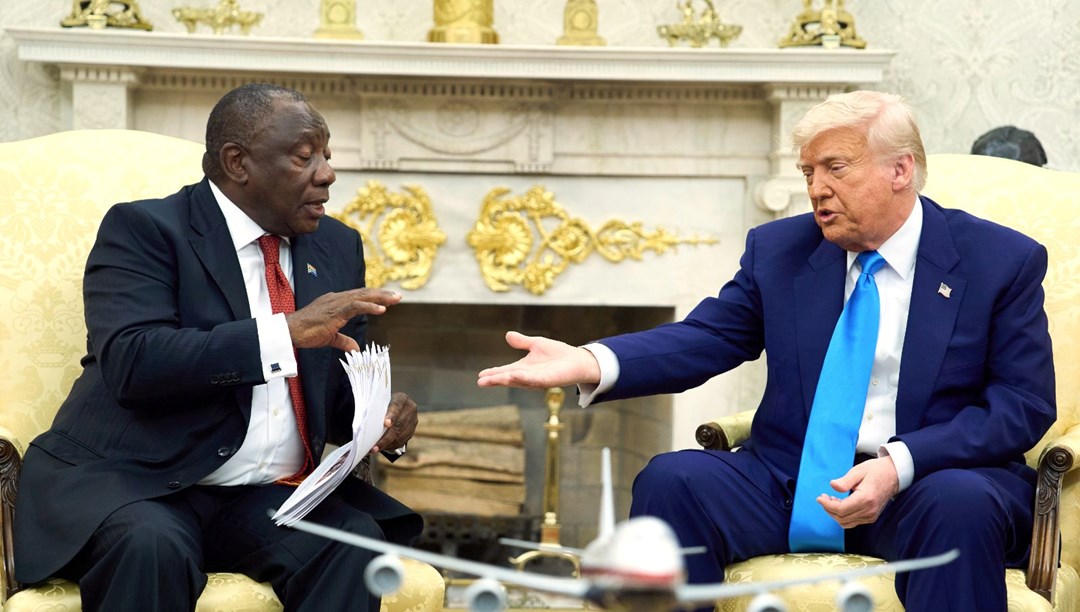
Ramaphosa’s Controversial Visit to the United States
South African President Cyril Ramaphosa recently undertook a visit to the United States, where he faced widespread scrutiny over allegations related to the murder of white South Africans and the expropriation of their lands. This visit echoed Ramaphosa’s unexpected remarks to Ukrainian President Volodymyr Zelensky earlier this year, demonstrating the fraught and complex nature of international politics.
Diplomatic Talks Turned Contentious
The visit began with discussions on trade and strategic minerals between Ramaphosa and US President Donald Trump. Initially characterized by a congenial atmosphere, including light-hearted conversations about golf, the tone soon shifted dramatically. Accompanying Ramaphosa were renowned South African golfers Ernie Els and Retief Goosen, who added a unique flavor to the diplomatic discussions.
However, the setting turned dramatic in the Oval Office, as Trump presented a selection of videos claiming that white South Africans are experiencing serious persecution. These visuals included footage of graves reportedly marked for white individuals, insinuating that their lives are under threat. Trump asserted, "People are leaving South Africa for their safety. Their land is being taken, and in many instances, they are being killed."
The Role of Media in Political Narratives
The video presented by Trump featured testimonies and exaggerated rhetoric from certain opposition leaders. Notably, Trump called for the arrest of one such opposition figure, Julius Malema, suggesting his inflammatory remarks incite violence. Throughout this segment, Ramaphosa remained largely composed, at times looking away from the screen, expressing his unfamiliarity with the footage shown, and seeking clarity on its origins.
Trump interrupted the South African leader, remarking that "farmers are not black," attempting to downplay the broader context of crime in South Africa, where Ramaphosa indicated that a significant number of crime victims are black. Ramaphosa’s diplomatic response highlighted his intent to discuss these sensitive issues further, signaling a desire for constructive dialogue amid intense tensions.
Trump’s Outburst Against NBC News
The situation escalated further when an NBC News reporter asked about the aircraft gifted by Qatar to the US during these discussions focused on serious matters. Trump reacted angrily, accusing the reporter of attempting to distract the conversation with irrelevant queries. In a scathing critique, he labeled the journalist, Peter Alexander, as a "terrible reporter" lacking the necessary qualities to be in journalism.
Trump claimed that media outlets like NBC News, along with other "fake news" channels, were ignoring critical narratives about the "genocide" of white farmers in South Africa. Instead, they focus on topics that could potentially be used against him, such as the Qatari jet. Referring to the reporter as "stupid," Trump maintained his stance that the media fails to represent the realities facing South Africans accurately.
The Underlying Tensions in South African Politics
Ramaphosa’s composed demeanor in face of accusations serves to highlight the complex political landscape in South Africa. The ongoing discourse surrounding land reform and historical injustices remains a deeply polarizing issue. The global spotlight on these topics often simplifies the nuances involved in the nation’s socio-political fabric.
The accusations brought forth by Trump reflect broader conservative narratives in the United States about South Africa. Many in the US amplify these claims without comprehensive knowledge of the historical and social contexts that shape such issues in South Africa. The reality is that, while violent crimes are an issue in South Africa, the racial dynamics are intricate, involving multifaceted layers that cannot be boiled down to simplistic narratives.
The Future of US-South Africa Relations
This diplomatic encounter has the potential to recalibrate relations between the two nations. While both countries engage in economic partnerships that could benefit from mutual understanding, the issues of race, land, and historical injustices will require meticulous navigation.
Ramaphosa’s ability to maintain his composure, amidst harsh scrutiny and accusations, demonstrates a strategic approach to international diplomacy. It suggests that he aims to foster understanding rather than conflict, possibly paving the way for more constructive relations moving forward.
Overcoming the challenges presented during this visit will demand open dialogue and a commitment to address the underlying issues that plague both nations. As global complexities intertwine with local realities, the implications for South Africa and its populace are profound, and how they are managed will ultimately define the trajectory of bilateral relations.