
Cyril Ramaphosa’s Controversial Visit to the U.S.
During a recent visit to the United States, South African President Cyril Ramaphosa found himself in a contentious dialogue concerning allegations of mass killings of white farmers and land confiscations in his home country. These claims echo Ramaphosa’s earlier unexpected remarks directed towards Ukrainian President Volodymyr Zelensky back in February, prompting scrutiny on whether his approach to handling international controversies is effectively serving South African interests.
Meeting with President Trump
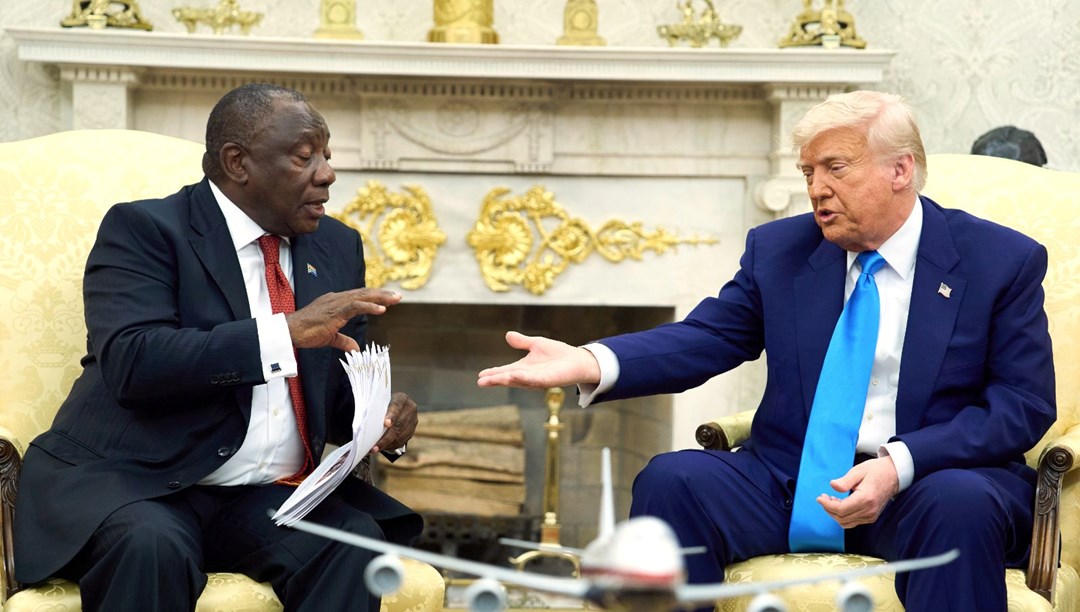
Ramaphosa came to the U.S. primarily to discuss trade and strategic minerals with President Donald Trump. Initially, the meeting seemed to foster a friendly atmosphere, even featuring discussions about golf, a shared interest between the two leaders. Accompanying Ramaphosa were renowned South African golfers Ernie Els and Retief Goosen, which added a layer of light-heartedness to the encounter. However, this amicable atmosphere quickly dissipated as the focus shifted to serious allegations relating to violence against white farmers in South Africa.
Unexpected Turn of Events
What started as a cordial meeting took a dramatic turn during a televised broadcast from the Oval Office. Trump presented footage and newspaper clippings that claimed to highlight the suffering of white South Africans, attempting to substantiate his assertion that "people are fleeing South Africa for their safety" and "their land is being taken." He added that in "many instances, they are being killed." This pointed rhetoric marked a stark contrast to the earlier light-hearted exchanges, creating an uncomfortable atmosphere for Ramaphosa.
The video Trump showcased prominently featured scenes allegedly depicting graves marked with white crosses, purportedly signifying the victims of violence against farmers. It included inflammatory statements from certain opposition leaders, provoking Trump to call for the arrest of one individual, Julius Malema, whom he deemed particularly incendiary.
Ramaphosa’s Reaction
As Trump aired the controversial video, Ramaphosa largely maintained his composure. He occasionally glanced at the screen but otherwise reacted with a degree of stoicism, stating that he had not seen such footage before and expressed an eagerness to understand its origin. When Trump attempted to amplify a narrative of violence by referencing newspaper articles claiming "death, death," Ramaphosa shifted the dialogue back to the broader context of crime in South Africa, noting that a significant number of crime victims in the country are black.
However, Trump interrupted him, declaring, "Farmers are not black," which led Ramaphosa to offer a measured response: "We are ready to discuss these concerns with you." This exchange illustrated not only the complexity of the issues at hand but also Ramaphosa’s attempt to steer the conversation back towards a more balanced perspective.
Context of Violence in South Africa
The backdrop to this meeting is a deeply rooted narrative surrounding violence in South Africa, particularly against farmers, which has historical ramifications tied to the apartheid era. Many argue that while violence and land reform are significant issues, the narratives presented by various parties, including those like Trump, tend to oversimplify the complexities at play. Although some white farmers have faced violence, it’s essential to recognize that the crime statistics reflect a broader issue that disproportionately affects black South Africans.
The rise in farm attacks has prompted debates over land redistribution policies in the country, which many see as a contentious yet crucial aspect of redressing historical injustices. Thus, while Trump’s intentions may have been to rally support for white South Africans, they also risk diverting attention from the larger issue: equality and justice for all individuals in South Africa.
Trade and Strategic Minerals
Ramaphosa’s visit aimed to underline the economic ties between the U.S. and South Africa, particularly concerning strategic minerals such as platinum, gold, and diamonds. These resources are vital not only for the South African economy but also for U.S. technological advancements and energy solutions. In this respect, Ramaphosa attempted to navigate a difficult conversation while underscoring the importance of collaboration between the nations.
Despite the fraught dialogue, Ramaphosa did not shy away from restoring focus on trade relations, aiming to reflect the potential for growth and partnership beyond the contentious debates on violence and land ownership.
A Balancing Act
This meeting reveals the delicate balancing act that Cyril Ramaphosa must perform on the international stage. While he strives to defend South Africa against oversimplified narratives, he also aims to foster stronger economic relationships and rectify historical injustices. Ramaphosa’s composed demeanor during this politically charged encounter demonstrated both his commitment to diplomacy and his awareness of the nuanced complexities facing his country.
Navigating international criticism while advocating for economic growth is an arduous task, yet it is one that is essential for the future stability of South Africa. As global interest in the nation’s situation continues to rise, effective communication and diplomacy will remain crucial components of Ramaphosa’s leadership.