
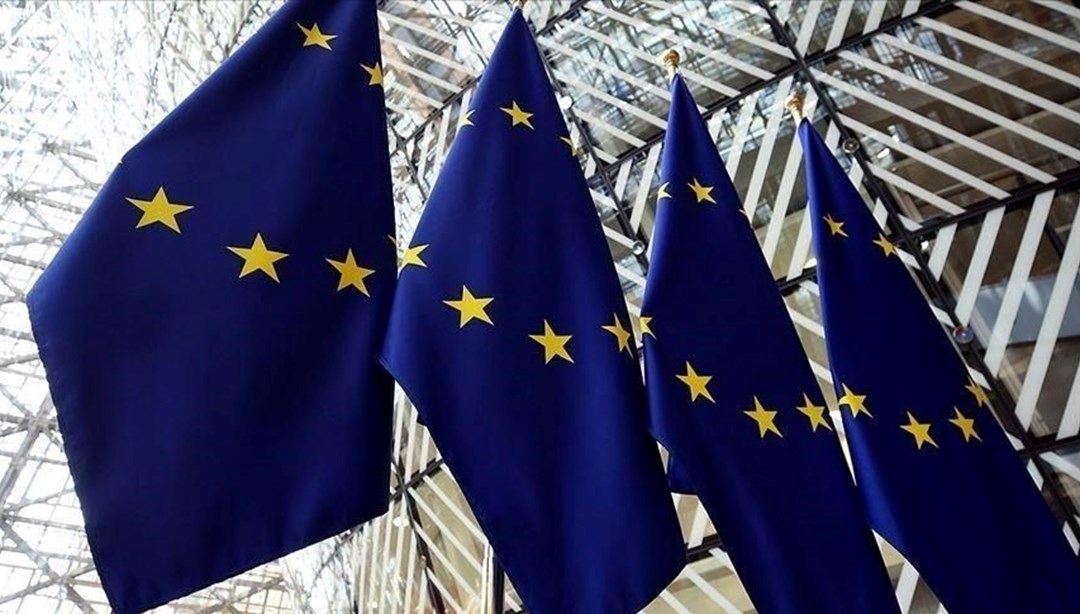
AP General Assembly Session on Israel’s Gaza Plans
The **European Parliament’s General Assembly** held a session titled “The EU’s Response to Israel’s Plan to Take Over Gaza: Effective Humanitarian Support and the Release of Prisoners.” During this session, intense debates erupted between lawmakers voicing concerns about Israel’s **blockade** on Gaza and those expressing support for Israel.
Contentions Among Lawmakers
In a polarized atmosphere, right-leaning lawmakers expressed strong reactions against their colleagues sporting **kaffiyehs** and **Palestinian flags**. Finnish MEP **Sebastian Tynkkynen** from the far-right ECR group suggested, “We should also come with Israeli flags.” His statement highlighted the ongoing tensions surrounding the conflict. In contrast, **Lynn Boylan**, an Irish lawmaker from the left group, reminded attendees that similar expressions of solidarity—like wearing **Ukrainian flags**—had been common in previous discussions.
Session Chair **Sophie Wilmes** frequently intervened, acknowledging the **sensitivity** of the topic and recognizing that patience was running thin among members. Some lawmakers used their one-minute speaking slots to remain silent, symbolically protesting the EU’s **silence** regarding allegations of **genocide**.
Pushing for Action on Israel’s Association Agreement
MEP **Iratxe Garcia Perez**, representing the Socialists and Democrats group, criticized the EU Commission’s decision to review its **Partnership Agreement** with Israel, stating it was insufficient and called for an immediate end to the partnership. “We must act now. I don’t want to be on the wrong side of history as a European,” Perez asserted, invoking a sense of urgency among her fellow lawmakers.
Criticism of Justifying Violence
While addressing those supporting Israel, **Benedetta Scuderi** from the Greens group declared, “There is no justification for killing children.” Her powerful statement underscored the moral complexities surrounding the actions taken by both sides in the ongoing conflict. Furthermore, **Hilde Vautmans**, a Belgian MEP from the Renew group, emphasized that the EU would scrutinize whether Israel violated human rights as part of its review of the Partnership Agreement. “Even **Donald Trump** acknowledged that the suffering of infants and children results from Israeli actions,” she remarked, framing the discussion within a larger context of accountability.
The Need for Immediate Action Against Violence
MEP **Villy Sovndal**, also from the Greens group, insisted, “We need no more evidence,” calling for an immediate cessation of the EU’s partnership with Israel without further review. His comments illustrated a growing frustration with the **inactivity** perceived by some lawmakers in response to ongoing violence.
**Joao Oliveira**, a Portuguese lawmaker from the left group, directed his remarks at those supporting Israel, stating, “You come here repeating **Netanyahu’s** arguments and defending Israel’s crimes. This makes you an accomplice.” His words encapsulated the sentiment of many who feel that enabling harmful policies equates to complicity in human rights violations.
The Importance of Actions Over Words
Filipina descent politician **Rima Hassan**, a member of the left group, shared a personal narrative about losing family members during the **Nakba** and referred to the **Gaza** population as the children of Nakba victims, emphasizing their ongoing suffering. “What matters now is not what you say but what you do. A surgeon in Palestine told me that the only thing left to do is ‘civil disobedience’,” she conveyed, calling for active engagement rather than passive rhetoric.
Empowering the Public to Influence Policy
**Abir Al Sahlani**, an Iraqi-Swedish MEP from the Renew group, framed the EU’s decision to review its partnership with Israel as a victory resulting from months of public protests. She encouraged citizens: “We are in a moment that will shape history. Don’t stop; write to your representatives, call your government, and email your officials. Pressure them to suspend the Partnership Agreement with Israel during the review process. Allow the people of Europe to be the ones who **write history**.” Her impassioned plea highlighted the need for civic engagement and urged people to take their advocacy beyond the parliamentary walls.
Conclusion
The heated exchanges during the session reflect a complex landscape of opinion within the European Parliament regarding the ongoing crisis in Gaza. The divergence of views—ranging from calls for immediate action to those advocating continued support for Israel—highlight the challenges in achieving a **unified response** to one of the world’s most enduring conflicts. As public pressure mounts and legislative discussions intensify, the future of the EU’s role in the Israeli-Palestinian conflict remains uncertain yet critical.