
50,000-Year-Old DNA Discovery in Sub-Saharan Africa
The Paradigm Shift in Ancient DNA Research
For decades, the belief that warm climates in Sub-Saharan Africa hindered the preservation of ancient DNA has constrained this region’s contribution to genetic history. Unlike colder climates such as those found in Siberia and Northern Europe, where ancient genetic remains have been routinely recovered, the harsh heat of Africa seemed an insurmountable barrier. This long-held dismissal of Africa’s potential for ancient DNA research was challenging widely held assumptions in the scientific community.
New Findings Challenge Previous Assumptions
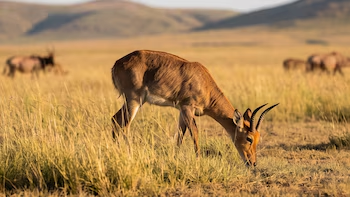
A groundbreaking study led by the University of Copenhagen, in collaboration with South African and Canadian institutions, has shattered this misconception. The study reveals that under specific conditions, genetic material can survive for tens of thousands of years, even in warm environments. The key finding involved sequencing DNA extracted from a 50,000-year-old tooth of a mountain chamois (Redunca fulvorufula), a species of antelope that roamed the African landscape long ago.
Implications for African Genetic History
This discovery marks the oldest genetic material recovered in sub-Saharan Africa, significantly enhancing our understanding of the continent’s natural history. This ancient DNA may provide invaluable insights into the evolutionary pathways of species and their adaptation strategies through time. The results necessitate a reevaluation of previously ignored fossil evidence, as they suggest that many specimens might still hold valuable genetic information.
Methodology: A Systematic Approach
The research involved a meticulous examination of 320 fossils from various paleontological sites in South Africa, particularly the Paleo-Agulhas region. These fossils were not only analyzed for their DNA but also underwent a detailed study for collagen preservation. The methodologies included using 3D imaging and bioinformatics techniques to eliminate modern contaminants, confirming the legitimacy of the findings.
Key Factors for DNA Preservation
The study outlined critical factors influencing DNA preservation:
- Age of the Fossil: Older fossils demonstrated better retention of genetic material in some cases.
- Microclimate: The specific environmental conditions under which fossils were buried significantly impacted conservation.
- Chemical Properties of Sediment: Composition and moisture levels of burial environments played a crucial role in the preservation of DNA and collagen.
The Study’s Findings at a Glance
Approximately 45% of the fossils examined yielded identifiable DNA, a considerable landmark. Not only were Holocene era specimens analyzed, but four fossils, including the ancient mountain chamois tooth, yielded usable genetic material. This advancement paves the way for future paleogenomic studies in Africa, previously viewed as a difficult terrain for such research.
Broader Impact on Evolutionary Studies
While the results do not suggest that DNA from species over a million years old can be sequenced, they open new avenues for understanding Africa’s genetic landscape. This includes insights into animal populations during the last ice age and evolutionary changes across ecosystems, as well as implications for human evolution.
The evolving narrative around ancient DNA in Africa underscores the continent’s potential to contribute significantly to the global understanding of genetics, evolution, and the historical context of species. This study is a monumental leap toward reconstructing a more comprehensive picture of the world’s biological history and its ongoing impact on our species today.