
The Urban Family Tree of Usera District in Madrid
Madrid, like many large modern cities, has expanded by incorporating neighboring towns, each carrying its own unique history. One such area, Usera, located south of Madrid, stands out for its intriguing connection to a notable family whose history is etched into the very names of its streets. With a population exceeding 143,000 by 2023, the district is a vivid example of how urban development intertwines with personal legacy.
Usera: A Cultural Melting Pot
Today, Usera is celebrated for its multicultural vibrancy, particularly highlighted during the Chinese New Year festivities organized by the local Chinese community residing in the area. Yet, beneath this modern façade lies an intriguing peculiarity in its street names—Usera itself appears frequently, a reflection of the family lineage that shaped the district.
The Historical Roots of Usera
Tracing back to the late 19th century, the story begins with José del Río, affectionately known as “Uncle Sordillo.” This landowner bestowed lands north of Villaverde upon his daughter, Carmen del Río Fernández. Carmen’s marriage to Marcelo Usera in 1904 marked the fusion of two influential families.
Marcelo Usera, a military man and adept manager, transformed his wife’s inherited lands into prosperous enterprises. As a lieutenant colonel, he gained prominence while simultaneously nurturing the agricultural legacy left to him.
A Vision for Affordable Housing
Despite initial successes in livestock management, it became apparent that the south Madrid lands were unsuitable for traditional farming. Inspired by the Marquis of Salamanca’s successful urban project, Usera pivoted towards creating a working-class neighborhood featuring affordable housing, bolstered by the Cheap Houses Law of 1911. This initiative not only transformed rural land but also allowed Usera to capitalize on land appreciation without suffering the economic woes faced by his predecessors.
The Family Tree in the Street Map
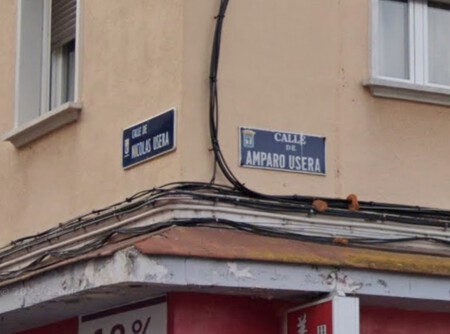
Usera’s streets became a living tribute to family heritage. Initial names reflected illustrious military figures closely associated with Marcelo, but as the street-naming process evolved, his own family stepped into the limelight. Streets like Nicolás and Mariano Usera pay homage to Marcelo’s brothers, while a central avenue, Marcelo Usera Street, serves as the neighborhood’s backbone.
Corner of Amparo Usera and Nicolás Usera streets
Marcelo honored his wife Carmen through a dedicated square, while other family members like Amparo and Isabelita Usera were immortalized in street names. Friends and community members also received this honor, transforming Usera into an intricate tapestry of tributes.
Honoring Contributions Beyond the Family
Usera’s legacy extends beyond familial connections; it also acknowledges those who contributed to the district’s development. Pioneers like Gumersinda Rosillo and Jesús Montoya were among the first inhabitants, celebrated for their roles in the community’s establishment. Even figures like Máximo Carazo, the first pharmacist, who provided clean water, are etched into the neighborhood’s memory.
A Lasting Legacy
The Usera district exemplifies how history, culture, and community intertwine in urban development. Every name on the street map reflects not only a family tree but also a narrative of resilience, ambition, and the enduring legacy of individual contributions. In this unique blend of personal and communal history, Usera stands as a monument to the idea that family legacies can persist long after their time, resonating through the very streets we walk today.