
Mark Zuckerberg’s Bold Move: Building AI Data Centers in Tents
Mark Zuckerberg is on a mission to elevate his company, Meta, to new heights in the race for artificial intelligence (AI) . With his sights set on building a superintelligence team , Zuckerberg has amassed the talent needed to navigate this highly competitive field. However, talent acquisition is just one facet of his ambitious plan. The real challenge lies in harnessing substantial computational power to facilitate groundbreaking AI developments. This urgency has led to a rather unconventional strategy: constructing data centers in outdoor tents .
As astonishing as it sounds, Meta’s desire for rapid progress is finely tuned to its unique operational rhythm, which involves erecting its data centers at unprecedented speeds. In a bid to bolster their computational capacity amidst pressing demands, outdoor tents have been employed as temporary, agile solutions. While this unconventional choice raises eyebrows, it is a calculated decision made to ensure that the integration of the equipment does not compromise the system’s energy efficiency and cooling sustainability. The decision to utilize tents, especially during summer, may seem counterproductive given the heat management challenges, yet this reflects Meta’s willingness to take bold risks in pursuit of innovation.
Zuckerberg Follows Musk’s Footsteps
The urgency behind Zuckerberg’s tactics is reminiscent of a rival in the AI arena : Elon Musk. Musk previously captured headlines by installing an astounding 100,000 Nvidia GPUs in a mere 19 days, a feat that left executives such as Jensen Huang in awe. According to a report from SEMIANALYSIS, Zuckerberg’s hurried approach has been significantly influenced by Musk’s rapid strides in AI, particularly with XAI and Tesla . Facebook has a storied legacy of embracing a “move fast and break things” policy, and it appears that this philosophy remains deeply embedded within the company’s DNA, now echoing a similar sentiment found in the OpenAI community.
<img alt="In silence, the engineers specialized in AI are becoming the best paid workers in history" width="375" height="142" src="https://i.blogs.es/2bebac/zuck/375_142.jpeg"/>Meta’s Grand Plan for Superintelligence
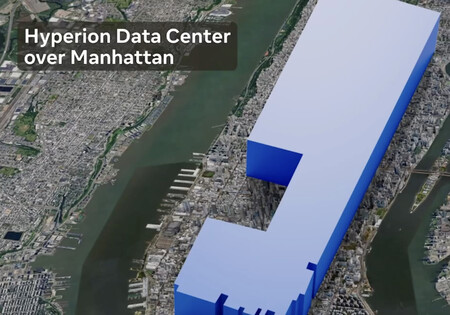
While the tents are erected, Mark Zuckerberg officially announced plans to invest hundreds of billions of dollars into computational infrastructure aimed at developing superintelligence. The construction of two major data centers has been proposed. The first, named Prometheus , is set to go operational as early as next year. The second, Hyperion , aims to rival the size of Manhattan and is expected to have a staggering capacity of up to 5 gigawatts over the next few years. The tents serve as interim setups until the permanent installations are ready. For context, no NVIDIA H100 and H200 operation clusters have exceeded 200 megawatts to date, according to SEMIANALYSIS.
</div>Racing Against Time in AI
The context in which these developments are occurring is crucial. While Meta was once prominently positioned in the AI race , its focus on the metaverse in recent years proved to be a massive financial drain. This dynamic shifted dramatically with the release of Flame 4 , their latest major language model, which unfortunately failed to meet expectations. Competing technologies such as O3 , Claude 4 , and Gemini 2.5 Pro quickly overshadowed Meta’s offerings. This awareness of waning competitiveness has led Meta to shift its default programming AI from the underwhelming Code Flame to Claude , representing a significant pivot in strategy.
Beyond Talent: The Race for Supercomputing Resources. Meta’s ambitious plans demonstrate that talent acquisition alone will not suffice in the quest for AI supremacy. Zuckerberg has successfully recruited some of the top minds in the industry, but that is only part of the equation. Moreover, Meta’s acquisition of Scale AI has bolstered their data quality, providing another layer of competitive advantage. To complete the trifecta, however, immense computational power is necessary. This is where the newly constructed data centers come into play. Furthermore, Meta is exploring nuclear energy options as they aim to enhance their energy efficiency, even proposing a facility that leverages underground geothermal heat.
The strategy unfolds with a multi-faceted approach, centered not only on acquiring the best talent and models but also on securing substantial computational resources and sustainable energy solutions. It’s a race against time, and the stakes have never been higher.
Images | Mark Zuckerberg | Meta
In Xataka, we delve deeper into the staggering amounts being allocated by Big Tech for data centers, revealing just how critical these investments are for the future of technology.