
Discovering the Unique Dance of the Dwarves in Santa Cruz de la Palma
Incredibly strange parties abound in Spain , where giving and taking is part of the culture. As summer approaches, the frequency of local festivities increases, with each town showcasing its own unique traditions. One of the most fascinating celebrations occurs in Santa Cruz de la Palma —the dance of the dwarves. This event is particularly interesting not merely for its visual aesthetics but also for its rarity, as it is celebrated only every five years. After a ten-year gap due to unforeseen circumstances, the dance has made a spectacular return.
Dwarves to Accompany the Virgin
Often described using a somewhat outdated terminology, the dance of the dwarves has taken the internet by storm, celebrated for its comic visual spectacle . This is arguably the most famous segment of the traditional festivities centered around the descent of the Virgen de las Nieves . This annual event takes place in the town of Santa Cruz, where the statue of the Virgen de las Nieves is transported from her mountain sanctuary to the coastal city. Throughout this colorful festivity, a series of popular events occur, including music and dance.
How Dwarves Dance
While the dancers are actually people of average height concealed beneath enormous Napoleonic tricorn hats , they have become a beloved symbol of La Palma . The music accompanying their dance is a lively polka composed in 1925 by Domingo Santos Rodríguez , lasting for over ten minutes. The dance is endlessly repeated throughout the day, with some participants dancing for an astonishing thirteen hours without a break .
Lustral Dances and Special Celebrations
The feasts surrounding the Virgin’s descent occur every five years, but this year’s dance had a particularly significant meaning as it was the first performance in a decade; the previous event was canceled due to the pandemic. As the 24 dwarves reappeared, this occasion held special value for children who had never witnessed the spectacle before. Notably, a tradition that had not been practiced since 1925 was revived: the dancers first appeared dressed as kings before transforming into dwarves. Intriguingly, this year marked a milestone as two women participated in the dance as dwarves for the first time.
The Viral Dance Phenomenon
The ten-year hiatus generated tremendous anticipation on social media , leading to an unprecedented level of interest in the event. The hashtag #Dwarves2025 trended on TikTok , racking up thousands of views and comments. Additionally, a live broadcast on Instagram attracted over 340,000 views , significantly enhancing the event’s visibility. Canarian public television also seized the moment by maximizing social media outreach, which substantially broadened the event’s audience.
Disturbing Dwarves: The Mystical Side of the Festivities
While the dance is captivating, it also carries a mystical narrative that adds depth to the event. The ceremonial aspects echo other Spanish celebrations that blend the macabre with the magical. Similar festivities include the Vijanera de Silió , where symbolic characters portray ancestral forces, and the pilgrimage of Santa Marta de Ribarteme , where survivors of illnesses carry coffins as offerings to the Virgin.
Spanish Festivals: A Landscape of Cultural Oddities
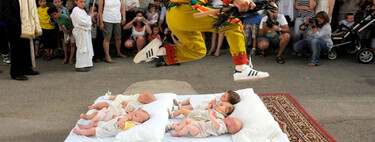
Spanish celebrations are abundant with bizarre and monstrous characters. For example, the Castrillo Colacho of Burgos features a demonic figure that hops over babies lying on mattresses during the Corpus week. Similarly, the Piornal Jarmplas is characterized by a person donning a horned mask, becoming a focal point of chaotic revelry as townsfolk throw turnips at them. Here, dance blends with shocking elements, creating a carnival atmosphere rich with tradition.
In essence, the dance of the dwarves in Santa Cruz de la Palma illustrates how cultural traditions can adapt and flourish, even after years of dormancy. As a celebration uniquely intertwined with the community’s history and spiritual beliefs, it remains a testament to the vibrant spirit of the people of La Palma.
As families and communities come together, these enchanting festivities not only entertain but also uphold the rich cultural tapestry that is Spain .