
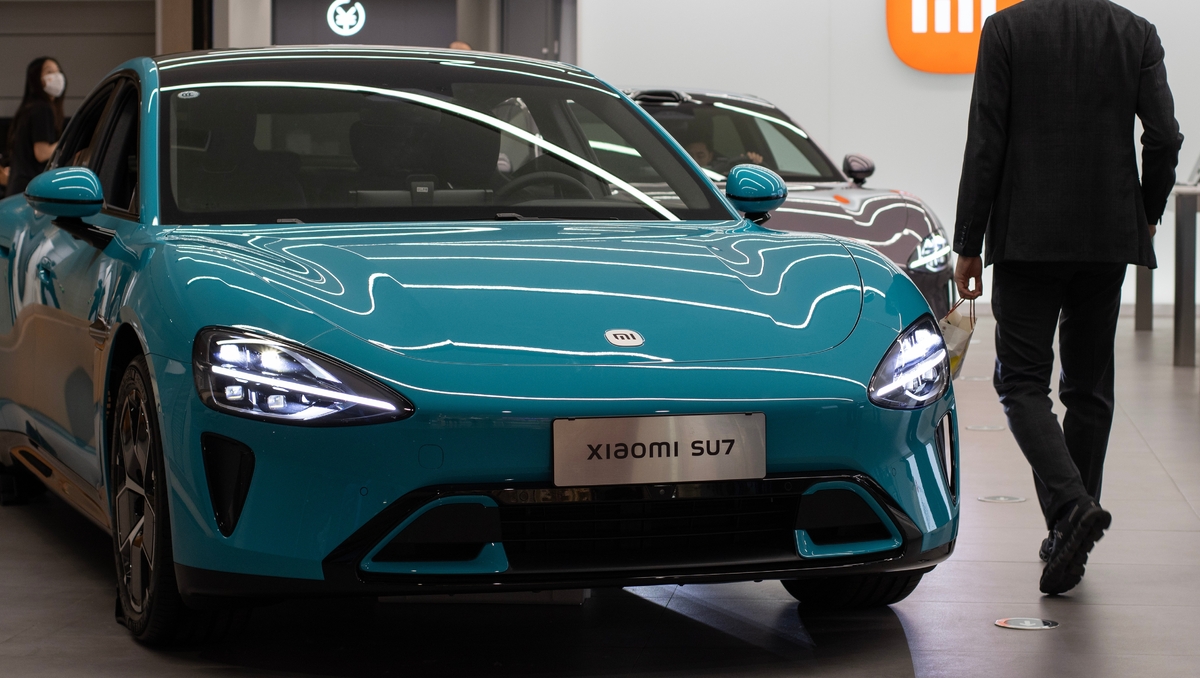
Xiaomi’s progression is prominent as Chinese companies thrive in the automotive market, with BYD leading the charge. The delivery volume for May matched that of April, showcasing a sustained momentum .
Xiaomi Breaks into the Electric Vehicle Market
This marks the eighth consecutive month in which Xiaomi has delivered over 20,000 units , while the YU7 prepares for its launch. This consistency demonstrates the company’s ability to establish itself in a local market dominated by historical players.
The YU7 represents a significant milestone for Xiaomi. Officially unveiled in May, this electric SUV is scheduled for commercialization in July 2025. Currently, the company’s offerings are limited to the SU7 series , which includes the standard electric vehicle along with the SU7 Pro and SU7 Max versions.
In the month of May, Xiaomi also opened 29 new showrooms across China. The company now boasts 298 retail points in 82 cities. Additionally, for after-sale service, there are 153 support centers situated in 88 urban areas, enhancing customer service and support.
Xiaomi is also making its presence felt at the Shenzhen Auto Show , ongoing from May 31 to June 8, 2025. The company showcases its two electric vehicles, the SU7 and YU7 . Competition is fierce in the Chinese market , where Xiaomi finds itself not just up against BYD but also Tesla , the American electric vehicle giant.
The successful entry of Xiaomi into the electric vehicle market indicates the company has effectively diversified its product range. It is no longer solely focused on smartphones and connected gadgets but is now betting on the future of automotive technology .
The Impact of Xiaomi’s Vehicles on the Market
With impressive sales , Xiaomi is not only solidifying its position in the home electronics market; it is also asserting itself in the highly competitive automotive sector . The company’s strategy targets affordability without sacrificing quality , appealing to a broader consumer base. The electric vehicle market is particularly important, not just from a sales perspective but also in addressing environmental concerns associated with traditional petrol and diesel vehicles.
Xiaomi’s statement about sustainability through its vehicles resonates deeply with consumers who prioritize eco-friendly options. The YU7 focuses on energy efficiency and combines cutting-edge technology with sleek design, further enhancing its appeal. With renewable energy being a leading trend, Xiaomi’s commitment to innovative electric mobility aligns with current consumer preferences.
As Xiaomi rapidly scales its operations within the automotive sector, it inherits a plethora of technical expertise from its extensive experience in consumer electronics. This knowledge can facilitate seamless integration of smart technology in its vehicles, presenting features that enhance safety, comfort, and overall user experience. For instance, the infotainment system in the SU7 is designed to connect seamlessly with smartphones, allowing users to control various functions with ease.
With established partnerships and a growing interest in electric vehicles, Xiaomi is poised to leverage its existing retail infrastructure to boost sales. The showroom strategy serves dual purposes: it allows consumers to experience the vehicles firsthand while also enhancing brand visibility .
Moreover, customer service and after-sale support are critical for building consumer trust in new technology. Xiaomi’s large network of service centers demonstrates the company’s commitment to maintaining its customer base through robust support systems, essential for any automotive manufacturer. Consumers often weigh after-sales service heavily in purchasing decisions, especially for electric vehicles, where serviced plants and repairs can be limited.
Challenges and Opportunities in the Automotive Sector
Despite the positive outlook, Xiaomi faces numerous challenges as it ventures further into the electric vehicle market. Competition from well-established companies like BYD and Tesla will require continuous innovation and adaptation. The landscape is evolving, with consumer preferences shifting towards more technologically advanced options, thus pushing companies to stay ahead of trends. Regulatory factors surrounding energy consumption and vehicle safety standards also represent hurdles that will need to be meticulously navigated.
Furthermore, the company must achieve a balance between rapid expansion and maintaining quality control in manufacturing. The push for growth can sometimes compromise product integrity if not managed correctly. Hence, maintaining strict quality assurance protocols as the production scales will be vital for sustaining the brand’s reputation.
Despite these challenges, the opportunities for growth in the electric vehicle market are substantial. As global awareness around environmental issues continues to rise, manufacturers focused on sustainability are set to benefit immensely. Xiaomi’s ability to leverage its brand strength, embrace innovation, and implement effective sales strategies will ultimately determine its long-term success in this dynamic market. The electric vehicle revolution is merely beginning, and Xiaomi stands ready to play a crucial role in shaping the future of transportation.