
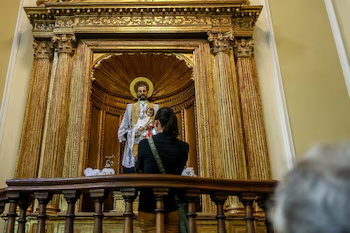
The Struggle for Equality in the Catholic Church
Historical Context of Women’s Exclusion
In the Catholic Church, women face significant barriers to equality, exemplified by their exclusion from roles during Holy Week in Sagunto, Valencia. Despite comprising a majority of active faithful and being crucial to the daily functions of parishes and religious communities, women are systematically barred from decision-making positions. Organizations such as Christian Networks and Women’s Revolt in the Church emphasize that, while theological reasons underpin this exclusion, they are predominantly rooted in a patriarchal interpretation of doctrine.
Limited Progress Under Pope Francis
Pope Francis has made modest strides in integrating women into Church activities, permitting them to serve as readers, acolytes, and catechists. He has also appointed women to significant roles within the Vatican. Nevertheless, these initiatives represent minimal shifts in a predominantly male-centered structure. The election of Leo XIV in May 2025 may hinder further substantial changes regarding women’s inclusion in key areas of responsibility within the Church.
Voices for Change
Raquel Mallavibarrena, a spokesperson for Redes Cristianas, expresses concern over the Church’s failure to recognize the need for equal representation. She underscores the paradox: women are highly active within parishes, yet they remain excluded from formal leadership roles. “If women left the Church, many parishes would be forced to close,” she asserts, highlighting their essential contributions.
The Need for Institutional Reform
The gender disparity within the Church is increasingly incongruous when juxtaposed against the backdrop of women’s leadership in secular societies. Mallavibarrena contends that the Church’s persistent exclusion of women signifies a serious disconnect with contemporary values. She challenges the institution to acknowledge the severe impact of its discriminatory practices, especially in light of ongoing issues surrounding sexual abuse and gender violence.
Grassroots Initiatives for Equality
Activist groups like Women’s Revolt in the Church are vocal in demanding that women receive “the same rights as men” regarding compensation, work, and dignity within the institution. Spokesperson Teresa Casillas argues that entrenched theological beliefs perpetuate a patriarchal conception of God that fundamentally excludes women from leadership and sacramental roles. “The attitude of the institution is anachronistic,” she emphasizes, calling for a significant cultural shift within the Church.
Moving Beyond Symbolic Gestures
Both Mallavibarrena and Casillas agree that reforms are essential for the Church to uphold its moral authority and relevance. They advocate for the abolition of clericalism, which they view as a hierarchical structure that subjugates women. They also call for greater inclusivity in language used in liturgy and recognition of women’s contributions to theology throughout Church history.
A Path Forward
As advocates for gender equality within the Catholic Church assert, establishing a community of equals aligns with the values espoused by Jesus. By embracing feminist ideals, the Church could evolve into a more equitable institution, reflecting the diverse roles women play in society today. “We believe that feminism is essential in the Church,” says Casillas, reminding us that the essence of Jesus’ community was rooted in equality.
Ultimately, the demand for full inclusion is not a quest for “crumbs” but a call for the Church to recognize the vital contributions of women, a change desperately needed in an institution long anchored in tradition.