
Panama City Hall’s Humanitarian Initiative for Venezuela
The city of Panama has taken a significant step in providing humanitarian assistance to Venezuela, following the devastating earthquakes that struck the country on June 24. Mayor Mayer Mizrachi has implemented an innovative electronic tracking system for the aid dispatched to ensure accountability and transparency.
Coordinated Humanitarian Efforts
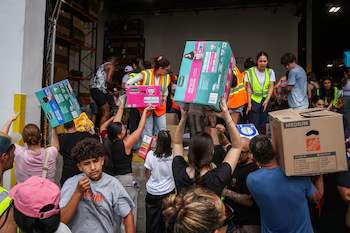
Under Mayor Mizrachi’s leadership, Panama City Hall organized a citizen collection drive that gathered approximately 100 tons of humanitarian aid. This initiative has garnered support not just from the local government, but also from various public entities, all aimed at providing relief to the areas impacted by the earthquakes. Reports indicate that more than half of the collected aid has already been sent to Venezuela, primarily targeting regions most affected by the disaster.
Advanced Tracking for Transparency
To enhance transparency, Mayor Mizrachi has integrated AirTags—small electronic tracking devices—into the aid packages. These devices are cleverly concealed within everyday items such as diapers and water bottles. “They leave on different pallets, on different flights, and I can always respond to my citizens regarding which flight the aid is on and if it has already arrived in Venezuela,” Mizrachi stated. This proactive approach allows the local government to monitor the aid’s journey in real-time, alleviating concerns about potential misdirection or delays.
Real-Time Monitoring and Challenges
As of now, Mayor Mizrachi has reported that some AirTags are in La Guaira, a heavily impacted coastal area of Venezuela, while others are located in Maturin, about 416 kilometers from the capital, Caracas. This ability to track aid directly means that the local authorities can respond swiftly to inquiries from concerned citizens. Mizrachi acknowledged the challenges posed by unfamiliarity with Venezuelan geography, suggesting that tracking data can sometimes be misleading. He refrained from jumping to conclusions about the situation of the aid tagged in Maturin, opting for a cautious and considerate interpretation.
Sustained Commitment to Aid
Despite initial challenges, Mayor Mizrachi remains committed to sending more aid. Just recently, a new plane loaded with 16 tons of humanitarian goods departed for Venezuela, marking the tenth flight from Panama. “If I didn’t believe in this cause, we wouldn’t be sending another plane,” he emphasized, reiterating the importance of maintaining trust in this humanitarian endeavor.
The Impact of the Earthquake
The scale of the disaster in Venezuela has been shocking, with earthquakes measuring 7.2 and 7.5 on the Richter scale. According to the Venezuelan government, the death toll has reached approximately 3,342, with 16,740 injured and 17,345 individuals losing their homes. The impact has been widespread, particularly in La Guaira, which has a history of natural disasters and has been likened to the catastrophic “Vargas tragedy” of 1999.
Conclusion
Mayor Mizrachi’s innovative approach to tracking humanitarian aid not only demonstrates a commitment to transparency but also highlights the importance of collective action during times of crisis. As Panama continues to assist its neighbors in Venezuela, the need for reliable and accountable mechanisms becomes even more vital, ensuring that aid reaches those who need it most.