
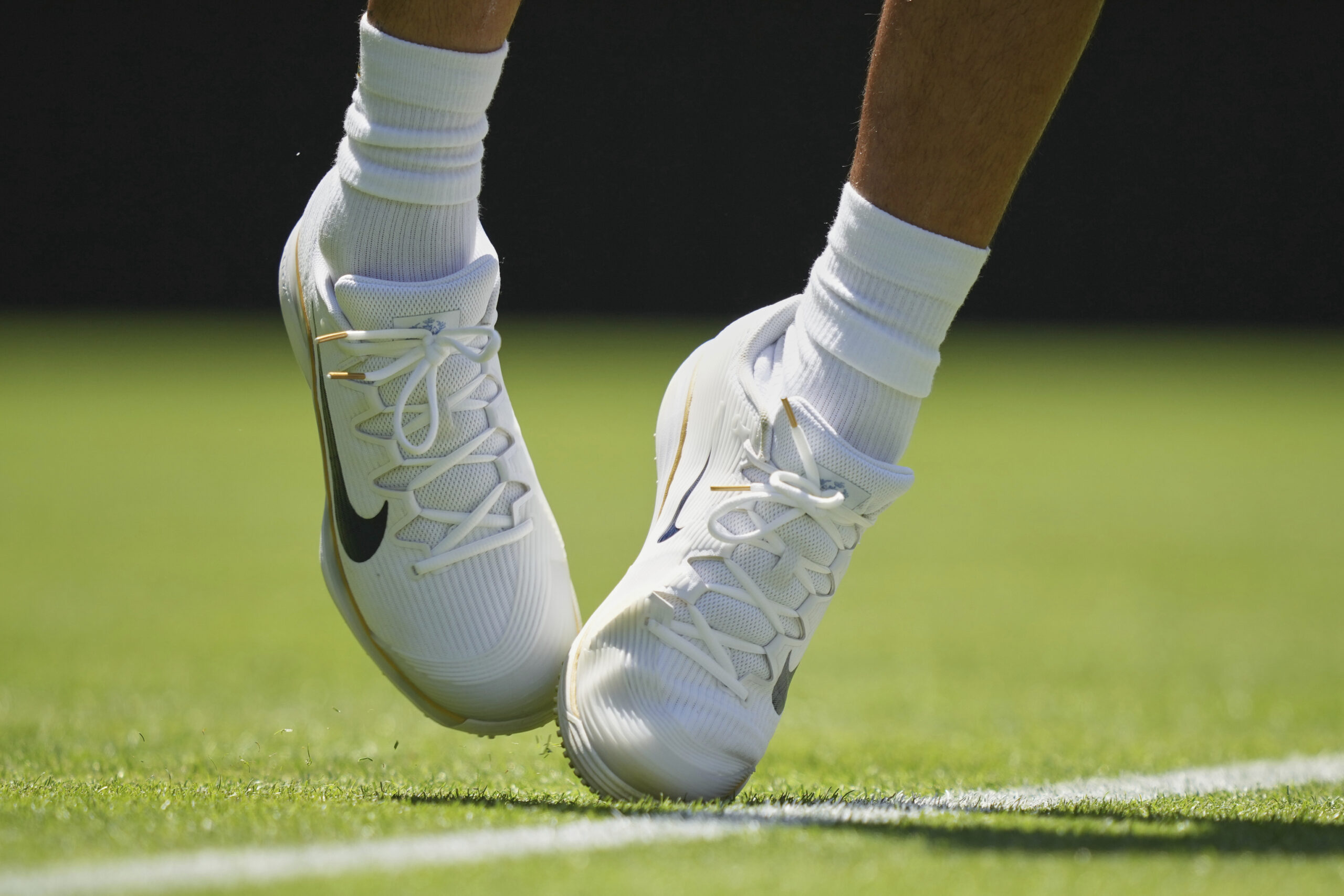
Winning the Channel Slam —the rare feat of capturing both Roland Garros and Wimbledon in consecutive seasons—remains one of the most challenging targets in professional tennis. Coco Gauff, fresh from her victory in Paris, expressed her thoughts with a mix of ambition and realism: “*It’s extremely difficult, and while I would love to achieve it, I won’t put pressure on myself. If it works out, great. If not, I will learn.*” Gauff, who has quickly risen in the ranks, succumbed to the pressures of the grass courts in her opening match at Wimbledon, illuminating the tough transition many players face. This feat has historically been tackled by only eleven legends of the game: five men, including Rod Laver , Rafa Nadal , and Novak Djokovic , and six women, such as Serena Williams and Martina Navratilova . Notably, last year, Carlos Alcaraz joined this elite list, establishing himself as a formidable presence in the sport.
As the reigning champion of Queen’s and facing the challenge of the All England Club, Alcaraz showcased his talent with a convincing victory over Oliver Tarvet (6-1, 6-4, 6-4). At just 22 years of age, his abilities on the court place him back among the favorites. How does he make success appear so seamless? Analyzing this, former player and current commentator Alex Corretja highlighted Alcaraz’s innate talent. He noted, “*It’s evident in the transition between surfaces. Carlos has an incredible talent. His quick wrist movement and ball control allow him to hit effectively, even on grass where the ball bounces lower.*” With strong legs and the ability to easily adapt to different surfaces, Alcaraz truly embodies the kind of player who can make the unimaginable seem routine.
Understanding the Transition
Corretja, who has firsthand experience transitioning between clay and grass, opened up about his own struggles. In his early career, Wimbledon presented a formidable challenge, and he remarked, *“It was a nightmare; it was incredibly difficult. On clay, the ball bounces higher and slows down, but on grass, everything accelerates. You have to bend your knees and rely heavily on your serve, which I never adapted to.”* His difficulties are echoed by many players who find the rapid pace and unpredictable nature of grass courts to be a daunting obstacle.
Before the ATP ranking changes in 2000, the system only considered the top 14 results for players, allowing for specialists to thrive. Many greats like Gustavo Kuerten and Sergi Bruguera dominated on clay while struggling on grass, whereas the likes of Pete Sampras excelled on the latter. This distinction has blurred over the years, and Corretja noted, “*Now most players hit the ball hard and flat regardless of surface. You can hardly spot differences in their games anymore, even between fast and slow courts.*”
Potential Challenges Ahead
With the changes in tournament formats and player ranking systems, the landscape has shifted even more dramatically. The recent Wimbledon tournament already saw the exit of four Top 10 players, including Daniil Medvedev and Alexander Zverev , proving that even the most seasoned professionals face significant challenges on the grass courts. Alcaraz’s matchup against Fabio Fognini serves as a reminder that any player can present unexpected hurdles. While fortunate not to face tough competitors like Novak Djokovic , Corretja emphasizes that “*In Wimbledon, an unexpected rival can create uncomfortable scenarios. Think of players like Fabian Marozsan , who surprised Carlos at Roland Garros. On grass, every match feels faster and more dangerous.*”
In this high-stakes environment, Alcaraz must tread carefully. He holds the potential to join the ranks of all-time greats, but the challenge remains steep. The unpredictability of grass courts fundamentally alters the dynamics of tennis, demanding not only exceptional skills but also mental resilience and adaptability to varying play styles. Whether he manages to reach the pinnacle of winning consecutive Grand Slams remains an open question, one that captivates tennis enthusiasts around the world.