
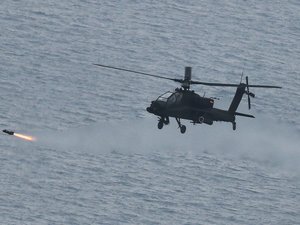
He had been one of the weapons delivered by the United States to Kyiv for many years. The American Hellfire supersonic missile is one of the weapons that will no longer be in Ukrainian hands “to put the interests of America first.” A very heavy loss for Ukraine.
This Tuesday, July 2, the deputy spokesperson for the White House, Anna Kelly , announced that the United States would stop delivering certain American weapons to Ukraine, stating it was necessary “to put the interests of America first.” Among these weapons is the renowned Patriot air defense system and the powerful Hellfire AGM-114 supersonic missile , which has been a critical asset for Ukraine in its defense efforts against invading forces.
Breaking: White House Confirms It Has Halted Weapons that Ukraine was scheduled to receive, included PAC-3 Patriots, 155mm Artillery Rounds, GMLRS, Stinger, AIM-7, and Hellfire Missiles. @Annakelly47 TELLS ME: “This decision was made to put America’s interests first following a…”
– Nick Schifrin (@nickschifrin) July 1, 2025
The Hellfire missile , developed during the Cold War and often referred to as a “Tank killer,” has been praised for its ability to destroy any armored vehicle. With a range of 8 km and a precision error margin of only 1 meter , the Hellfire can achieve a speed of 1.3 Mach , equivalent to over 1,600 km/h . According to military experts, this air-ground missile can effectively target enemy armored positions while being launched from stealthy locations thanks to its laser guidance system.
“The Weapon Requested by Ukraine”
Valued between 50,000 and 100,000 euros , the Hellfire missile has been in Ukraine since the onset of the conflict, providing a formidable boost to the nation’s military capabilities. Norway has also contributed to sending these crucial munitions to Ukraine. Bjørn Arild Gram , the Norwegian Minister of Defense, stated, “It is the weapon requested by Ukraine, and it is useful in the fight against the Russian occupation forces.” This underscores the importance of the Hellfire missile in Ukraine’s ongoing efforts to combat Russian offensives.
The decision to halt the delivery of such significant military assets raises concerns for Ukraine’s ongoing military strategies. As the situation continues to unfold, the political motivations behind the U.S. decision appear intertwined with broader national priorities. Kelly indicated that the decision was not taken lightly but emphasized that America’s interests would come first—a statement that has sparked critiques domestically and internationally.
Support from the U.S. has been pivotal to Ukraine’s defensive capabilities. Gerardo Muñoz, a military analyst, stated, “The absence of the Hellfire missile can diminish Ukraine’s striking power against armored units, especially in aerial campaigns.” The missile’s precision targeting has been crucial for removing threats effectively and minimizing collateral damage, thus making it indispensable in a fight characterized by urban and guerilla warfare.
As the international community watches these developments, it raises questions about long-term military support for Ukraine and how it will manage its defense against more potent adversaries. The reduction in arsenal can potentially lead to increased pressure on Ukraine’s military forces and could embolden opposing forces, heightening the risk of escalating conflict.
In the larger geopolitical landscape, these shifts can have significant implications. Countries supplying military aid to Ukraine, such as Norway, may need to reassess their contributions in light of U.S. policy changes. The Pentagon and global military analysts are closely monitoring the balance of power in the region, recognizing that military capabilities play an integral role in shaping diplomatic relations and future confrontations.
In conclusion, the recent U.S. decision to halt specific weapons deliveries to Ukraine, especially the Hellfire missile, reflects a significant pivot in military assistance that could have profound implications for the ongoing conflict. As Ukraine continues to confront its challenges, the loss of such critical weaponry may require a reevaluation of its military strategies and alliances, showcasing the complexities of international relations in times of warfare.