
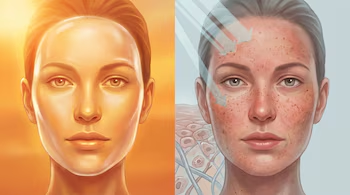
Understanding the Dangerous Myth of the “Solar Callus”
The Rise of the Solar Callus Trend
The “solar callus” has recently emerged as a popular trend on social media, suggesting that repeated sun exposure can lead to a hardened skin that supposedly offers more resistance to ultraviolet (UV) radiation. This concept has gained traction, especially among young individuals searching for natural alternatives to conventional sun protection methods.
A Misguided Notion of Skin Resilience
Advocates of the solar callus theory believe that repeated exposure to UV rays prompts the skin to develop a protective barrier akin to a physical callus formed through friction. However, specialists, including dermatologist Ramzi Saad, emphasize that this belief lacks scientific backing and is not supported by any recognized physiological processes. In fact, Dr. Saad states, “There is no such thing as a ‘solar callus’ or ‘sun callus.’ These are invented terms that have no place in the medical field.”
Rejection by the Medical Community
The medical community has categorically rejected the idea of the solar callus. Experts like Dr. Saad insist that skin cannot develop tolerance to sunlight. Instead of creating a natural defense against UV radiation, skin damage and the risk of skin cancer progressively increase with repeated sun exposure.
The Perils of Tanning and Sunburn
Dr. Saad clarifies that both tanning and sunburn are indications of skin DNA damage, not forms of protection. He warns, “A tan or burn is a sign of DNA damage in the skin, not a license to avoid sun protection in the future.” This damage can accumulate over time, manifesting later as skin cancers or age-related skin disorders.
The Cumulative Nature of UV Damage
One of the crucial aspects dermatologists highlight is the cumulative effect of UV exposure. Even minimal, intentional, and unprotected sun exposure can lead to increased skin cancer risks and accelerated aging. According to Dr. Saad, “Sun damage is cumulative,” meaning daily exposure, even for a few minutes, can have serious long-term implications.
The Importance of Consistent Sun Protection
In light of the persistent myths surrounding sun exposure, specialists call for adopting robust photoprotection habits. Recommended practices include wearing appropriate clothing, avoiding peak sun exposure hours, and applying sunscreen with adequate SPF daily.
Final Thoughts
The Skin Cancer Foundation reinforces that protection must be constant, even during casual or cloudy days since UV radiation can penetrate clouds. The overwhelming consensus is clear: no tan is a healthy tan, and any unprotected exposure poses significant risks.
To protect yourself and ensure skin health, it’s essential to be vigilant about sun safety. The solar callus myth could lead to harmful behaviors; educating oneself on proper sun protection should be a priority for everyone.