
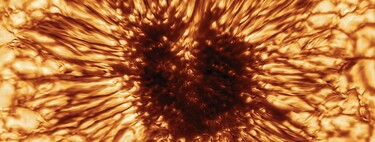
Unveiling the Secrets of Sunspots: A Scientific Breakthrough
It was not until about 400 years ago, with the invention of telescopes, that humanity realized the existence of sunspots . These fascinating regions of high magnetism and low luminosity have captivated astronomers, who have spent centuries trying to unravel their mysteries. Recently, a team of scientists made significant strides in understanding why some sunspots remain stable for extended periods, while others fade quickly.
Solving the Sunspot Mystery. A recent study has shed light on one of the longstanding enigmas surrounding sunspots and their evolution. Researchers have addressed the question of why certain sunspots can maintain a stable equilibrium and exist for months, whereas others quickly dissipate.
The Dynamics of Sunspots. Sunspots are dynamic regions that arise , grow , and eventually fade over time. Decades of research have revealed that these spots are areas where the sun’s magnetic field is exceptionally strong. The formation and disappearance of sunspots mark the progression of the Solar Cycle , an 11-year cycle characterized by peaks of activity followed by periods of relative calm.
The number of sunspots directly corresponds to an increase in solar activity. According to the research team behind this new study, the “unstable” magnetic configurations surrounding these spots are responsible for phenomena such as coronal mass ejections (CMEs), which can have profound implications for Earth and its satellites.
Enhancing Observations. The team developed a pioneering method for analyzing sunspots with heightened reliability and precision through terrestrial telescopes. This technique was employed using the observations made from the Hispano-German Gregor Solar Telescope . The primary goal was to eliminate disturbances caused by the Earth’s atmosphere in the images obtained, resulting in significantly improved measurements of the solar magnetic field.
Understanding Sunspot Stability. This refined analysis enabled the team to explore why certain sunspots can persist for months while others vanish rapidly. Since the 1970s, scientists have hypothesized that such stability results from a balance between the magnetic field pressure of the sun and the external gas pressure surrounding it—a balance that remained elusive until now.
The new findings indicate that the magnetic field of sunspots compresses under external pressure until a state of equilibrium is achieved. This discovery not only elucidates how some sunspots can survive but also holds potential for predicting the instabilities that cause CMEs, which are vital for safeguarding our planet from their effects.
The details of this groundbreaking study were published in the journal Astronomy & Astrophysics, further emphasizing the importance of this research in the field of astrophysics.
Ground-Based Observations. One of the advantages of this new methodology is that it simplifies the study of the sun and its spots from the Earth’s surface without necessitating space telescopes. This greatly reduces costs and makes the observations more accessible.
Maintaining vigilant surveillance of sunspots is critical for detecting bursts that traverse the space between the Sun and Earth at nearly the speed of light . Such events can disrupt satellites and communication networks, making it increasingly important to anticipate their occurrence as our technological dependency intensifies.
With advancements in understanding sunspots and their behavior, the scientific community stands ready to better prepare for the consequences of solar activity. The recent breakthroughs not only uncover the secrets of these mysterious solar phenomena but also enhance our capability to mitigate their impacts on modern technology. The interplay between the sunspots and solar storms is a vital component of our solar system, where continued research can lead to significant technological safeguards and deeper cosmic understanding.
As the study of sunspots evolves, it becomes increasingly clear that they are not mere curiosities of our star, but crucial indicators of the sun’s health and activity, with profound implications for life on Earth.