
Michelin’s Remarkable Donation: A Closer Look
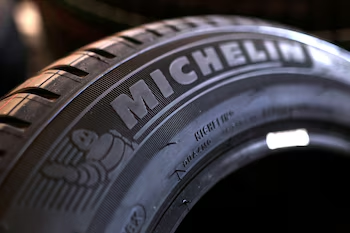
The French tire manufacturer Michelin has made headlines by donating 4.3 million euros to the French government, a move that has been widely regarded as highly atypical for a corporation. This donation serves as a reimbursement of a tax credit that the company received back in 2015. Originally intended for investing in machinery at the La Roche-sur-Yon plant, these financial resources are now being returned following the plant’s closure and the subsequent relocation of its equipment to facilities in Spain and Eastern Europe.
Context of the Donation
This unusual act comes at a time when discussions around taxation and public subsidies in France are heating up. Many prominent business leaders and the Medef employers’ association have expressed their concerns over what they view as a potentially damaging state budget. They argue that recent increases in corporate taxes could threaten the financial viability of many businesses.
In light of this, Michelin has characterized its repayment as a “voluntary and exceptional” gesture, clarifying that they were under no legal obligation to return the tax credit.
Political Pressure and Public Scrutiny
A significant factor contributing to Michelin’s decision has been the mounting public and political pressure regarding government aid to industries. Last summer, the French Senate published a report investigating public subsidies, focusing specifically on how these funds were allocated. The La Roche-sur-Yon plant had received a portion of these subsidies aimed at improving competitiveness and employment from 2013 to 2021.
However, the Senators have questioned Michelin regarding the utilization of these funds, particularly after the factory’s closure in 2020 and the transfer of its newly acquired machinery to facilities outside France. The parliamentary report urged Michelin to consider repaying the part of the tax credits associated with the equipment that was relocated.
Michelin’s Justification
Despite the calls for accountability, Michelin has reiterated that the legal framework of the CICE (Tax Credit for Competitiveness and Employment) does not necessitate any reimbursement and does not impose binding conditions for its usage. Nevertheless, the company has engaged in discussions with government authorities over several months to ensure clarity regarding the potential return of the funds.
The Ministry of Economy has since confirmed that the donation underwent a rigorous review and aligns with current laws and budgetary guidelines. They characterized Michelin’s gesture as “voluntary and responsible.”
Senate Commitment and Future Outlook
During a parliamentary session in November, Senator Fabien Gay emphasized Michelin’s ethical commitment to refunding the state. The Minister of Economy, Roland Lescure, remarked that such a corporate decision to “write a check to the State” is quite rare, guaranteeing that this transaction would be processed promptly.
Despite this goodwill gesture, Michelin is bracing for a challenging year ahead in 2025. The company has had to adjust its objectives due to a negative shift in its economic environment, notably citing a decline in operations in North America. Since the start of the year, Michelin’s share value has decreased by approximately 13.15%, adding more complexity to an already tough business landscape.
Conclusion
The decision by Michelin to donate 4.3 million euros, while viewed as ethical and commendable, unveils layers of public accountability and corporate responsibility in France. As scrutiny over financial practices grows, how companies respond to both legislative and public pressure could reshape the landscape of corporate governance in the country.