
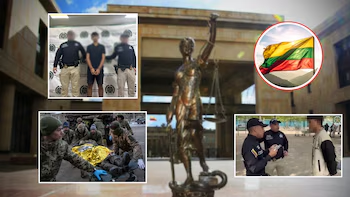
Colombian Citizen Faces Extradition to Lithuania: A Case of Terrorism and Espionage
The Supreme Court of Justice of Colombia has approved the extradition of Gonzalo de Jesús Ramos Santos, a 22-year-old from Magdalena, to Lithuania. He is charged with terrorism and espionage linked to a larger international group connected to the intelligence services of the Russian Federation.
Background of the Charges
Ramos Santos, born in Santa Marta, is suspected of collaborating with an organized group that has engaged in espionage against entities linked to military operations in Ukraine. Authorities in Lithuania assert that this group has operated across various countries while maintaining direct ties with Russian intelligence agents. It is believed that Ramos participated in intelligence operations targeting a company supplying drones for the war in Ukraine, reflecting actions that serve Russian interests.
Arrest and Extradition Proceedings
The arrest warrant for Ramos Santos was initiated by the Vilnius District Court on December 3, 2024, following a comprehensive investigation. The judicial files indicate that he may have committed “three serious intentional crimes” in late September 2024, as part of a well-organized terrorist group. Notably, his capture in Barranquilla occurred in July 2025 after Interpol issued a red notice.
Organization and Alleged Activities
Ramos Santos is said to be part of an organized terrorist group characterized by systematic planning and a clear division of roles. The investigation has identified multiple individuals involved, including Cuban citizens and other nationals who allegedly facilitated similar acts. Communication among these suspects reportedly utilized the messaging app Telegram.
Specific Accusations Against Ramos Santos
One of the critical accusations against Ramos involves conducting espionage at UAB TVC Solutions, a firm that specializes in drones. He allegedly gathered intelligence on the company’s operations, including the number of mobile spectrum analysis stations and its protective infrastructure. The information was reportedly transmitted to Russian intelligence contacts via a phone supplied from Russia.
Detailed Investigation Findings
The court documents include meticulous details regarding Ramos Santos’s travel and actions. After allegedly entering Lithuania from Russia, he stayed in a guest house and conducted surveillance on the drone company. Reports suggest that he returned with photographic and video evidence to pass along to his contacts, further solidifying the case against him.
Broader Implications and Future Legal Proceedings
The Lithuanian authorities believe that Ramos and his associates aimed to undermine state stability and deter support for Ukraine during its conflict with Russia. The group’s activities involved plans for destructive actions targeting communication facilities integral to the Ukrainian military effort.
As the Colombian Supreme Court has indicated no legal barriers against his extradition, the final decision now rests with the Colombian government led by Gustavo Petro. Ramos Santos is expected to undergo judicial proceedings in Lithuania, where he will face serious charges of international terrorism and espionage.
In summary, the case of Gonzalo de Jesús Ramos Santos illustrates the complexities of modern terrorism, where individuals can significantly impact international conflict through coordinated covert operations.