
Revolutionizing AI: The Groundbreaking Launch of GPT-5
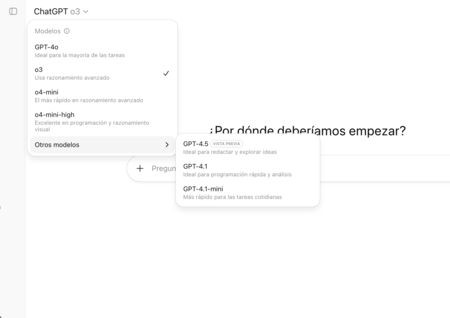
For the past two years, OpenAI has provided its users with an array of choices in AI models, crafting a veritable supermarket of options. The current offerings include:
- GPT-4O
- O3
- O4-mini
- O4-mini-High
- GPT 4.5
- GPT 4.1
- GPT-4.1-mini
While this diversity allows tailored applications for different use cases, it can also lead to considerable confusion among users. How many individuals truly understand the nuances of selecting a reasoning model versus a faster, more conversational one? The complexity of this selection process can often overshadow the benefits of using AI.
ChatGPT Plus users may find themselves unknowingly operating under the default model, GPT-4O , without fully grasping the implications of their choice. This scenario underscores a significant issue: the apparent overload of options has created a cognitive burden that detracts from the user experience.
Image: Xataka.
Enter GPT-5 , which represents a paradigm shift in how users interact with AI. This new system does not merely introduce another model; rather, it seamlessly integrates intelligent decision-making processes that automatically direct each prompt to the most appropriate processing type. In this way, the burden of choice is eliminated, rendering it an almost invisible aspect of the user experience.
As Sam Altman highlighted earlier this year, the objective is simple: “We want AI to simply work.” With GPT-5, that vision is realized. Users can now engage with the platform without the cognitive overhead associated with selecting between multiple models. The magic of ChatGPT is restored, allowing users to focus on what they want to accomplish rather than how to optimize their inputs.
The reality of users’ experiences has become clear: most individuals are not experts or intensive users. Instead, they are casual users who pay for AI capabilities without the desire or time to experiment with technical specifications. They intuitively recognize the potential of AI but wish for an experience that is uncomplicated yet effective.
GPT-5 is designed with this user profile in mind. It caters to those who understand that ChatGPT can provide immense value but prefer not to become engineers of prompts. They seek a product that delivers intelligent and relevant responses without requiring in-depth technical knowledge.
OpenAI’s recognition of user preferences has led to this important adjustment. The vast majority of users appreciate technology that obviates complexity while delivering high-quality outcomes. GPT-5 does not merely depend on enhanced cognitive abilities; it knows when deeper processing is warranted and when a simpler response suffices.
Historically, technological transitions have followed a predictable pattern:
- Initially, sophistication meant control, with manual inputs, dials to adjust, and extensive manuals to decipher.
- Subsequently, the focus shifted to providing users with instant, no-fuss solutions—akin to the automatic features in modern vehicles.
GPT-5 firmly falls into this latter category, striving to meet the needs of the typical user who desires a reliable tool that simply functions without demanding extensive technical understanding. This average user, who pays for a service, is finally beginning to receive the benefits they expected.
With the shift to GPT-5, OpenAI has enlisted a game-changing upgrade that not only maximizes the effectiveness of its model but also elevates the user experience to a new level. The future of AI appears promising, and with GPT-5 leading the charge, users can expect a more intuitive, streamlined, and effective experience.