
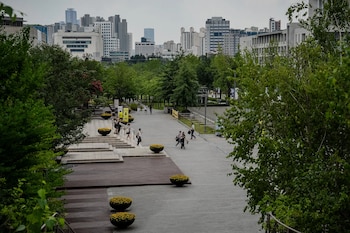
The Impact of Trump Administration Policies on International Students
For Jess Concepcion, a microbiology student from the Philippines, pursuing a PhD at a university in the United States had been a dream. Most of his academic mentors studied and conducted research there, and he aspired to follow their lead. However, when the U.S., under President Trump, began to pause visa interviews during the peak season this spring, threatening to deport international students based on political speech and slashing funding for academic research, Concepcion quickly changed plans. Application processes for PhD programs are extensive and tailored to specific schools, so he is now looking at programs in Switzerland and Singapore.
“That uncertainty made me stop in my tracks and choose another country,” said Concepcion, 24. “The immigration policy is quite restrictive, and I’m on the other side of the world. Living in that kind of instability so far away isn’t healthy for me.”
This is a dilemma faced by many young people worldwide. According to the United Nations, 6.9 million individuals studied abroad in 2022. The United States has long attracted the largest number of international students, with 1.1 million enrolled in the 2023-24 academic year.
While it’s early to assess if more foreign students will opt to skip U.S. institutions, warning signs are already abundant.

International education platforms, such as IDP and Keystone Education Group, are noticing a marked decline in interest in U.S. programs. Many academic administrators surveyed by the Institute for International Education this spring reported more than usual drops in international applications for the upcoming year.
These aren’t the first signs that U.S. higher education is losing its dominant position. For years, Asian countries have strengthened their institutions and promoted them to students worldwide. With more attractive alternatives, the hostile stance of the Trump administration could accelerate the decline of U.S. educational supremacy.
“We are transitioning from a world where there were only a few major countries as destination points to a much more multipolar world,” said Clay Harmon, CEO of the Association of International Enrollment Management, representing recruitment agencies.
“Everything adds to this narrative of, ‘Maybe this isn’t the right destination for me after all,’” Harmon noted. “There are many other countries willing to accept my money instead.”
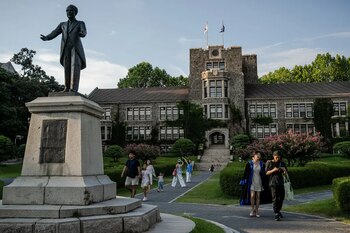
For decades, in the English-speaking world, Oxford and Cambridge in the United Kingdom, the Ivy League in the United States, and other prestigious universities in Australia and Canada have led the requests.
Gradually, schools in China, Japan, Taiwan, and Singapore have begun to appear in annual rankings of the best universities—with lower fees. Governments have sent representatives to university fairs and set targets for the number of students they wanted to attract each year.
When Trump began to discourage international students shortly after starting his second term, Asian nations welcomed those who could no longer continue their studies in U.S. schools.
Consider the case of South Korea, where Concepcion sought his master’s degree after winning a government scholarship that covered living expenses and tuition. He added a mandatory language study year and entered Korea University in Seoul, where his program will kick off this fall.
During the spring, Korea University was among several institutions offering relief measures when the U.S. government began canceling some student visas and terminating funding programs. Another South Korean university, Yonsei University, will open rolling admissions for undergraduate transfers year-round starting in 2026 and is planning a custom visitation program for students whose studies are disrupted in the U.S..
Trump has accelerated these plans, but this effort has been underway in Asia for decades.
South Korea has sent students abroad for years while attracting few from abroad. In the early 2000s, leaders began to see that imbalance as a kind of trade deficit and set out to boost international recruitment, guided by a similar effort in Japan, which had about 337,000 international students last year and aims for 400,000 by 2033.
South Korea’s latest goal was set for 2023: 300,000 international students by 2027. By 2026, Seoul was named the best city for international students in the closely followed Quacquarelli Symonds World University Rankings.
Initially, the South Korean government aimed to support schools in small cities, where low birth rates and migration to larger cities have reduced high school graduating classes. International students are also not subject to the tuition caps that apply to domestic students, creating a new revenue source to keep universities afloat.
Meekyung Shin, the director of educational globalization at the Ministry of Education of South Korea, stated that initially, it was generally expected that these international students would return home after their studies. More recently, authorities have begun to view international students as a response to the country’s labor shortage. Seoul has set up a support center to help international students find employment, and visa policies have been relaxed to assist them in working after graduation.
“Now we are very interested in how to help them decide to stay here,” said Shin.
Currently, there are around 70,000 students in South Korea from China and 50,000 from Vietnam. Myanmar and Nepal send thousands each year. For South Korean companies, these students represent an opportunity: potential employees who could help expand business in their home countries or manage factories abroad.
Hyundai, for example, manufactures many of its cars in Vietnam and is looking to sell them in Singapore. Kyle Guadana, a Singaporean student studying at Yonsei University, leads the Foreign Students Union. He noted that Hyundai, among other companies, had reached out directly.
“They’re looking for foreigners who can work with them,” Guadana, 24, said. “They’re specifically targeting Southeast Asian students because they’re trying to expand their bases here.”
Despite these initiatives, the recruitment campaign faces complications. To meet its goals, the government has accepted a broader range of language proficiency tests and reduced the minimum bank balance required for obtaining a visa. They have also increased the number of hours that students can work weekly. Some students have enrolled primarily to make money in South Korea, which is otherwise not easy to do.
This is especially true outside Seoul, according to Jun Hyun Hong, a professor at Chung-Ang University who participated in the early efforts to attract international students to South Korea’s higher education system. Local governments are delighted to have more people willing to work in factories and farms, something that universities facilitate.
“If we focus primarily on reaching the numerical target,” Dr. Hong said, “and ignore the quality of international students and the educational capacity of the university, there are concerns about whether maintaining these numbers will be sustainable in the long run.”
Shin, the education official, indicated that the government is working to ensure the quality of programs. Currently, international students represent about 10% of the total student population, which she believes is a good proportion to maintain.
However, the greater challenge may be ensuring that those who come primarily to study can work in South Korea upon graduation—and that they want to stay.
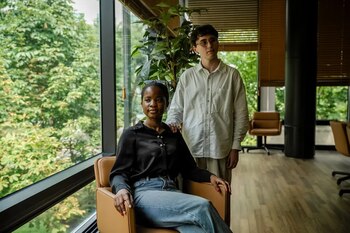
Keity Rose Mendes grew up in Mozambique and received the same scholarship awarded to Concepcion, now studying industrial engineering at the National University of Seoul. She chose South Korea for its safety and because she wanted to learn about its manufacturing techniques. However, after three years of classes, she felt that collaboration was undervalued and that foreign students were not well integrated.
“Many of them, especially non-Asian international students, just want to finish their studies and leave,” Mendes, who heads the International Students Association at her school, stated. “I wish the same effort they put into attracting international students was also placed on creating facilities to keep them here.”
For millions of students deciding where to study, the United States remains the primary destination. Degrees from top U.S. universities carry social respect—and lucrative job offers—in countries like South Korea.
However, even that allure has diminished due to new obstacles since Trump took office, said Pierre Huguet, CEO of the global admissions consulting firm H&C Education.
“Many viewed the U.S. as a place that offered more freedom and an escape from rigid social pressures in Korea,” Huguet explained. “Now they fear visa revocations, invasive online presence checks, and a chillier campus climate, which is the opposite of what they expected.”
Huguet noted that his clients are focusing on the United Kingdom and Australia. The number of South Korean students studying abroad in general has been declining as domestic universities rise in the rankings.
The United States isn’t the only developed nation that has placed hurdles in front of international students. Canada and Australia limited international student visas last year, while the United Kingdom raised visa fees and considered shortening postgraduate work visas.
“No country is being extremely welcoming at this stage,” said Yash Sharma, who runs an admissions consultancy called Longshore Education focused on the Indian market. “There is an anti-immigration sentiment across the English-speaking world.”
Political uncertainty is compounded by changes in job opportunities after graduation. Tech companies, which have long been a major draw for the U.S., have reduced entry-level hiring as artificial intelligence decreases the number of people needed to perform simpler tasks.
This is what finally swayed Divyank Rawat. After working as a data analyst in India post-college, he decided to pursue a master’s in the U.S. because he felt it was the only place where he could learn certain skills.
The 25-year-old was admitted to several good programs. However, after speaking with others who recently graduated from the U.S., the job market looked discouraging. Coupled with the risk of not obtaining a student visa and new threats to the three-year period after graduation during which students can work on their student visas, he decided to stay in India for now.
“Suppose I finish in the U.S. with $70,000 in debt and no job security,” Rawat said. “That is a daunting thought.”
He wishes he had applied to European programs: “The mistake was not having a backup plan.”