
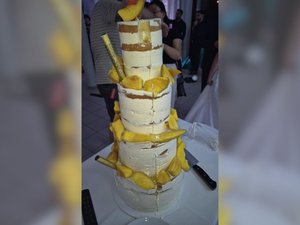
In a surprising turn of events, a couple from Herstal, Belgium , is making headlines with their demand for a full reimbursement of their wedding cake, priced at a staggering 860 euros . Described by the couple as “sloppy” and “inedible,” the cake fell short of the grand expectations they had for their special day. This incident has sparked a conversation about the importance of presentation and quality in wedding planning.
“I had total confidence in her,” said Mediha, referring to the local pastry chef they hired. However, that confidence quickly turned into disappointment on their wedding day. The couple—who were eager to celebrate their union with friends and family—had envisioned a majestic four-story cake adorned with exquisite decorations and rich flavors, particularly a delightful fusion of mango and passion fruit . The reality, however, was vastly different.
On the day of the ceremony, Mediha and her partner Lillo were met with disappointment, where they described the cake as a “ sloppy disaster .” She poignantly reflected, “I was really humiliated in front of all my guests.” Instead of the beautiful cake she had envisioned, she was confronted with a visually unappealing and poorly constructed confection, which did not reflect the exotic tastes they anticipated. Guests reportedly laughed at its wobbly presentation, leading to questions such as, “Where is the real cake?”
The Aftermath of Disappointment
This cake disaster didn’t just end on the wedding day; it sparked a wave of harassment on social media directed at the pastry chef. In response to the widespread ridicule, the cake creator offered a discount of approximately 20% on the original price, but the couple deemed this insufficient. Their public outcry for the full reimbursement was loud and clear, fueled by the disappointment of their wedding day and the potential embarrassment it caused.
In defense of her work, the pastry chef admitted, “I do not deny that the cake is very ugly. The cake is missed in terms of decoration, I lacked vigilance. But it takes on really crazy proportions.” This acknowledgment indicates an understanding of her shortcomings but also highlights the severity of the couple’s reaction. The fallout extends beyond monetary loss; she mentioned considering pursuing legal action for defamation and harassment stemming from the couple’s public statements about the cake.
This unfortunate saga raises important questions about the expectations surrounding wedding vendors and the responsibility they hold in fulfilling promises made to couples on one of the most memorable days of their lives. For many, weddings are not just ceremonies but a culmination of dreams, meticulously planned over many months. Mediha and Lillo’s experience serves as a cautionary tale for future brides and grooms to carefully vet their vendors, and, perhaps more importantly, set realistic expectations in a world where social media can amplify even minor missteps into public disapproval.
In a world driven by Instagram-worthy moments, the pressure to deliver on aesthetics can often overshadow the core values that make a wedding truly memorable. The disappointment faced by this couple is unfortunately not an isolated incident but a reminder that even the best-laid plans can sometimes go awry. Ultimately, the couples’ experience underscores the significance of open communication and trust between clients and service providers, ensuring that dreams can be realized instead of met with disillusionment.