
In the late 1970s, the idea that a nuclear reactor could fall from space ceased to be science fiction and became a real problem for several governments worldwide. A Soviet satellite with a reactor on board had lost control and was barreling towards Earth’s atmosphere, leaving officials uncertain about where its remains would land or the potential consequences of such an impact. Amid the tension of the Cold War, secrecy and urgency dictated the response. This event raised uncomfortable questions that resonate even today: What was a nuclear reactor doing in orbit? Why was the risk accepted? And what are the implications when technology strays from its intended purpose?
On January 24, 1978, the Soviet satellite Kosmos-954 re-entered the Earth’s atmosphere after weeks of tracking by American radars. The trajectory of the satellite was shrouded in doubt, and its landing point was unknown. Eventually, fragments of the device were scattered over an extensive area of northern Canada, from the Northwest Territories to parts of Nunavut, Alberta, and Saskatchewan. What began as a technical problem quickly escalated into an international emergency with significant scientific, diplomatic, and health implications.
The Day the Cold War Left Radioactive Remains Over Canada
Kosmos-954 was not just a scientific endeavor—it was a cog in a military machine designed by the Soviets to monitor the oceans. Specifically, it was part of the US-A series, created to locate large ships, particularly American aircraft carriers, using radar. To keep this energy-intensive system operational for extended periods without solar power, the Soviet Union opted for a compact nuclear reactor. This decision explains the presence of fissile material on board and the heightened concern surrounding its loss.
The technological core of Kosmos-954 was a BES-5 reactor known as “Buk,” developed specifically for military satellites. This reactor utilized uranium-235 and was intended to power the satellite’s radar throughout its operational life. The BBC reports that 31 devices were launched with BES-5 reactors, continuing to employ these systems until the late 1980s. However, the history of these launches was far from smooth, marked by earlier failures and incidents, including a serious mishap in 1970 and another reactor that fell into the Pacific Ocean in 1973.
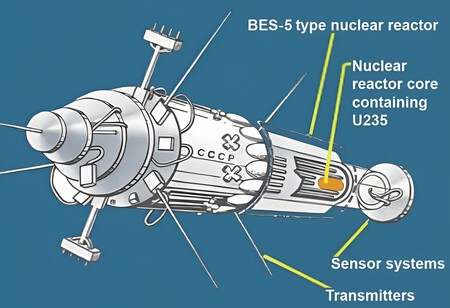
The signs that a crisis was emerging became apparent weeks before re-entry, as tracking systems indicated that Kosmos-954 was steadily losing altitude. The U.S. monitored the satellite’s trajectory closely, acutely aware of the nuclear reactor it carried. However, uncertainty loomed over whether the Soviet security apparatus could safely eject the reactor and place it into a secure orbit prior to atmospheric entry.
Once it was confirmed that debris had fallen onto Canadian soil, the scenario shifted dramatically. Authorities recognized that fragments were scattered over a vast, remote, snow-covered region, complicating immediate assessments. Initial measurements indicated radiation in certain areas, but there was no comprehensive map of the contamination. Canada faced a rapid decision-making process regarding public safety and the identification of potentially hazardous materials in extreme conditions.
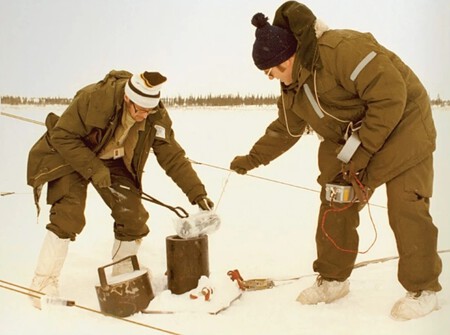
To tackle this unprecedented crisis, Canada sought international collaboration. Operation Morning Light mobilized Canadian and American military personnel, scientists, and technicians well-versed in nuclear emergencies. They operated from improvised bases in northern Canada, flying specialized aircraft equipped with radiation sensors. Each detected anomaly necessitated further investigation, all while contending with harsh winter conditions and limited infrastructure.
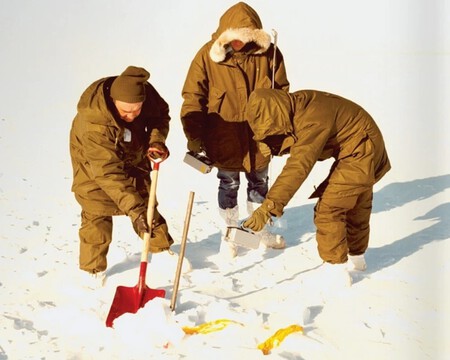
As the search unfolded, the extent of contamination proved to be more intricate than anticipated. Beyond visible satellite fragments, tiny radioactive particles were also discovered, complicating detection and removal efforts. This prompted teams to exercise extreme caution, necessitating expanded search areas. Simultaneously, engaging communications with local northern communities became a priority, addressing their concerns about health risks, water safety, and the safety of local wildlife.
As weeks went by, the operation focused its efforts, with the official phase of Morning Light lasting 84 days. Nevertheless, reports indicate that search activities extended throughout most of 1978, covering an impressive area of 124,000 square kilometers. During this period, 66 kilograms of debris were recovered, and Canada deemed the immediate threat to its population and environment contained. Subsequently, the Canadian government sought compensation, claiming $6.1 million from the Soviet Union. In 1981, the USSR agreed to pay half, marking an unusual diplomatic resolution for such an incident.
The case of Kosmos-954 did not conclude with the recovery of debris. Over the ensuing months, the incident provoked international discussions and intensified demands for increased safety regulations and transparency regarding nuclear power in space. Countries called for stronger guarantees and clearer communication on programs that had previously operated under a veil of secrecy. Ultimately, the episode underscored that accidents in space transcend political borders, with far-reaching consequences for third-party nations.
Images | Arctic Operational Histories