
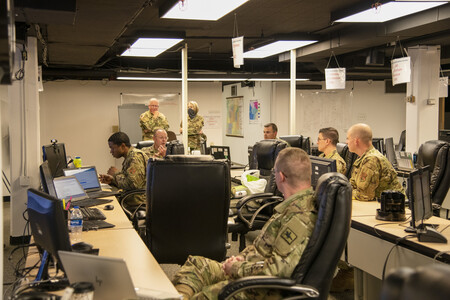
Several nations might equip their militaries with formidable ground, naval, air, and even space forces, but none can match the United States’ combined military prowess. Despite this superiority, recent global conflicts have illuminated a significant gap in U.S. military readiness: cyber warfare. The emergence of cyberattacks as an essential tool of modern confrontation poses intricate challenges that some experts believe expose vulnerabilities within the American armed forces.
The Inadequacy of Current Cyber Forces
A recent report by a commission formed through the Center for Strategic and International Studies (CSIS) and the Cyberspace Solarium Commission highlights a troubling diagnosis: the present structure of U.S. cyber forces is inadequate for effective deterrence, competition, and operational success in cyberspace. While the Pentagon boasts a wealth of specialists and operational capacity, the core issue lies in the lack of centralized responsibility for recruiting, training, and equipping personnel within U.S. Cyber Command (USCYBERCOM).
Military Spending vs. Capability
It’s important to note that military power must be measured in more than just financial figures. According to SIPRI, the U.S. was the largest military spender globally in 2025, investing nearly $954 billion, or 33% of total global military expenditures. Despite this fiscal dominance, analyses by organizations like GAO and Brookings indicate that the U.S. still excels due to its diverse capabilities, logistics, and strong alliances. However, when it comes to comprehensively addressing cybersecurity challenges, this spending may not translate to operational effectiveness.
The Missing Branch: Cyber Warfare
Perhaps the most baffling aspect of the report highlights the absence of a dedicated branch for cyber warfare in the U.S. Armed Forces. Unlike traditional combat domains that are supported by various military services, cyberspace lacks a similar structure. Instead, responsibilities are diluted across different services with no single authority overseeing the recruitment and training of cyber personnel, leading to disjointed and inconsistent training protocols.
Recruitment and Retention Challenges
The report further indicates that the divergent approaches among the five military services in recruiting and developing cyber talent create inefficiencies. Each service branch employs different criteria for recruiting, training, and career development, which complicates uniformity and effectiveness in building a cohesive cyber force. Katherine Sutton, a senior cyber advisor at the Pentagon, has underscored the difficulties in attracting skilled personnel and the challenge of retaining those talents against the lure of more lucrative private-sector opportunities.
Steps Toward Improvement
Although the Pentagon has not been stagnant, its efforts to mitigate these issues include initiatives like CYBERCOM 2.0, established in 2025 to bolster Cyber Command’s capabilities in talent management and training. However, critics assert that this does not rectify the fundamental problem: the necessity for a dedicated military branch focused solely on generating cyber capabilities.
Potential Solutions
The commission proposes establishing a specific Cyber Force responsible for organizing, training, and equipping personnel for both offensive and defensive operations. This force would complement USCYBERCOM, which would focus on the tactical employment of these personnel. By doing so, the various military branches could continue to manage their systems while relinquishing the sole responsibility for capabilities essential to offensive and defensive cyberspace operations.
A Call for Specialized Cyber Warfare Training
The paradox is striking: despite the U.S. maintaining the most potent military structure globally, it still lacks an organized force designed to meet the unique demands of cyber warfare. Experts argue that as cyberspace has emerged as a battlefront, the military must adapt and prepare through specialized training and dedicated resources.
In summary, while the United States is undeniably a leader in conventional military power, the rapid evolution of cyber warfare may expose significant weaknesses within its operational frameworks. Addressing these vulnerabilities will require strategic foresight and organizational changes that prioritize the establishment of a dedicated cyber warfare branch.