
Rising Tensions: The Threat of Closure in the Strait of Hormuz
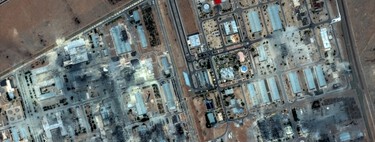
Recently, the United States launched a series of bombings on nuclear facilities in Iran, igniting significant tension in the geopolitical landscape. In response, Tehran’s Parliament quickly proposed the potential closure of the Strait of Hormuz , a crucial passage through which nearly one-fifth of the world’s oil and gas is exported by sea. While the final decision rests with the Supreme Leader, Ali Khamenei , the implications of this threat have sent shockwaves through maritime routes in the Persian Gulf.
On Monday, reports emerged that at least one Chinese oil tanker began to turn back, as detailed by the specialized account OilBandit. Other vessels are reportedly delaying their routes or changing course. Although the blockade has not yet been officially declared, the domino effect is already being felt. For China, which is Iran’s main energy partner and principal buyer of its crude oil, the risk of a heightened conflict poses both economic and diplomatic challenges.
The Strength of China’s Stance. The Chinese Ministry of Foreign Affairs has expressed its concerns, urging the international community to “maintain stability in the critical shipping routes of the Persian Gulf.” They called for efforts to de-escalate the conflict, as reported by The Wall Street Journal. Spokesperson Guo Jiakun confirmed that Beijing is in communication with Iran and other relevant parties.
Additionally, China has labeled the waters of the Gulf as “important channels of international trade ,” emphasizing that their safety is a shared interest . Meanwhile, Washington has explicitly requested that Beijing act as an intermediary. “They heavily rely on the Strait of Hormuz for their oil,” stated Secretary of State Marco Rubio, urging China to intervene to prevent a global catastrophe, according to Europa Press.
A Vital Route. China stands as the primary buyer of Iranian crude, making a potential closure a significant threat to this strategic supply chain. Furthermore, due to U.S. sanctions, many Iranian exports reach China via third-party countries like Malaysia, complicating oversight. Nonetheless, estimates cited by The Wall Street Journal suggest that China could absorb up to 90% of the oil exported by Iran, constituting approximately one-tenth of China’s total imports.
An Energy Bottleneck. The ramifications extend further. The Strait of Hormuz transports between 17.8 and 20.8 million barrels of crude oil daily, accounting for 20% of global liquefied natural gas (LNG) and one-third of liquefied petroleum gas. According to the Energy Information Administration (EIA) , around 84% of crude and 83% of LNG end up in Asian markets, with China being the primary destination. Neighboring countries like Qatar, the UAE, Bahrain, Kuwait, and even Saudi Arabia rely on this passage for hydrocarbon exports. Any closure would have immediate repercussions.
A Discomforting Position. While China has intensified its calls for dialogue, the situation places it in a strategic yet uncomfortable position as a mediator. Beijing has cultivated an “ unbreakable friendship ” with Tehran and signed a $400 billion economic cooperation agreement in 2021, granting it preferential access to oil and gas at competitive prices, as detailed by EFE.
However, the United States expects China to take an even bolder step. “If anyone can convince Iran, it’s China,” Rubio remarked. It remains to be seen whether Beijing is willing to embrace this role or if it prefers to allow others to manage the increasing pressure.
What Happens Next? While the Strait remains open for now, markets have already reacted. Brent crude has surged beyond $80 per barrel, and according to Lloyd’s List , insurance premiums for navigating the area are on the rise, even without an official closure. The tension is translating into additional costs and urgent logistical decisions. Iran’s Supreme National Security Council is yet to weigh in on the Parliament’s recommendation.
Meanwhile, China continues to observe cautiously. As noted by South China Morning Post, China already faced disruptions in the Red Sea due to attacks by Houthi militants from Yemen. A blockade in Hormuz could replicate or even exceed that level of disruption.
Could China Emerge Stronger? It’s important to note that China possesses strategic reserves of oil and gas, allowing it to cushion the impact of a supply cut temporarily. If other Asian countries were left without supply, they could potentially turn to energy through infrastructure and commercial channels controlled by China. Furthermore, China’s diversified energy strategies might provide it latitude.
However, the situation remains fraught with uncertainty. Chinese ships are starting to reverse course, altering their routes. Within a mere nine kilometers of width, the energy balance of the entire planet teeters on the edge of disruption.
Image Source: European Space Agency (Flickr) and PXHere
Xataka: The question is no longer if the U.S. will attack, but whether Iran will follow through on its threat: 9 kilometers of water are keeping the world in suspense.