
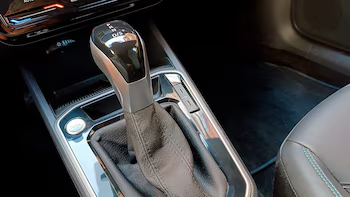
Understanding the Secrets of Managing Automatic Transmissions in Economical Cars
In recent years, many affordable car models have embraced automatic transmissions, specifically the continuously variable transmission (CVT). This innovation allows even budget-friendly vehicles to offer features that were once exclusive to high-end cars. However, successfully navigating the nuances of these CVT systems often requires a different approach from traditional automatic or manual transmissions.
What is a CVT?
A continuously variable transmission replaces traditional gears with a system of two conical pulleys connected by a belt. The design allows for a seamless transition between gear ratios, resembling how a bicycle shifts gears through pulleys. This system minimizes the number of moving parts, resulting in lower manufacturing costs and improved fuel efficiency.
Benefits of CVTs
Simplicity and Cost-Effectiveness: CVTs are generally simpler than traditional automatic transmissions, containing fewer components like gears and linkages. This simplicity leads to reduced costs for manufacturers, making cars equipped with CVTs more accessible to consumers.
Fuel Efficiency: By continuously adjusting the gear ratio, CVTs can keep the engine running at its optimal RPM, enhancing fuel consumption. This can be particularly advantageous in urban driving conditions.
Challenges of CVT Driving
While CVTs come with multiple benefits, they also present unique challenges that drivers must navigate:
Response Time: When accelerating from a stop, many drivers experience a delay in response, often feeling as if the vehicle is stuck in a “gear.” This is primarily due to the lack of traditional gear shifts.
Understanding the Mechanics: It can be challenging for drivers to acclimate to the absence of physical gears. The sensation of shifting is simulated, which can lead to confusion, especially for those transitioning from vehicles with conventional transmissions.
Tips for Effectively Managing a CVT
Gentle Acceleration: To mitigate the delay in response, drivers should accelerate gently. This allows the CVT to operate smoothly without demanding a rapid downshift, preventing what’s called a “gap” in acceleration.
Utilize Manual Mode: Most CVTs come with a manual option, allowing drivers to control when to shift (even if shifts are simulated). Engaging manual mode can provide more control during dynamic driving situations.
Use Steering Wheel Paddles: If equipped, using paddle shifters can help drivers react more quickly when immediate acceleration is required, creating a more responsive driving experience.
Final Thoughts
The move toward CVTs in affordable cars reflects a broader trend of making advanced automotive technology accessible to a wider range of consumers. However, mastering this technology requires patience and adaptation. Understanding the operation of CVTs and adjusting driving habits can significantly enhance the experience, ensuring that drivers reap the benefits of fuel efficiency and modern conveniences without frustration. Whether choosing between a CVT or a traditional transmission, it’s essential to weigh personal driving preferences against the practicality of operating these newer systems.