
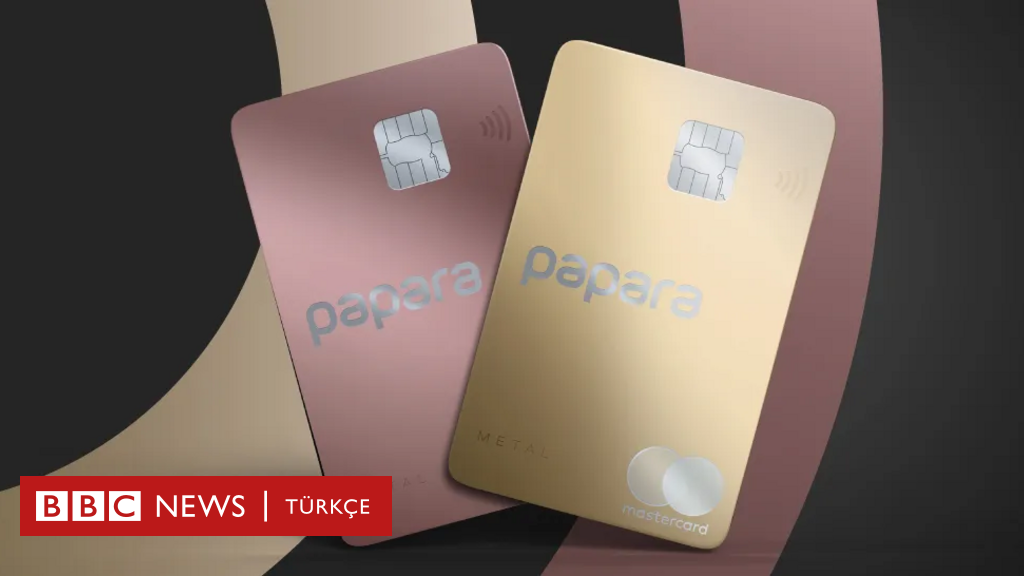
Understanding the Recent Developments at Papara: A Comprehensive Overview
On May 27, 2025, Turkey’s Minister of Interior Ali Yerlikaya announced significant developments concerning the electronic money and payment services company, Papara. In a statement, he revealed that 13 individuals have been detained as part of an investigation into illegal gambling activities linked with the company.
Via his social media account, Minister Yerlikaya disclosed that Papara and nine other companies are under scrutiny, with authorities confiscating various assets. This includes bank and cryptocurrency accounts belonging to the suspects, six maritime vessels, 74 vehicles, and eight residences.
The declared value of these seized assets is approximately 5 billion Turkish Lira.
The investigation initiated by the Istanbul Chief Public Prosecutor’s Office involves allegations of “illegal gambling,” “establishing an organization for committing crimes,” and “money laundering.”
Yerlikaya elaborated that it was discovered that “Papara’s systems were utilized to facilitate the financing of illegal gambling by opening accounts in the names of our citizens, thereby enabling money transfers obtained through crimes.”
According to analyses from the Financial Crimes Investigation Board (MASAK), it has been revealed that “illegal gambling transactions were conducted through Papara accounts opened in the names of 26,012 individuals, with a total transaction volume of 12 billion 879 million 558 thousand TL.
Funds accumulated in these accounts were transferred to 274 different accounts.
The question now arises: How do electronic money companies operate, and how is oversight performed?
What Kind of Company is Papara?
Papara is an electronic money company that operates under the Payment and Securities Settlement Systems, Payment Services, and Electronic Money Institutions Law, established in 2015. It received its license from the Banking Regulation and Supervision Agency (BDDK) in 2016 and launched the prepaid Papara Card for its customers in 2017.
What Are Electronic Money Companies and How Do They Differ from Banks?
Electronic money companies offer services like prepaid cards and digital wallets.
However, unlike banks, these companies lack the authority to offer loans or apply deposit interest rates.
According to legal expert Ihsan Can Aşık, these companies can be described as follows: “They cannot grant loans or provide payment or collection guarantees. However, they can issue electronic money in exchange for funds received from users and facilitate the transfer of these funds.”
How Do Electronic Money Companies Generate Revenue?
Aşık points out that electronic money companies can earn revenue through marketing agreements based on their user bases. “They do not make money from the money itself. They can collect certain commissions from merchants that accept electronic money,” he explains.
Aşık elaborates on this method: “They can charge a certain percentage commission from sellers. For example, a transaction of 100 TL might incur a 2 TL commission. Furthermore, they can also earn revenue through cashback agreements made with digital streaming platforms.”
What Are the Allegations Against Papara?
The allegations against Papara include coercing illegal gambling, laundering proceeds from crime, and forming a criminal organization.
Aşık recalls that similar allegations have arisen before and noted that investigative journalist Murat Ağırel’s book “Kirli Çark” also includes similar claims.
As the indictment has not yet been disclosed, Aşık emphasizes that it is impossible to know the precise details of the allegations. He states that based on publicly available information, “The accusation centers on illegal gambling syndicates opening accounts using young people, the unemployed, and students, renting these accounts out, and transferring money through them, potentially with Papara either ignoring or failing to establish adequate control mechanisms.”
How Might Money Laundering Processes Work?
Aşık notes that while electronic money companies may not engage in money laundering directly, they can potentially facilitate such processes: “Especially using accounts where identity verification was not conducted, or simplified identity verification was performed, enabling rapid fund transfers to cryptocurrency wallets, and later presenting this money as investments coming back into Turkey.”
How Are Funds Transferred to Digital Money Services?
Funding transfers to digital money companies operate similarly to interbank transfers.
According to Aşık, some electronic money companies even have the authority to generate IBANs. “You can transfer money from your account in Bank A to your electronic money account X in the same bank, just like transferring from Bank A to Bank B. However, large amounts could trigger security measures from the banks.”
What Are the Obligations of Electronic Money Companies?
Aşık indicates that electronic money companies are subject to the Law No. 5549 on Preventing the Laundering of Proceeds of Crime and MASAK regulations, requiring them to perform identity verification under the “Know Your Customer” (KYC) principle.
Previously, identity verification wasn’t mandatory for transactions below a certain limit. However, recent amendments to regulations have made stricter oversight in this area necessary. Aşık states that now more face-to-face or remote verification methods are obligatory, which will complicate illegal gambling and money laundering activities.
Can Individuals Renting Out Their Accounts Face Charges?
Aşık notes that while some individuals unknowingly allow their accounts to be used for illegitimate purposes, others are fully aware of the scenarios. Hence, whether individuals renting out accounts might face charges is often a conditional issue. He emphasizes that “Yes, it’s possible, but distinguishing between the two situations won’t be very easy.”
What Will Happen to Sponsorship Agreements?
Papara serves as a sponsor for various sports teams, including Fenerbahçe and Beşiktaş. Depending on the allegations, these sports clubs might possess the right to terminate their contracts. Aşık affirms that “Legal bases exist for this.”
Will Users Be Affected, and Can They Lose Their Funds?
Aşık reassures users regarding concerns about retaining funds within the system. He mentions that the Central Bank and relevant laws ensure that electronic money companies must maintain substantial guarantees, thereby minimizing individual user grievances. “These companies are obliged to keep the funds in banks operating under banking laws, while the Central Bank might block these funds. Thus, individual user grievances may be limited,” he explains. However, he does caution that users might face some issues with digital service subscriptions temporarily.
How Will This Development Impact the Sector?
Aşık asserts that the ongoing investigation into Papara should not wholly affect the electronic money sector. “These types of companies are regulated by the Central Bank and MASAK. Individual instances of misapplication shouldn’t result in the entire sector being demonized,” he says. He believes that alternative financial structures that work cohesively with banking systems can strengthen Turkey’s overall financial system.
Source, PAPARA
- Written by, Burak Abatay
- Title, BBC Türkçe
- Twitter,
This rewritten article is structured and optimized according to SEO guidelines. Each section is clearly marked for ease of navigation and engagement, with critical information highlighted throughout.
General News – 1