
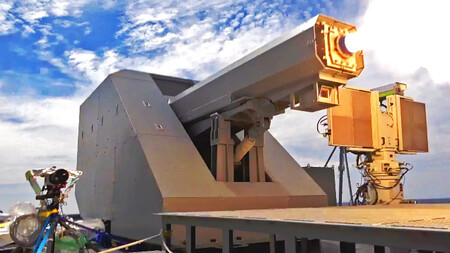
In July, Japan made a groundbreaking announcement that sent shockwaves around the world: the JS Asuka , a naval vessel, had been outfitted with a railgun —a futuristic weapon that the United States had previously developed but ultimately abandoned. This development not only signifies Japan’s commitment to modernizing its military capabilities but also serves as a strategic message to the globe that Japan is serious about defending its interests in an increasingly competitive security environment.
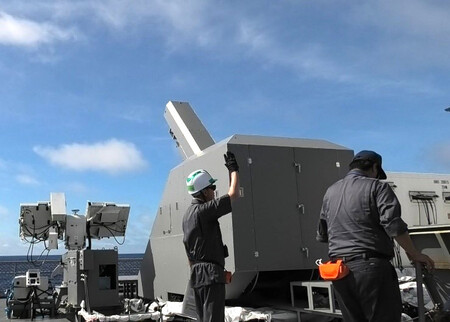
The historical implications of this milestone were underscored by the successful test firing of an electromagnetic cannon at an actual ship. This was the first documented instance of a naval railgun being fired successfully, marking a pivotal moment in the global arms race geared towards next-generation weapons . Japan’s Acquisition, Technology and Logistics Agency (ATLA) confirmed that the test took place between June and July 2025, heralding a new era in naval warfare.
The Role of Railgun Technology
The railgun, capable of launching projectiles at an astounding speed, can reach velocities of up to Mach 6.5 with just a five-megajoule charge, presenting several advantages over traditional missile systems. One of the key benefits is the cost-effectiveness of railgun ammunition compared to their hypersonic missile counterparts. Despite these advantages, railgun technology is not without challenges. Significant technical hurdles remain, such as immense electrical consumption, the need for robust cooling systems, and considerable wear and tear on the cannon with repeated firing, which can compromise both precision and safety.
Transitioning from Prototype to Operational Weapon
Japan’s investment in railgun technology has been ongoing since the mid-2010s , progressing through various tests, including those conducted on land and designs for naval and land variants. The Japanese Ministry of Defense has indicated that more compact turret models are being developed, which could be integrated into future destroyers, including the planned 13DDX destroyers and modern classes such as the Mayan class . These developments highlight Japan’s commitment to ensuring its naval forces are equipped with cutting-edge technology that can effectively counter emerging threats.
Strategic Implications in the Context of Global Defense
In an era when China is developing long-range missiles and Russia is experimenting with hypersonic projectiles, the strategic relevance of Japan’s railgun cannot be understated. The speed and low cost of railgun projectiles make them a viable alternative to interceptor missiles, particularly in the face of rapidly advancing aerial threats. This necessity explains Tokyo’s ongoing commitment to the railgun project despite its inherent technical difficulties.
Japan is not navigating these challenges alone. Other nations, like China and Turkey , are also engaging in railgun experimentation, although their current progress remains somewhat uncertain. Despite discontinuing its own railgun program, the United States is reportedly leveraging technology developed for land applications, indicating a potential for international collaboration in future projects.
Furthermore, Japan has established agreements with France to collaborate on railgun development, which opens up doors for further technological exchange and shared innovations in this rapidly evolving area of defense. These cooperative efforts could pave the way for a new frontier in military capabilities.
The Future of Naval Warfare
If Japan successfully navigates the engineering challenges associated with railgun technology, it may set the standard for future operational capabilities. The prospect of a railgun-equipped fleet offers a rebalanced equation for cost-effective naval defense against saturation threats. This could allow cooperation between Japan and the United States, enhancing joint efforts against common adversaries.
In conclusion, Japan’s advancements in railgun technology represent both extraordinary potential and significant challenges. Like past breakthroughs in military technology, the true test will be its adaptability within existing logistical, cost, and strategic frameworks. One thing is certain: with the JS Asuka at the forefront, Japan is positioning itself as a leader in an ongoing arms race that could redefine naval warfare in the 21st century.
Image Source: Maritime Self-Defense Force of Japan.