
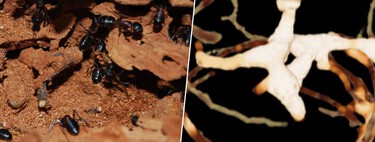
Discovering New Ant Species in Spain: The Oxyopomyrmex Genus
The list of animal species that inhabit Spain has added two new names. And this time we are not talking about exotic species imported from a distant country, but about the discovery of two new species of ants in Andalusia.
Two new species. The finding of the two new species both belonging to the genus Oxyopomyrmex, has been in charge of the researcher at the University of Córdoba (UCO), Joaquín Reyes López . It’s about O. arenarius and O. pallens, discovered thanks to specimens found in Jaén, Granada, and Huelva, including the renowned Doñana National Park .
The genus of ants Oxyopomyrmex is classified within the subfamily of the Myrmicinae . These, as explained by Reyes López himself, can be found in the arid areas of the Mediterranean basin , although it is a taxonomic group on which there is little available information.
Until now, we only knew the presence of two species of this genus in Spain, namely O. santschii and O. saulcyi. This new finding alters the number of known species of this group in the country, which now stands at four. According to the University, the discovery adds two new names to the list of about 300 species of ants that inhabit the *Iberian Peninsula *, as noted by the EFE agency.
Oxyopomyrmex arenarius: According to Reyes López, the name of this new species refers to the fact that all its nests were found in sandy soils . This species, whose type location is the Biological Station of the Doñana , presents an oval head, and a coloration that ranges from the dark brown of its head and abdomen to lighter tones in its joints.
Oxyopomyrmex pallens: The name of the second identified species is derived from its pale coloration , which includes light and yellowish brown tones throughout its body. In this case, the municipality where it was first found is Mures , located in the province of Jaén.
Electronic scanning microscopy. For the analysis, Reyes López turned to electronic scanning microscopy, a sophisticated technique that allowed him to closely study the morphological characteristics of these ants and compare them with features of other similar species.
The details of the study have been published in an article in the journal Insects.
By limiting the territory. As one might expect, our understanding of these ants remains limited. The findings suggest that these species are typical of the southern part of the Iberian Peninsula , but there is potential for their habitat to extend further. Therefore, discovering more specimens could inform us about the geographic range occupied by these new species.
Image | Reyes López, 2025/Insects / Protoculture
The discovery of these two new ant species not only adds to our understanding of biodiversity in Spain but also highlights the importance of ongoing research in various ecosystems. Each species, such as O. arenarius and O. pallens, offers a glimpse into the intricate web of life that exists within the Mediterranean basin . Ongoing efforts to explore and document these species will undoubtedly provide further insights into their roles in the ecosystem and the potential impacts of environmental changes.