
Redefining Our Understanding of the Paleolithic Diet: Insights from Ancient Tools
Imagining the diet of humans tens of thousands of years ago often leads us to the concept of the paleo diet . For many years, it was widely accepted that this diet primarily consisted of meat . However, recent studies have challenged this notion, shedding light on the plant-based components that played a significant role in our ancestors’ diets. Archaeological finds, including tools from ancient times, provide valuable insights into this area of research.
The latest notable discovery comes from China, featuring tools that are estimated to date back at least 300,000 years .
The Groundbreaking Discovery
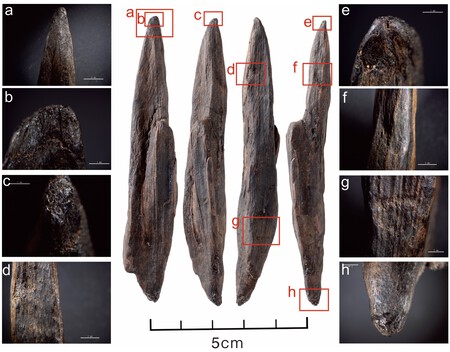
Researchers have published findings in an article on Science, detailing a series of 35 wooden tools found at the Gantangqing archaeological site in southwest China. The researchers employed Electronic Spin Resonance methods to date the sediment minerals stuck to these tools, revealing that they likely originated between 250,000 and 361,000 years ago .
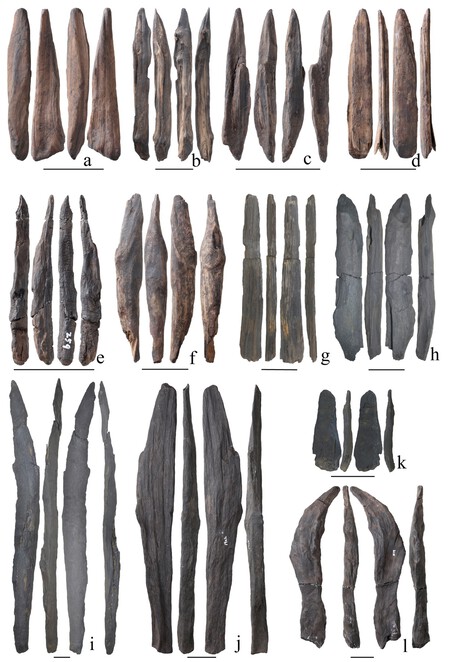
This collection showcases a variety of tools, including large sticks for digging, hooks, and smaller implements. Each tool exhibits distinct manufacturing marks, such as rounded ends , sharper parts, and polished surfaces that suggest they were purposefully crafted.
The Role of Collectors
While hunting was indeed significant during prehistoric times, increasing evidence suggests that a plant-based diet was equally essential prior to the advent of agriculture . Experts believe these tools were not designed for hunting, but rather for processing plant foods . Analyzing the waste materials and use markings on the tools indicates their primary function was to excavate and collect edible roots, tubers, and other plant matter. For example, hook-shaped tools may have been used to cut smaller roots, while others were likely employed for cleaning vegetables effectively.
Contrasting Approaches
What makes this discovery particularly intriguing is its divergence from previous findings. In Western Eurasia and Africa, similar wooden tools from the same era have been discovered, but they predominantly catered to hunting . In stark contrast, the tools at Gantangqing are not only more diverse but are mainly specialized in the collection of plant materials .
The Significance Beyond Diet
The tools, which date back to the late Paleolithic era when stone tools were predominant, raise questions about the resource availability in East Asia. It has been hypothesized that stones were scarcer in this region compared to others, making organic tools like wood vital. This reliance on plant-based tools reveals the cognitive abilities of Southeast Asian populations that parallel those of their European and African contemporaries, highlighting their advanced tool-making skills.
Ultimately, such a seemingly simple discovery —a collection of ancient tools—allows us to draw connections between the diets of our ancestors, their technological abilities, and their adaptation strategies in facing environmental challenges. It also challenges the long-standing idea that stone tools were the sole focus of Paleolithic technological evolution, suggesting that wood and plant processing equally played a significant role in the journey of human development.
As we continue to uncover more evidence about our ancient past, each new finding helps us revise our understanding of early human life, ultimately revealing that our dietary habits and technological capabilities were more sophisticated and varied than previously thought.