
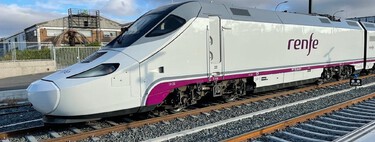
Overview of the Vigo-Madrid AVE Route
A little over a year ago, controversy arose between autonomous communities concerning the AVE high-speed train link between Vigo and Madrid. Abel Caballero, the mayor of Vigo, highlighted that one significant factor behind the delays was “an excessive number of stops in the Castilla y León area.” In response, authorities announced a “direct” train service from Vigo to Madrid, excluding stops in this autonomous community.
A Dire Promise: Longer Travel Times
The initially promised travel time for the AVE connection was 215 minutes (or 3 hours and 35 minutes). Since the launch of this high-speed corridor, achieving this promise has been a challenge. Despite the ambitious announcement made by Óscar Puente in 2024, current experiences show that the train journey often exceeds four hours. In many cases, only minimal improvements have been seen, with most trips lingering around the 240-minute mark—a frustrating reality for passengers.
The Quest for Fewer Stops
To address travel delays, Caballero suggested that trains should not stop in Castilla y León. He pointed out that most time was wasted due to these stops, emphasizing the region’s already extensive train coverage. Local media reported his perspective, which was met with immediate pushback. Renfe quickly rejected these ideas, while Alfonso Fernández Mañueco, president of Castilla y León, termed Caballero’s statements “intolerable.”
Direct Service with a Twist
Starting May 20, a new timetable offered a “direct” AVE service from Vigo to Madrid without stops in Castilla y León. The new train will depart Vigo at 5:50 a.m. and reach Madrid by 9:55 a.m. It promises to streamline travel by stopping only at selected Galician cities before heading straight to Madrid’s Chamartín station. Yet, the reality is that passengers now must wake up earlier, and journey times seem paradoxically longer.
Timing Challenges for Other Cities
Despite the introduction of this direct service, residents from other areas like Ourense and Pontevedra face their own issues. Those in Ourense will experience a minimal reduction in journey time—only four minutes less—while Pontevedra’s residents will take eight minutes longer than they did previously. Given this reorganization, it has become clear that almost all trains from Vigo to Madrid are now taking over four hours.
Responsibilities of Adif in the Delay
Much of the delay stems from ongoing works in the Guadarrama tunnel, adding about seven extra minutes to the journey. Moreover, temporary speed limits along the Galician section continue to impede travel times. In light of these challenges, Renfe has voiced frustrations concerning Adif’s management of infrastructure, asserting that necessary updates to crossings and timing have not been made.
AVE Reliability and Performance Concerns
The introduction of the Talgo Avril train has significantly impacted the performance of the AVE corridor. Despite earlier concerns regarding the overall reliability of these trains, they have shown the capacity to reach the promised travel time of 215 minutes. However, instances of achieving these benchmarks appear to be exceptions, primarily serving to alleviate delays rather than represent standard performance.
Final Thoughts
As the new direct AVE service takes off, residents remain skeptical of the promised improvements in travel times. The combination of increased wake-up times and limited reductions in travel duration raises questions about the true benefits of the recent changes. Stakeholders will need to address these ongoing concerns to enhance the travel experience for all passengers along the Vigo-Madrid corridor.