
The Curious Case of the Necronomicon
In 1922, a young writer from Providence introduced a cursed tome that didn’t exist in any library worldwide: the Necronomicon. A century later, what began as a private joke has led to real-life sects, plagiarism accusations among New York occultists, and even the release of a new Spanish edition exceeding 600 pages. The Necronomicon was never written, yet it continues to surface frequently, hinting at some enigmatic truth hidden within its fictional pages.
Neonomicon: The Latest Edition
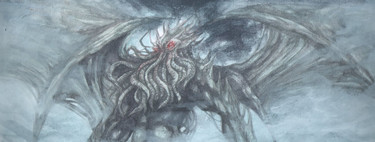
Duomo Ediciones recently released a new Spanish edition of the Necronomicon. This volume, spanning 648 pages, compiles nearly all the references to this dark tome throughout Lovecraft’s extensive body of work and those of other writers influenced by him. Illustrated by Greta Grendel, the book emphasizes its fictional nature while still captivating the imagination of readers.
The content was curated by Italian Giuseppe Lippi, who organized the material into three sections: “The Dream,” “The Myth,” and “The Terror.” In his prologue, he aligns the Necronomicon with other impossible literary works like Jorge Luis Borges’s Pierre Menard’s Don Quixote and Robert W. Chambers’s The King in Yellow. The Necronomicon serves as a literary atlas, charting Lovecraft’s influential yet deliberately fictional creation.
The Origins of a Fictional Artifact
Howard Phillips Lovecraft first mentioned the Necronomicon in 1922 in his story The Hound, published in Weird Tales in 1924. He referenced its supposed author, the Arab Abdul Alhazred, a year earlier in The Nameless City, presenting a couplet about a death that can die. Lovecraft expanded on this fictional history in 1927 with History of the Necronomicon, claiming the original text was penned in 8th century Yemen, later translated into Greek around 950 AD. Lovecraft unabashedly acknowledged the made-up nature of this artifact, writing in a letter, “there was never any Abdul Alhazred or Necronomicon: I invented those names.”
The Necronomicon in Lovecraft’s Works
The tome’s presence remains significant in Lovecraft’s stories. In The Dunwich Horror (1929), the Necronomicon features prominently as Wilbur Whateley seeks a complete copy at Miskatonic University, only to face dire consequences when he attempts to steal it. Lovecraft meticulously crafts a world where the Necronomicon not only exists but also acts as a harbinger of chaos and terror.
In At the Mountains of Madness (1936), the explorers uncover vital information about the shoggoths within its pages. The Necronomicon not only enriches Lovecraft’s narratives but also serves as a key to unlocking the darker mysteries of his literary universe.
The Real Necronomicon: A Shift in Perception
The idea of a “real” Necronomicon emerged in 1977 with the publication of Simon’s Necronomicon, a pastiche that blended Sumerian and Babylonian mythology with Lovecraftian elements. This iteration, created by Herman Slater, the owner of a New York esoteric shop, aimed to appease customers longing for a tangible form of the legendary book. Writers often attribute its creation to Peter Levenda, who used the pseudonym Simon.
As the Necronomicon transitioned from a limited hardcover release to mass-market paperback, the cultural landscape shifted. Notable figures, including William S. Burroughs, praised its revelations, arguing that concealing mystic knowledge only served the privileged elite. This evolving narrative suggested that Lovecraft had inadvertently tapped into authentic occult teachings, with his fictional gods being representations of real forces.
A Lasting Legacy in Film and Comics
The Necronomicon’s influence extends beyond literature into film and comics. In Sam Raimi’s Evil Dead franchise, the “Necronomicon Ex Mortis” plays a pivotal role, awakening ancient spirits. Additionally, Alan Moore’s Providence delves into the origins of the book, culminating a trilogy that started with The Courtyard and Neonomicon.
As a result, the legend of the Necronomicon has persisted and thrived in modern pop culture, proving that even a fictional book can ignite genuine intrigue and creativity across multiple mediums.