
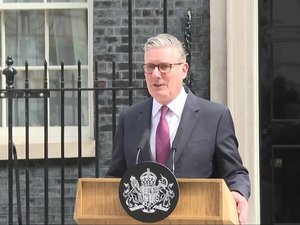
Very unpopular recently, Keir Starmer gave in under pressure. He has just announced his resignation this Monday June 22, 2026. The favorite to succeed him is Andy Burnham, the mayor of Greater Manchester.
British Prime Minister Keir Starmer announced his resignation on Monday during a speech in front of Downing Street in London, specifying that he would remain in office until the appointment of his successor at the head of Labor.
“The Country I Love”
“Every decision I have made has been about putting the country I love first. That is why I will resign as leader of the Labor Party,” he declared, his voice choked with tears.
Starmer’s emotional farewell was a culmination of growing dissatisfaction with his leadership. Since taking office in July 2024, he faced multiple challenges, both from within his party and the broader public. His recent unpopularity surged, particularly following a significant parliamentary by-election victory by his political rival, Andy Burnham, the current mayor of Greater Manchester. This victory acted as a catalyst, amplifying dissent within the party and prompting calls for Starmer to step down.
The Context of Pressure
Keir Starmer’s tenure as Prime Minister was marked by turbulent times. In a political landscape often characterized by uncertainty and division, he struggled to unite his party and address pressing issues such as economic stability and public health. The recent by-election was viewed as a referendum on his leadership, and with Burnham’s rise, it became clear that a faction within the Labor Party was ready for change.
Starmer’s resignation letter underscores his lifelong commitment to public service, stating that his decisions were motivated by the welfare of the country rather than personal ambition. This focus on prioritizing the nation’s interests reflects a deep understanding of political accountability, a lesson learned through experience.
The Next Steps for Labor
As Keir Starmer prepares to step down, all eyes are on who will take the helm of the Labor Party. Andy Burnham, given his recent success, is the favorite to succeed him, bringing a wealth of experience and a strong connection to the electorate. Burnham’s emphasis on grassroots politics and regional issues resonates well with constituents, potentially positioning him as a unifying force for the party.
The transition period will be crucial, as the new leader will need to galvanize the party, rebuild public trust, and outline a clear vision moving forward. The challenges are significant, but a new leader may also provide an opportunity for renewal and reinvigoration within the party.
Conclusion
Keir Starmer’s resignation marks a pivotal moment in British politics, signaling not only the end of his leadership but also the potential for new beginnings within the Labor Party. As the nation watches closely, the future of Labor will depend on how well it can navigate the leadership change and reengage with the public in a meaningful way.
> More information to follow on Midi Libre…