
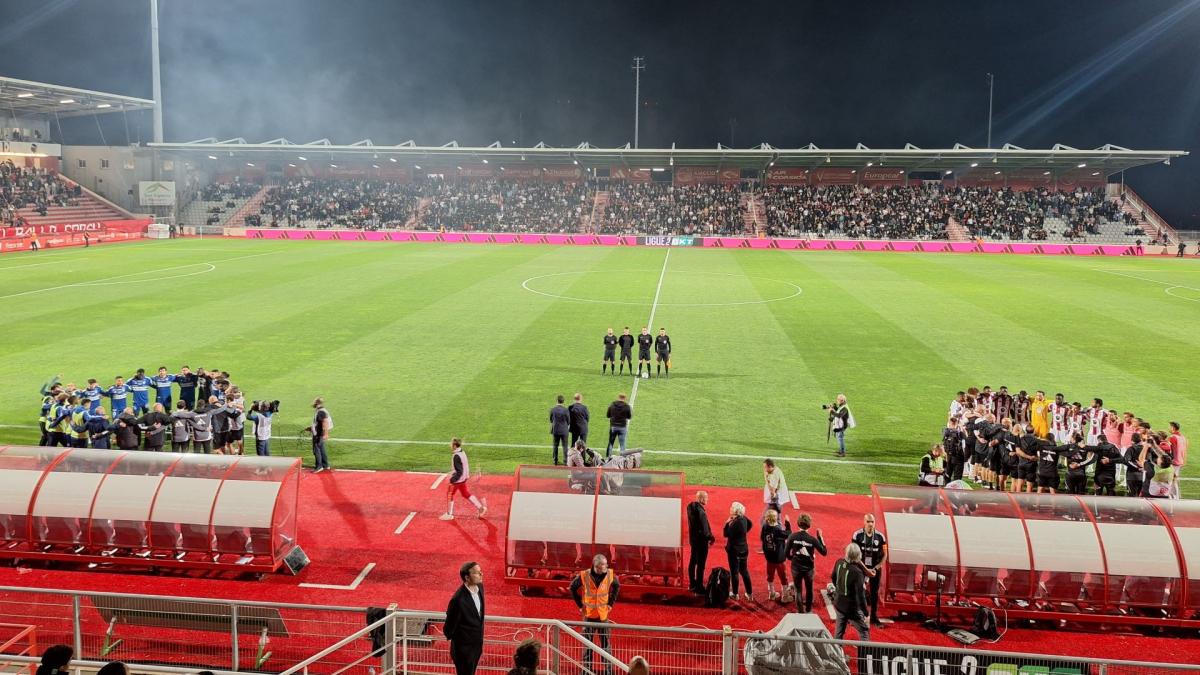
AC Ajaccio: A Club in Turmoil Amid Financial Scandals
AC Ajaccio, a club steeped in history and tradition, finds itself at the center of a storm as investigations into alleged financial misconduct unfold. The announcement from Jean-Philippe Navarre, the public prosecutor of Bastia, revealed that two surveys have been initiated regarding serious allegations of extortion, fraud, and forgery. These investigations come in the wake of the club’s severe financial difficulties, which ultimately led to its relegation and judicial liquidation in August.
Background on AC Ajaccio
Founded in 1910, AC Ajaccio, also known as ACA, has made significant contributions to French football. The club has earned notable achievements, including two Ligue 2 titles in 1967 and 2002, and several appearances in Ligue 1, the top tier of French football. However, the recent revelations threaten to overshadow its rich legacy.
Historically, ACA enjoyed a strong fan base and has been a vital component in the community of Ajaccio. Unfortunately, this proud club has struggled with financial viability, culminating in the alarming announcement that it would be excluded from all national competitions for the upcoming 2025-2026 season.
Current Investigations
The crux of the ongoing investigations is centered around allegations that have raised eyebrows in the football community. As stated by the prosecutor, “The economic and financial pole of the Bastia prosecutor’s office has made recipient of several information notes as well as two complaints filed by its leaders and the French Football Federation.” This indicates that the issues at ACA are not solely an internal matter, but rather involve multiple stakeholders, raising questions about accountability and governance within the club.
The investigations have been assigned to the interdepartmental management of the national police and the inter-ministerial research group of Corse-du-Sud. This underscores the seriousness of the allegations, which could have far-reaching consequences for not only the club but also its management.
Financial Crisis and Judicial Liquidation
The club’s plight worsened when it was revealed that ACA had a staggering debt of approximately €13.5 million. This financial burden led to its professional structure—a simplified joint stock company (SAS)—being placed in compulsory liquidation on August 20. With 65 employees affected by this decision, the emotional and economic ramifications are significant.
Reports from Tracfin, a French governmental agency responsible for monitoring financial transactions, have also been disclosed. These reports are pivotal in understanding the financial practices within the club and suggest that more is at stake than merely poor management decisions. The fact that these documents are under scrutiny highlights a potentially deeper, systemic issue within ACA and perhaps even in the broader French football ecosystem.
Historic Significance
AC Ajaccio has made a mark on French football not only for its achievements but also for its resilience. The club has seen various ups and downs, including its most recent tenure in Ligue 1 during the 2022-2023 season. Yet, with the present circumstances, it seems that this historic entity may face challenges that threaten its very existence.
As one of the oldest clubs in France, the potential loss of ACA would resonate beyond the football pitch. It would represent a significant loss to local history and culture, given that sports clubs often serve as community pillars.
Future Implications
The future of AC Ajaccio now hangs in the balance. The ongoing investigations could reveal significant ramifications involving financial management practices, which may even implicate higher-ups within the club and the national football federation. Should culpability be established, it’s likely that this would not only affect the club’s operations but could also lead to a reevaluation of financial regulations governing football organizations across France.
The turmoil facing ACA raises crucial questions about the integrity of football governance within the nation. If not addressed, it could have a broader impact, not just locally but throughout European football, and bring to light pressing concerns about financial ethics, compliance, and accountability in the sport.
In conclusion, AC Ajaccio’s current situation serves as a cautionary tale for football clubs aiming for stability and sustainability. The unfolding investigations indicate that scrutiny is warranted at all levels of football management to ensure the integrity of the game for future generations. As fans, communities, and stakeholders watch this saga unfold, the hope remains that AC Ajaccio will emerge from this turmoil stronger, with lessons learned to foster a thriving future in the competitive world of football.