
Trump’s Call for Dialogue with Iran Amid Tensions
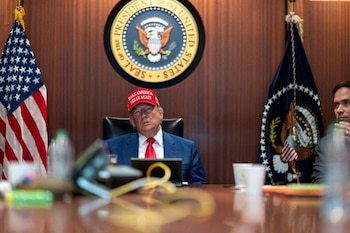
The President of the United States, Donald Trump, stated Thursday that he is open to meeting with Iranian officials “if required” to resume discussions on Tehran’s nuclear program. He encouraged Iran to return to the negotiating table, emphasizing the need for dialogue.
“Iran wants to dialogue, and I think they would like to talk to me. And it’s time to do so,” Trump asserted during a speech at Andrews Air Force Base, located outside Washington. This announcement comes as Trump was set to fly to Iowa for a public event aimed at celebrating the enactment of what he termed his “Great and Beautiful Law” in the House of Representatives.
These remarks occur in the wake of recent Israeli attacks against targets in Iran, a military operation that had U.S. backing. In this context, Trump noted that his administration does not seek to escalate tensions with Iran, adding, “They have received a beating. And, frankly, we are both exhausted.”
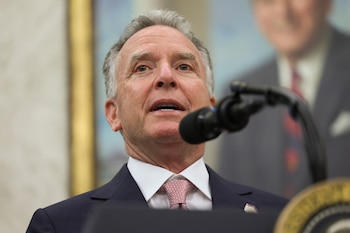
In his address, Trump also commended the efforts of Steve Witkoff, his special envoy for the Middle East, whom he described as “a great negotiator.” He highlighted Witkoff’s “fantastic job” in mediating the nuanced dynamics in the region.
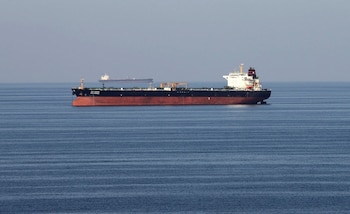
On the same day, U.S. authorities announced a new sanctions package targeting Iran and its so-called “Ghost Fleet” utilized for circumventing previous restrictions and continuing the international export of crude oil. This comprehensive measure also includes actions against the group Hezbollah.
These sanctions are aimed at hindering the Iranian regime’s access to crucial resources needed for both its international activities and the operations of the Revolutionary Guard.
U.S. Treasury Secretary, Scott Besent, explained that the new set of sanctions affects six entities connected to Iran’s crude oil export network.
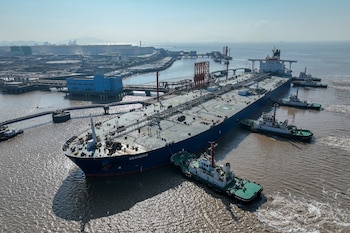
Among the organizations that have been sanctioned are companies managed by Iraqi businessman Salim Ahmed Said, used for transporting Iranian oil through Iraqi territory. Furthermore, the sanctions encompass four ships identified as part of the logistics network that continues oil sales despite international sanctions.
The measures focus on “all networks accused of facilitating the transport of this oil,” according to Besent, who stressed the Treasury Department’s commitment to increasing pressure on the financial resources that support the activities deemed destabilizing by the Iranian regime.
The official statement accentuates that these resources directly benefit the Revolutionary Guard, a body that has already faced previous sanctions imposed by the United States.
Besent commented that the U.S. government’s stance reflects the Iranian regime’s actions and their reverberating effects. “As President Trump has already made clear, Iran’s behavior has been weakened. Although he had all the opportunities to choose peace, his leaders have chosen extremism,” he remarked in the statement issued post-announcement of the sanctions.
He concluded by stating that the measures intend to disrupt the Iranian government’s access to strategic resources, asserting, “The Treasury will continue to intensify pressure on the regime’s capacity to access financial resources that support their destabilizing activities.”
The ongoing dialogue and sanctions reflect the complex and evolving dynamics of U.S.-Iran relations, highlighting both the potential for negotiation and the persistent threats seen in the region.