
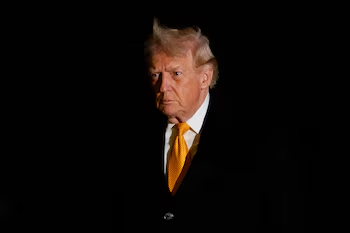
Trump Claims Control Over Venezuela
The current geopolitical landscape has taken a dramatic turn, with U.S. President Donald Trump asserting that his administration is “in charge” of Venezuela. This statement comes on the heels of a significant military operation that led to the capture of Venezuelan President Nicolás Maduro, promptly appointing Delcy Rodríguez, the former vice president, as the acting president.
Prioritizing Oil Over Democracy
Trump has emphasized that his primary focus is on Venezuela’s oil industry rather than promoting democratic reforms or the release of political prisoners. Despite being questioned about electoral processes and the fate of political dissidents, Trump explicitly stated that these matters are not his priority. Instead, he insists that fixing the country’s oil infrastructure is paramount.
“We are in charge of Venezuela,” he stated firmly during a press briefing. This declaration underlines the U.S. government’s strategy to gain “total access” to Venezuelan oil—a resource he considers crucial for rebuilding the nation. This sentiment echoes a broader strategy seen across various administrations, casting economic interests as a tool for geopolitical maneuvering.
Threats of Military Action
Moreover, Trump has hinted at potential further military action if the Venezuelan government does not adhere to U.S. expectations. He stated that the U.S. forces are prepared for a “second attack” should the Venezuelan administration, under Rodríguez, “not behave well.” This rhetoric raises concerns about the U.S. military’s role in foreign sovereign affairs, sweeping aside critical discourse around human rights and democratic principles.
Trump’s remarks serve to highlight a calculated approach, prioritizing economic access to Venezuela’s vast oil reserves over pressing humanitarian and electoral reforms.
Infrastructure and Investment Issues
During his statements, he painted a bleak picture of Venezuela’s current state, describing it as a “dead country” suffering from mismanagement. He pointed out the dire condition of its oil infrastructure, which he characterized as “rusted” and “unusable.” Despite recognizing the role of companies like Chevron in managing Venezuelan resources, Trump lamented their inability to invest sufficiently.
In his perspective, the U.S. companies are ready to step in and revitalize not just the oil sector but also extend their influence into Venezuela’s aluminium and steel industries. Secretary of Commerce Howard Lutnick echoed these sentiments, underscoring Venezuela’s potential wealth in critical minerals and the country’s deteriorating mining history.
Dismissing Electoral Concerns
When pressed about the necessity of elections and the status of opposition figures and political prisoners, Trump was evasive. He reiterated that discussions about electoral reform and human rights would come later. “We will focus more on fixing it,” he emphasized, dismissing immediate questions about the country’s democratic processes. This refusal to engage in conversations about political freedom raises alarms over potential authoritarian tendencies in U.S. foreign policy.
Conclusion
Trump’s statements and actions concerning Venezuela illustrate a complex interplay between American economic interests and diplomatic practices. By asserting control and prioritizing resource access over democratic principles, the U.S. signals a potentially perilous path ahead, one that may prioritally affect both Venezuelans and regional stability. As the situation unfolds, the global community will be watching closely to see how these developments shape the future of Venezuela.