
The Misleading Claims of ‘White Genocide’ in South Africa
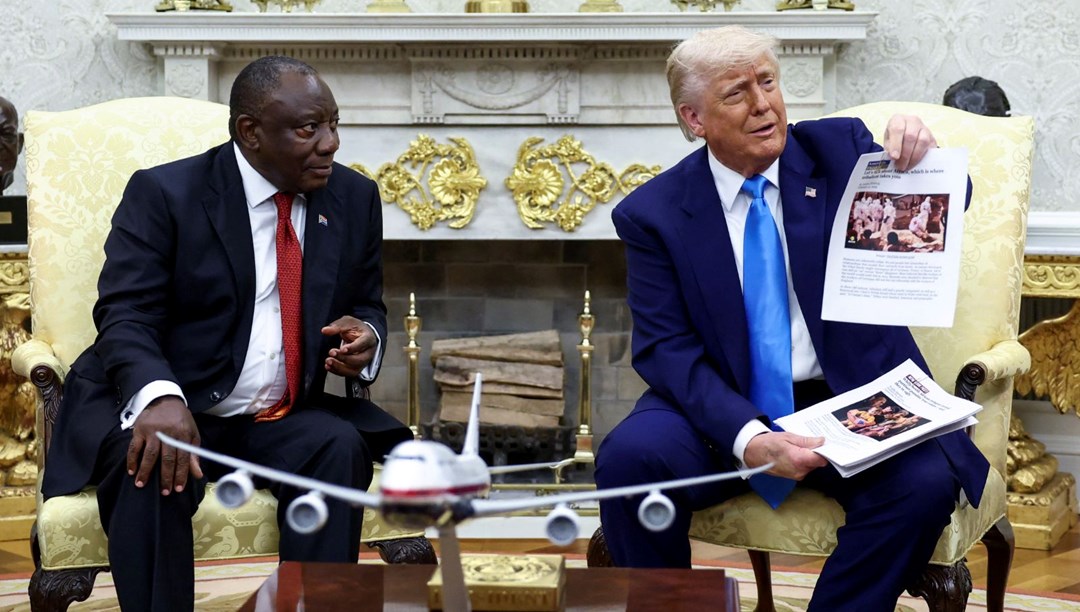
On May 21, during a meeting in the Oval Office, President Donald Trump made headlines by presenting images he claimed depicted a "white genocide" occurring in South Africa. However, it was later revealed that these images did not accurately represent the reality on the ground.
Images from the Wrong Country
According to a report by The Guardian, the images Trump shared were actually from the Democratic Republic of the Congo and not South Africa. The so-called “burial sites” referenced by Trump were also misrepresented. During the press conference alongside South African President Cyril Ramaphosa, Trump held up a photo and claimed it showed "all these white farmers being buried."
The image Trump displayed was reportedly an image extracted from a video published by Reuters on February 3. The video depicted humanitarian workers transporting body bags, but these were not from South Africa; they were filmed in the city of Goma, Congo. This footage highlighted casualties resulting from ongoing conflicts with the M23 group, which is backed by Rwanda.
Misrepresentation of Graves
At the meeting, Trump also presented a video he claimed showed a mass grave of over a thousand white farmers in South Africa. However, the reality was far different. The footage was captured along a road connecting the small towns of Newcastle and Normandein in South Africa. Contrary to Trump’s assertions, this video did not showcase graves; instead, it displayed a memorial site.
The memorial, created by Rob Hoatson, was clarified to be a place of remembrance but not a designated burial site. Hoatson stated that the area had been established after the killing of two white Afrikaners, thus serving as a temporary memorial rather than a mass grave for thousands.
The Context of the Meeting
During Ramaphosa’s visit to the U.S., he faced a torrent of allegations regarding mass killings of white farmers and land seizures. This situation mirrored an earlier incident in February when Ramaphosa had encountered unexpected comments from Ukrainian President Volodymyr Zelensky.
Initially, the discussions between Ramaphosa and Trump focused on trade and strategic minerals, creating an atmosphere of cordiality. They even engaged in light conversation about golf before the meeting took a serious turn.
Trump’s Claims and Their Impact
Trump, seeking to back his claims, presented videos and printed materials suggesting that white South Africans were victims of systemic violence and persecution. He stated, “People are fleeing South Africa for their safety. Their land is being taken, and in many cases, they are being killed.” Such assertions have far-reaching implications, stirring racial tensions and arguably inflaming fears among certain demographics.
The Broader Implications
The discourse surrounding the alleged genocide of white farmers has been a contentious subject within both South Africa and the international community. Misrepresentation can lead to a distortion of facts, ultimately influencing public perception and policy discussions. The imagery of violence, particularly when disconnected from its context, can evoke fear and unrest, making it critical for media and politicians alike to approach sensitive topics with due diligence.
The Role of Media in Shaping Narratives
This incident spotlights the crucial role that media plays in shaping public narratives. Misinformation, especially in the form of visuals that lack context, can perpetuate harmful stereotypes and exacerbate divides within societies. A responsible media approach must prioritize accuracy, context, and the avoidance of sensationalism to curb the spread of disinformation.
The Importance of Accurate Representation
As seen in this event, the consequences of misrepresentation can be severe. Accurate representation of facts not only aids in the formulation of informed policies but also fosters understanding among different racial and ethnic groups. Thus, it becomes crucial for those in positions of influence to communicate with clarity and precision.
When discussing sensitive issues such as racial violence and genocide, it’s essential to approach the subject with empathy and a commitment to truth. In a complex world where narratives often clash, grounding discussions in fact and being receptive to multiple perspectives is paramount.
Moving Forward
Understanding the realities faced by individuals in volatile regions involves nuance and context. Simplistic portrayals can overlook the deeper issues affecting communities. Listening to local voices and experiencing the realities firsthand is vital in crafting a narrative that accurately reflects the situation on the ground.
As we progress in an age overwhelmed by information, highlighting truth in societal discussions should remain a priority. This approach not only seeks to mitigate fear and division but also nurtures a global community grounded in empathy and understanding.
In closing, vigilance and responsibility in conveying information are essential in an interconnected world, where every image and claim can influence perceptions and create ripples far beyond immediate contexts.