
The Authority of ICE: President Trump’s Directive
The president of the United States , Donald Trump, has recently taken a bold step in directing the Immigration and Customs Enforcement (ICE) agency. His order outlines that ICE agents are now permitted to arrest individuals who attack police vehicles. This directive has raised questions about the balance between security enforcement and civil rights.
Trump’s Firm Stance on Public Order
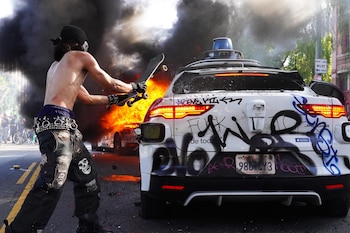
In a strongly worded statement released via his social media platform, Trump emphasized his commitment to public safety . “I fully authorize ICE to protect, just as they protect the public. I don’t want to see a car with an agent of the attacked public order!” he expressed. Furthermore, he proclaimed “ immediate authorization for arrest and imprisonment ,” demonstrating a tough-on-crime approach.
Recent Attacks on Law Enforcement
This directive follows a surge in violent incidents targeting police vehicles, a situation that has concerned many in law enforcement. During Trump’s recent visit to Texas , he reported witnessing shocking images of these attacks upon police vehicles, citing that “these new vehicles suffered tremendous damage.” Such incidents have ignited debates over the appropriate response from law enforcement and the government’s role in protecting its agencies.
Strengthening ICE Capabilities
In response to these rising tensions, Trump has instructed the Secretary of National Security , Kristi Noem, and the “Border Tsar,” Tom Homan, to focus on training ICE agents to effectively confront those he labeled as “ thugs ” and “ unclean .” This directive implies a potential expansion of ICE’s authority in dealing with civil disturbances, a point that could spark significant controversy regarding the agency’s role in public safety.
Echoes of Support from Leadership
Noem, in a public statement, expressed gratitude to Trump for his backing, reiterating that “our ICE officers risk their lives every day to protect Americans.” Her remarks highlight the sentiment within law enforcement that they require greater governmental support in dealing with aggressive protestors and growing unrest. As law enforcement officials face mounting pressure, the administration seeks to bolster their ability to act decisively against threats to public safety.
The Broader Context of Civil Unrest
This announcement comes against a backdrop of escalating tensions surrounding law enforcement actions, particularly in relation to protests. Just prior to Trump’s statement, ICE conducted a raid on a legal marijuana cultivation facility in California , which resulted in significant clashes between police and demonstrators. These protests emphasized a broader cultural divide within the nation regarding the role of law enforcement and the treatment of various communities by governmental agencies.
Implications for the Future
The implications of these developments raise crucial questions about the balance between maintaining public order and respecting civil liberties. As ICE adopts what may be considered more aggressive tactics, advocacy groups are likely to challenge these measures, citing concerns over excessive force and the infringement of individual rights. As this situation unfolds, the discourse surrounding law enforcement and civil liberties will continue to evolve.
The emphasis by President Trump on granting ICE extensive authority could signal a changing landscape in how law enforcement manages civil unrest. With increasing public scrutiny on police actions, the coming months will be critical in determining how these policies translate into practice. Observers from both sides of the political spectrum will be watching closely as the nation grapples with issues of safety, civil rights, and the ever-evolving role of law enforcement in society.