
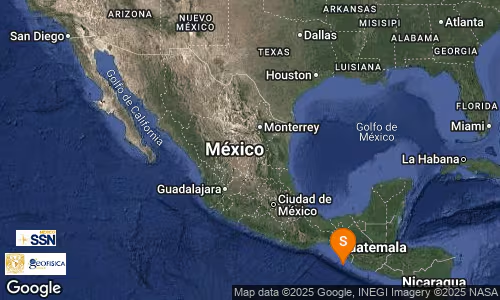
Earthquake Report: 4.1 Magnitude in Chiapas
The National Seismological Service (SSN) has confirmed a magnitude 4.1 earthquake that struck 55 km southwest of Huixtla, Chiapas. The seismic event occurred at 08:26:26 AM local time, recorded at a latitude of 14.73 and longitude of -92.76, with a notable depth of 54 km.
Understanding Mexico’s Seismic Activity
Mexico is situated in a complex tectonic landscape where the interaction of five tectonic plates—Caribbean, North America, Pacific, Rivera, and Cocos—creates a unique environment for seismic activity. This geological setting places Mexico in a zone of high seismicity, making it prone to earthquakes.
The Tectonic Plates
- Caribbean Plate: This plate is positioned to the southeast of Mexico and influences seismicity in the region.
- North American Plate: Covers a vast portion of North America and impacts seismic events through its boundaries with other plates.
- Pacific Plate: This large plate lies to the west and is known for producing significant seismic activity along the Pacific coast.
- Rivera Plate: Smaller than its neighbors, this plate also plays a role in Mexico’s overall seismic landscape.
- Cocos Plate: Located to the southwest, this plate actively subducts under the North American plate, frequently resulting in earthquakes.
These plates constantly move and interact with one another. As they collide, slide past, or separate from each other, stress accumulates along fault lines until it’s released in the form of an earthquake.
Impacts of the Earthquake
While the reported earthquake was measured at a moderate magnitude, it is essential to consider the implications it may have on the local population and infrastructure:
Potential Damage
Given the earthquake’s depth, widespread surface damage might be minimal. However, buildings not designed to withstand seismic activity can still experience structural issues. Local authorities will typically assess this risk following such events.
Community Preparedness
Chiapas, like many regions in Mexico, has systems in place for earthquake preparedness and response. Residents receive education about emergency procedures, which is crucial in minimizing the risks associated with seismic activities.
Continued Monitoring
The SSN continuously monitors seismic events across Mexico. Residents are encouraged to stay informed through reliable news sources and the SSN for updates following seismic activity.
Conclusion
The recent 4.1 magnitude earthquake near Huixtla, Chiapas serves as a reminder of Mexico’s position within a highly active seismic zone. The constant interplay of tectonic plates makes vigilance and preparedness essential for both authorities and citizens. Awareness and education can significantly mitigate the impact of such natural phenomena.