
It was called Morning Midas. Sailed on May 26 from the Chinese port of Yantai with more than 3,000 vehicles on board and was destined for the Mexican port of Lázaro Cárdenas. Sadly, it never arrived. On June 23, after several weeks adrift due to a fire on board, the freighter sank into the deep waters of the North Pacific, more than 600 kilometers southwest of Adak, Alaska. It disappeared silently, leaving a trail of smoke, steel, and abandoned cars that would never touch the mainland.
The fire began on June 3. According to the United States Coast Guard, the smoke was emanating from the deck housing electric vehicles. On board were 22 crew members, all of whom successfully evacuated in time and were rescued by the freighter Cosco Hellas, which happened to be in the vicinity.
A Freighter Adrift in the Micronesian Ocean
For days, the Morning Midas drifted, still enveloped in smoke. Rescue teams, working alongside Zodiac Maritime—the ship’s operator—attempted to assess the situation and prepared for a potential recovery. Unfortunately, they were unable to intervene in time. Structural damage combined with adverse weather conditions and water ingress ultimately led to its sinking, over 5,000 meters below the surface.
The cargo was not only numerous but also revealing: 3,048 vehicles, which included 70 electric and 681 hybrid models. According to updated data from the Coast Guard, after validating the figures with Zodiac Maritime, each vehicle likely had a designated destination—either a dealer or a consumer. Now, they rest permanently at the ocean’s bottom, with no hope of recovery.
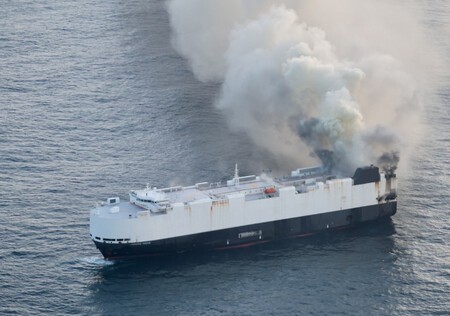
Morning Midas
The story of the Morning Midas sheds light on the complexities of maritime car transport , an intricate global network that we seldom see, yet is responsible for the flow of millions of vehicles each year. This incident also echoes previous events. In 2023, the Fremantle Highway freighter, which carried around 3,000 cars—including about 500 electric ones—burned for days in the North Sea, tragically resulting in the loss of a crew member. The ship was finally towed to port after a week-long battle with the flames.
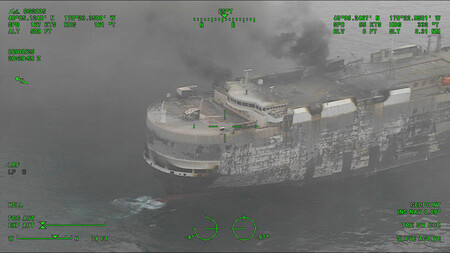
Morning Midas
This incident prompted Dutch authorities to urgently enhance emergency protocols for maritime car transport. The focus has since shifted to the challenges of controlling fires on ships transporting vehicles, particularly electric ones.
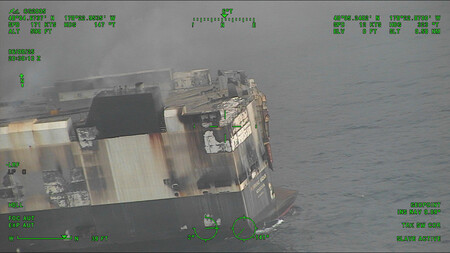
Morning Midas
Zodiac Maritime has dispatched multiple vessels equipped with anti-contamination systems to monitor the affected area. According to the Coast Guard, no signs of pollution have been detected as of yet, although the risk persists. The ship is noted to have carried approximately 350 metric tons of gas fuel and around 1,530 metric tons of very low sulfur fuel oil (VLSFO).
Maritime car transport serves as a vital piece of industrial machinery . While it may seem alarming to load over 3,000 vehicles on a single ship, this practice has become increasingly common. Manufacturers like ByD have even begun operating their own vessels, one of which can accommodate up to 7,000 electric cars in a single trip.
As of now, it remains unconfirmed whether the fire aboard the Morning Midas is linked to any of the electric vehicles it was transporting. What stands clear is that incidents like these occur amid an ongoing electric car boom . Each planned route serves as a learning experience. While conclusive answers are not yet in reach, one question lingers in the air: are we securely transporting thousands of high-voltage batteries across oceans?
Images | US Coast Guard (1, 2, 3, 4)
In Xataka | The cars are getting bigger and the squares do not grow. There are those who have a solution: the parking ‘spine’