
Are There Enough Controls on the Tracks in Spain?
The recent controversies surrounding Spain’s railway network raise an important question: are there sufficient controls in place to ensure safety? This discussion is prompted by a series of inspections that failed to reveal any anomalies before a significant accident.
The State of Inspections in Spain
In the lead-up to the accident, four inspections were conducted on the affected railway section, yet none identified any issues. Transport Minister Óscar Puente noted that even an auscultation—essentially an advanced diagnostic test—carried out the day before the accident would not have detected any anomalies either. This raises serious concerns about the adequacy of current inspection protocols.
Spain adheres to both national and European regulations for railway inspections and maintenance, with the responsibility for their execution falling on local infrastructure managers. While Spain has invested considerably in its railway infrastructure, questions remain regarding the effectiveness and thoroughness of the protocols employed.
Investment in Advanced Diagnostics
Countries like Italy, France, and Germany are pushing the envelope by investing heavily in advanced diagnostic technologies to ensure safety and efficiency. Angelo Petrosillo, General Director of the Italian Mermec group, points out that “all major European railway infrastructures have invested and plan to continue investing in advanced diagnostics.” Such measures aim not only to improve safety but also to optimize maintenance and traffic management.
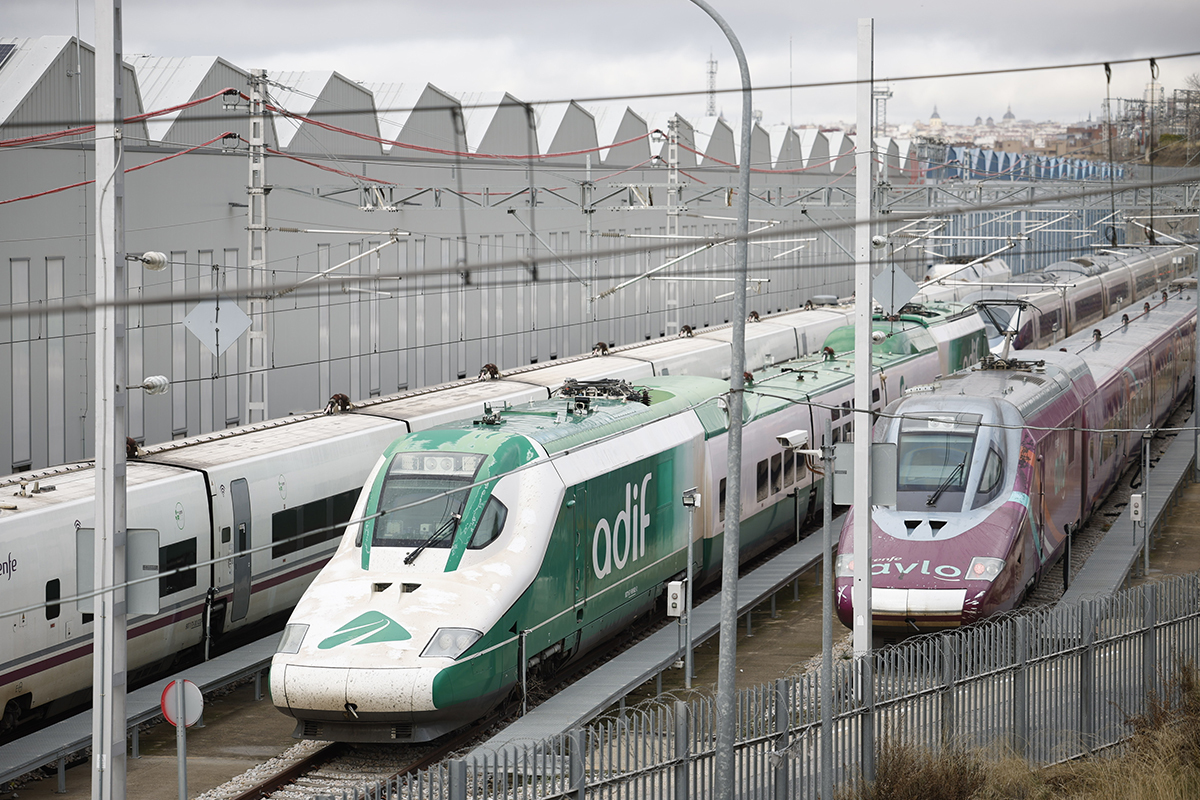
In Spain, ADIF—the state-owned railway infrastructure manager—claims to have periodic controls, utilizing specialized trains equipped with state-of-the-art monitoring technology to assess track conditions. They conduct at least two complete inspections per year on the high-speed network alone. However, the effectiveness of these protocols is now under scrutiny.
Comparison with Other European Protocols
Italy: The Diamante 2.0 Train
Italy employs a similar set of protocols but has taken significant steps forward. Since June 2025, the country has been utilizing the Diamante 2.0 train, designed explicitly to identify potential failures that could lead to delays or safety issues. Equipped with over 200 sensors and high-precision cameras, this diagnostic train operates at high speeds without passengers, gathering real-time data critical for timely interventions.
Germany and France: Stringent Control Mechanisms
In Germany, the railway system is managed by DB InfraGO AG, under scrutiny from the Eisenbahn-Bundesamt (EBA), which confirms a high and stable safety level through rigorous analysis. Meanwhile, France’s SNCF Réseau operates under the supervision of the EPSF (Établissement Public de Sécurité Ferroviaire), which guarantees strict adherence to safety regulations.
The Need for Continuous Improvement
The urgency of the situation demands that Spain’s railway inspection standards evolve according to the rapid advancements in technology, particularly regarding artificial intelligence and data analysis. Petrosillo emphasizes that while current technologies assist in detecting many issues, some problems remain elusive, underscoring the need for ongoing process improvements.
Conclusion
The concerns regarding Spain’s railway safety are significant and multifaceted. While existing regulations align with European standards, the effectiveness of their implementation appears questionable. Other European countries have adopted more advanced monitoring techniques, indicating that there is an opportunity for Spain to enhance its railway safety measures further. Continuous improvement is paramount to ensure that the railways can sustain not just efficiency, but most importantly, the safety of passengers.