
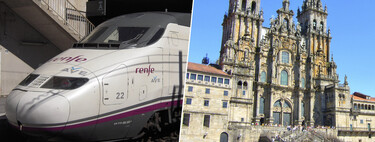
Railway liberalization has reached cruise speed with spectacular results for passengers , but it’s demolishing the accounts of operators.
Why is it important. The train price war is dramatically changing the transport map in Spain. Users benefit from more low-cost options and affordable prices , but companies are bleeding money in a battle that has also raised questions about the sustainability of the current business model.
In figures:
- Almost 40 million travelers used high-speed rail in 2024.
- That’s a staggering 77% increase compared to 2019, before the pandemic.
- Prices have fallen by up to 42% on various routes.
- Passenger income is now 35% below the levels prior to liberalization .
<img alt="Ouigo's strategy under pressure" width="375" height="142" src="https://i.blogs.es/e3f887/tren-ave/375_142.jpeg"/>The context. Ouigo has emerged as the undisputed champion of low prices. In the first quarter, it was the most economical operator in four of the five liberalized routes:
- Madrid-Barcelona (18.59 euros).
- Madrid-Sevilla (29.09 euros).
- Madrid-Málaga (26.89 euros).
- Madrid-Valencia (20.80 euros).
Only in the Madrid-Valencia route did Avlo surpass it, and that was by a mere 25 cents. This aggressive strategy is delivering results. The French subsidiary has captured 36% of the market share in the Madrid-Valencia service, 25% in Madrid-Valencia, and 15% in Madrid-Barcelona.
Yes, but. Profitability is another major concern. Although sources have not disclosed the exact losses of each operator in 2024, data shows that average revenue remains significantly lower than what Renfe achieved during its monopoly period.
The operators have managed only a 6% increase in average income on the Madrid-Barcelona route, bringing it to merely 8 cents per traveler per kilometer , a figure that is still 35% lower than the monopoly era.
Deepen. Beyond the numbers, liberalization is fundamentally reshaping mobility habits. The train has decisively beaten airlines in popularity: on the Madrid-Barcelona route, the railway’s market share has surged from 65% to 81.5%, while other routes now boast an 80-90% railway quota.
However, the financial sustainability of the sector is now at risk. If current margins fail to provide long-term profitability, a decision must inevitably be made: either prices will need to rise, or some operators may退出 the market.
In Xataka, it has been reported that Renfe has relied on Avril trains to compete with the low-cost strategies of Ouigo and Iryo, but these have not been without their own issues.
Outstanding image | Dani Guitar