
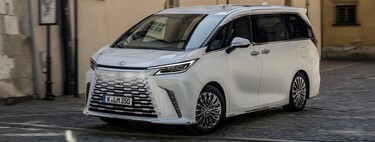
Toyota is the largest car manufacturer in the world, having sold nearly 11 million vehicles last year. However, the sales outlook for 2024 has two distinct interpretations.
The optimistic view is that, despite the anticipated rise of the electric vehicle (EV) market, Toyota continues to bet on hybrids, allowing it to maintain its position as the world’s top-selling automaker . While its presence in EV technology is minimal, the goal is to arrive at the right time or, if arriving late, to outperform rivals.
Conversely, the pessimistic outlook suggests that Toyota’s momentum is waning . Global sales fell by 3.7% , and although the company is making steady progress in the United States with its hybrids, it experienced a significant 6.9% drop in China . The competitive market poses serious threats to manufacturers, and losing traction in the world’s largest national market could be a hard challenge to overcome in the future.
2024 marks the third consecutive year that Toyota has lost sales in China, a country known for being the largest EV market globally. Up until this year, Toyota’s presence in China has been almost negligible, with its only EV being the Toyota bZ3 .
Now, Toyota has confirmed that it will launch the Toyota bZ3X (more focused on the affordable SUV market) and the Toyota bZ7 , both developed in partnership with local company GAC . Still, three electric models fall short when compared to giants like BYD or Geely , which boasts numerous brands.
Moreover, the Chinese market rewards manufacturers not only for offering efficient vehicles but also for enhancing interior quality and software functionality . Consumers are increasingly attracted to features ranging from classic infotainment offerings to converting the car’s interior into a karaoke venue .
This scenario has posed significant challenges for Western manufacturers, who have struggled to understand local consumer preferences. Toyota’s response? Teaming up with those who excel in this arena.
Toyota’s Alliances with Xiaomi and Huawei
In response to the evolving market, Toyota has chosen a strategic yet arguably smart route. Partnering with Xiaomi and Huawei positions its products as integral components of a broader digital ecosystem that encompasses an array of related products.
Since the introduction of the Xiaomi SU7 , the company has emphasized communication between mobile phones and cars, effectively transforming the vehicle into an extension of an omnipresent family of products. Their secret weapon is HyperOS .
My colleague Ricardo Aguilar shared insights on Xataka , revealing that the integration between Xiaomi’s system and mobile phones surpasses Apple CarPlay or Android Auto . The operating system replicates important information across up to five screens, with personalized applications showcasing phone content via a mirroring effect.
The system even allows for Apple CarPlay to function simultaneously with the base operating system, displaying its interface on the central and rear screens, while HyperOS runs in the background on the dashboard and Head-Up Display. The same interoperability exists for Android Auto .
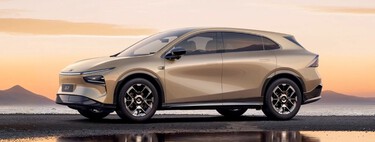
Similarly, products employing HarmonyOS , the software developed by Huawei, are gaining traction among vehicles released in collaboration with manufacturers like Aito , Chery , and JAC . Notably, they utilize their proprietary chips to attain independence from U.S.-based companies.
In 2021, Huawei showcased its aspiration for HarmonyOS as a multiplatform software aimed at integrating various products within a singular family. This inspires customers who own a Huawei phone to consider a car that offers a seamless user experience.
Like Xiaomi, Huawei’s strategy entails presenting itself as an enticing option for high-end or luxury vehicles, a concept vividly illustrated in this video.
The approach adopted by both Chinese firms starkly contrasts with Toyota’s, which has seen minimal investment in software thus far. Even though they have recently confirmed plans to invest more in developing their own operating system, they recognize the competitive risks posed by faster-moving rivals.

To navigate these waters, Toyota is forming alliances with both technology giants. As a result, the Toyota bZ7 will be compatible with both operating systems . Each entity is set to employ its unique artificial intelligence developments. For instance, Toyota is collaborating with Huawei to create a personal identification system enabling users to activate their desired profile with simple voice commands.
In addition to Xiaomi and Huawei, Toyota has also partnered with Momenta , a Chinese firm focusing on autonomous driving systems , a highly coveted market within China. The government’s intervention has been necessary to prevent manufacturers from overstating their capabilities to consumers.
Photo | Toyota
In Xataka , I receive inquiries from relatives and friends about the value of purchasing a Chinese car. This is my response.