
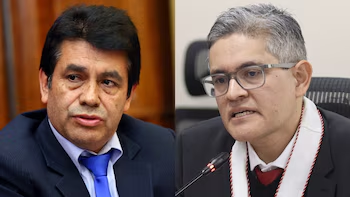
Tomás Gálvez Fires José Domingo Pérez from the Public Ministry
The recent termination of José Domingo Pérez from the Public Ministry marks a pivotal moment in Peru’s legal landscape. Tomás Gálvez, the Prosecutor of the Nation, officially dismissed Pérez after the National Board of Justice (JNJ) confirmed his non-ratification. This decision sheds light on ongoing debates surrounding judicial accountability and corruption in the country.
Background on Pérez’s Termination
In resolution 1642-2026-MP-FN, Gálvez formally ended Pérez’s appointment as the provincial anti-corruption prosecutor in the specialized unit for corruption crimes involving officials in Lima. Previously, Pérez served as a prominent member of the Lava Jato Special Team, known for its work in high-stakes corruption cases. However, multiple complaints, totaling 14, have raised serious concerns about his conduct in office.
The official documents indicate that Gálvez’s decision does not prevent any legal actions that may still arise from the pending complaints against Pérez. The resolution clearly articulates that “José Domingo Pérez Gómez must carry out the corresponding delivery of charge,” indicating an immediate effect on his position.
The Role of the National Board of Justice (JNJ)
The JNJ’s unanimous vote to uphold the non-ratification of Pérez underscores the gravity of the situation. Members of the Board—led by President María Teresa Cabrera—affirmed their satisfaction with the presented case, highlighting significant evidence against Pérez. Critics noted that Pérez attempted to argue a wrongful hearing process; however, the board countered that he was offered ample opportunity to respond to the charges against him.
Pérez’s claims regarding a “mafia pact” aiming to discredit judges and prosecutors were met with skepticism by the Board. According to their findings, the regulations governing their evaluation processes were clear and comprehensively communicated.
Concerns About Conduct and Suitability
The Board emphasized that technical qualifications alone would not suffice for maintaining a position of trust. Pérez’s evaluation encompassed both his suitability and conduct, which had shown to be lacking. Ongoing investigations into alleged illicit enrichment and embezzlement further exacerbated the situation, leading to a determination that his exit was necessary for maintaining the integrity of the Public Ministry.
Implications for the Public Ministry
This dismissal not only reflects the challenges within the Peruvian judicial system but also serves as a vital reminder of the complexities involved in prosecutorial roles. The resolution confirmed that standards set by the Inter-American Court of Human Rights were met, ensuring the procedural propriety of the proceedings against Pérez.
Conclusion: The Future of Judicial Integrity in Peru
The dismissal of José Domingo Pérez signifies a crucial moment in Peru’s fight against corruption. Tomás Gálvez’s decision bolsters the credibility of the judiciary as it grapples with internal issues of corruption and accountability. As the Public Ministry continues to navigate these tumultuous waters, the outcomes of ongoing investigations will likely shape public perception and trust in the legal system.
This significant event may serve as a critical juncture for ensuring that justice prevails and those in power are held accountable for their actions. The future remains uncertain, but the steps taken today could pave the way towards a more transparent and ethically sound judicial framework in Peru.