
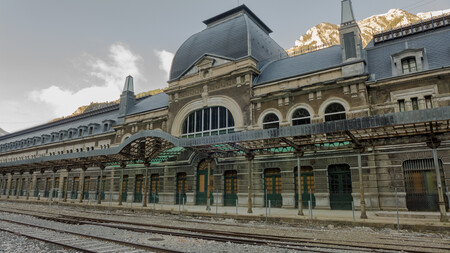
Canfranc: A Hotel Steeped in History
Not all hotels start from scratch. Some are born from buildings that carry a rich history long before becoming a tourist destination, and few cases in Spain exemplify this quite like Canfranc. This historic international railway station is nestled in the Aragonese Pyrenees and was part of a large-scale railway project that closed its doors in 1970. For decades, its imposing silhouette remained abandoned, turning it into a recognizable image of a forgotten railway legacy. Today, this space has transformed its function while preserving its historical essence.
The Legacy of a Major Railway Hub
To appreciate why Canfranc is so iconic, one must delve beyond its walls and focus on its original purpose. The station served as a crucial link between Spain and France when such infrastructure dictated the pace of European rail transport. Its strategic location was no accident; it was designed to facilitate the movement of travelers and goods through the Pyrenees. Its massive structure and complex facilities placed it among the significant railway complexes of its time.
From Monumental Station to Five-Star Hotel
The story of Canfranc extends beyond its role as a railway hub. Its location on the border made it a pivotal point during one of the most turbulent periods of the 20th century. During World War II, the station experienced continuous movement, some of which were visible, while others were shrouded in secrecy. This context forever marked the building, transforming it from a symbol of international cooperation to a site tinged with conflict.
That chapter came to a close in 1970, marking the beginning of a long abandonment. The majestic edifice was left to decay without a clear purpose. For decades, Canfranc transitioned from a bustling transit point to a static presence in the landscape, disconnected from everyday life. However, its grandeur and architectural significance ensured it did not fade into obscurity.
A Challenging Transformation
The recovery of Canfranc into its current form was neither quick nor simple. The building required extensive renovations to adapt it to its new purpose without erasing its recognizable character. The transformation project aimed to convert the former station into a hotel, all while respecting its historical architecture. Declared an Asset of Cultural Interest in 2002, the project was tasked with preserving heritage value while implementing modern amenities.
Preserving the Past in Luxury
This commitment to preservation is evident in the hotel’s interior design. Inspired by the 1920s, the decor combines rich materials, colors, and details that evoke the railway’s illustrious past. Elements such as wood, brass, and luxurious fabrics blend harmoniously, allowing the history of the space to resonate throughout the guest experience.
Luxury in the Heart of Nature
Today, Canfranc serves as a high-end accommodation, featuring 104 elegantly designed rooms, including four opulent suites. Set against the backdrop of the Aragonese Pyrenees, it offers a unique stay in a breathtaking environment. The hotel also boasts a wellness area complete with a heated pool and gym, ensuring guests have every comfort at their disposal. Notably, Canfranc Estación claims the title of the only five-star Grand Luxury hotel in Aragon.
A key feature of the hospitality experience here includes three onsite restaurants, with a culinary offering that blends Aragonese traditions with modern techniques, including a Michelin star and a Sun from the Repsol guide. Positioned in a stunning mountain environment, Canfranc provides proximity to ski resorts such as Candanchú and Astún, as well as numerous natural pathways, enriching the overall experience for visitors.
A New Chapter
Today, Canfranc is more than just a place to visit; it has been transformed into a destination where guests can immerse themselves in history while enjoying luxury. The transformation from a hurried transit point to a space for relaxation allows visitors to engage with the remarkable past intricately woven into the hotel’s fabric. The delicate balance between its storied history and its modern vocation defines its unique charm.