
Moon’s Resurgence: Oxygen Extraction via Innovative Technology
Goodbye, Mars; the Moon has become a priority again. Countries around the globe, alongside NASA, are focused on returning to the Moon, pursuing the dream of creating a sustainable lunar settlement. To achieve this, one critical resource is oxygen, and NASA has made significant strides in harnessing it directly from the lunar regolith.
The Role of a Giant Mirror
The Moon is often termed a “mine” due to its abundant resources. It holds enormous potential for generating energy through photovoltaics and contains essential elements, including oxygen, hidden within its surface dust—known as regolith. Current technologies struggle to extract usable oxygen from this regolith, but NASA’s innovative Carbothermal Oxygen Production Reactor (CaRD) is changing the game.
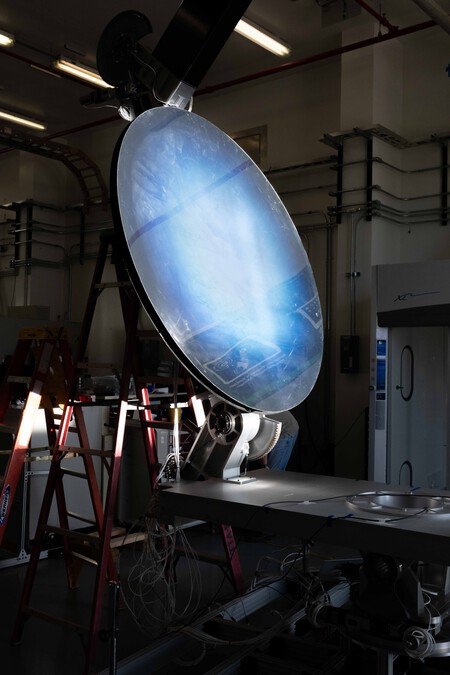
The CaRD project involves using a massive precision mirror designed to concentrate sunlight onto a reactor, heating it to a staggering 1,800ºC. The intense heat triggers a carbothermic reaction, resulting in the extraction of oxygen and other elements. This method stands out as it requires significantly less energy compared to other technologies, such as high-power lasers or electrolysis, making it a more feasible solution for lunar operations.
The Abundance of Regolith
According to NASA, this advanced technology has the potential to produce several times its own weight in oxygen annually, facilitating a permanent human presence and a future lunar economy. Beyond oxygen, the regolith also contains metals, which means that separating these components could yield additional resources. Furthermore, any leftover lunar dust can be utilized as a construction material for creating roads and building structures. Scientists are even exploring the possibility of inoculating regolith with bacteria to cultivate crops directly on the Moon.
The European Space Agency’s Perspective
While NASA continues to make impressive strides, the European Space Agency (ESA) is also working on lunar exploration. In the context of the Artemis program, which is set to take humans back to the lunar orbit this year, ESA is utilizing electrolysis for oxygen extraction. This method requires heating regolith to 950ºC with calcium chloride to release oxygen and separate metals. Remarkably, ESA is collaborating with NASA, testing the combination of human urine and lunar regolith to create a viable construction material for lunar habitats.
Competing Ambitions in Space
In the race for lunar dominance, China is making rapid advancements with aggressive plans for lunar exploration. By 2030, China aims to have its astronauts orbiting the Moon, with a manned landing planned for 2029/2030. In collaboration with Russia, they are also constructing the International Lunar Research Station, expected to be operational by 2030 and fully completed by 2035.
This new focus on the Moon aligns with SpaceX’s shift in priorities. Elon Musk announced recently that Mars is no longer the immediate focus as the Moon provides a more accessible and promising opportunity for quick advancements in space exploration.
Conclusion
With the potential to harness oxygen effectively, humanity is on the brink of a new era in lunar exploration. The combined efforts of NASA, ESA, and other international players signal a renewed commitment to establishing a sustainable presence on the Moon, emphasizing the importance of oxygen extraction technologies. As we stand at the threshold of this extraordinary chapter in space exploration, all eyes are on the Moon—the next frontier.
Images | NASA, ESA